

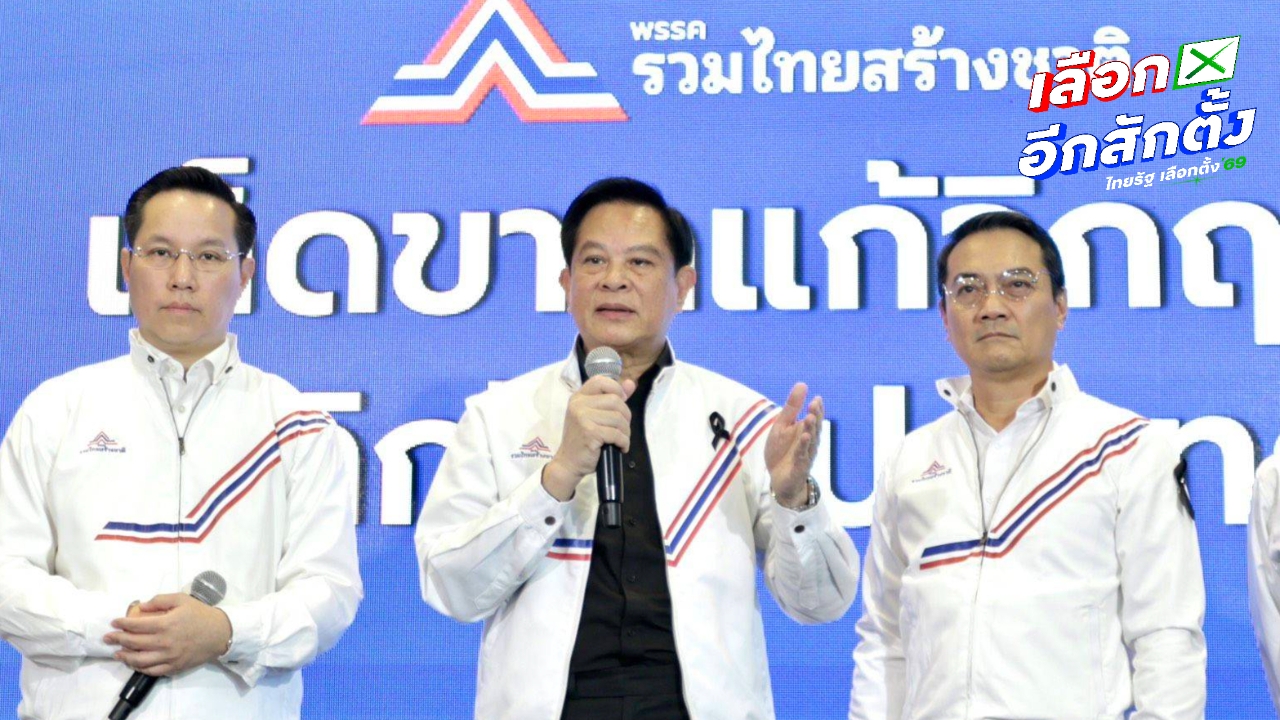
Three RTSC prime ministerial candidates oppose rewriting the entire constitution. Peerapant likened it to signing a blank check, warning it risks covertly whitewashing corrupt politicians and fears those previously disqualified may return to politics.
On 13 Jan 2026 GMT+7, Peerapant Salirutwipak, leader of the Thai Ruam Thai Sang Chart Party (RTSC), along with Attawit Suwanpakdee and Narapath Kaewthong, deputy leaders, clearly stated their opposition to drafting a completely new constitution and disapproved of holding a referendum to repeal the 2017 constitution.
Peerapant said that drafting an entirely new constitution means discarding the current one, even though many provisions of the 2017 constitution still hold value and benefit the country, especially mechanisms that disqualify or limit politicians guilty of serious offenses. Repealing the entire constitution could automatically allow previously disqualified individuals to reenter the political system.
Peerapant also questioned the referendum question that asks citizens to decide without knowing the framework and content of the new constitution, comparing it to giving citizens a blank check. This could result in people having to accept a completed constitution despite disagreeing with its details. He emphasized that the constitution must belong to the people and not serve the interests of certain political groups.
Attawit stated that the transitional provisions, which were the main concern in the 2017 constitution—such as the appointed Senate’s powers and succession mechanisms—have ended. Therefore, there is no need to repeal the entire constitution. He added that the current constitution’s main structure closely resembles those of 1997 and 2007. He warned that drafting a completely new constitution might covertly open the door to political amnesty and criticized the referendum question for lacking clear scope, noting previous political party agreements to keep Chapters 1 and 2 untouched. He proposed that if amendments are made, the referendum should clearly specify which chapters are affected rather than being overly broad and unclear.
Meanwhile, Narapath said that drafting a new constitution entirely is unnecessary since the concerning mechanisms have expired. He expressed worry that opening the door to a complete rewrite might lead to changes in key provisions without safeguards and risk undermining or abolishing political ethics mechanisms. He argued that constitutional amendments should be straightforward, addressing only problematic points, and prioritize the public interest rather than using a referendum as a tool to covertly benefit political interests.