

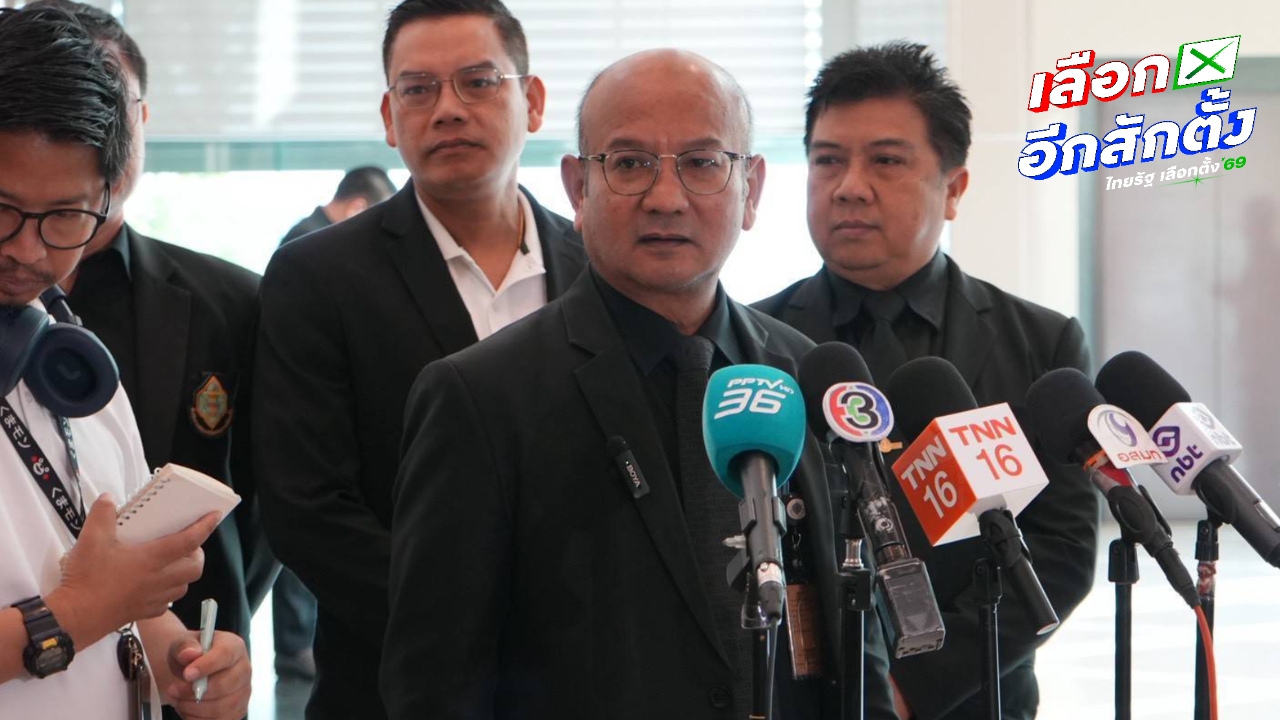
The Election Commission acknowledges the quiet atmosphere surrounding the constitutional amendment referendum campaign and is accelerating the organization of at least one referendum debate forum per province. It views the 'vote no' phenomenon in Subdistrict Administrative Organizations as a positive sign reflecting voter understanding, and assures it will not affect the parliamentary elections.
At 09:30 on 13 Jan 2026 GMT+7 Mr. Veera Yiprae, Deputy Secretary-General of the Election Commission (EC), said at the Rama Gardens Hotel regarding the relatively quiet referendum campaign on the 2017 constitution amendment, that the EC has already sent referendum materials to eligible voters nationwide and abroad. He admitted that public enthusiasm for the referendum has not been as strong as expected. The EC offices in each province may need to seek cooperation from relevant agencies and civil society networks to intensify door-to-door referendum campaigns. Additionally, each provincial EC is urged to organize at least one debate forum for public opinion on the referendum. Participants advocating for or against the amendment must register with the provincial EC first. The Public Relations Department and MCOT will act as main broadcasters to promote the campaign via radio and television.
The referendum question simply asks citizens whether they approve or disapprove of the 2017 constitution amendment. If the majority approve, the next steps of the referendum process will proceed; if the majority disapprove, the process ends immediately. Political parties, civil society groups, and media outlets can conduct educational campaigns encouraging voters to participate but must not promise benefits, obstruct voting, or spread false information, as such actions violate the Referendum Act.

In the case of the election for the Subdistrict Administrative Organization president in Tha Chamwong, Rat Phum district, Songkhla province, where no candidate received the highest votes, the option of "no vote" (voting against all candidates) or "vote no" also prevailed in other areas, Mr. Veera explained this reflects the democratic principle that sovereignty belongs to the people. Therefore, voters must decide whether to entrust power to someone suitable. If the public feels a candidate is unsuitable, it is their right to decide not to delegate power to that person. This is neither unusual nor problematic in a democracy. He views it positively that voters clearly express the type of candidates they prefer. The EC's mission includes communicating to the public how to elect good leaders. If voters find no suitable candidate, choosing none is normal and within their rights.
Regarding the question of whether the 'vote no' option would impact parliamentary elections and the referendum, Mr. Veera said he does not expect widespread 'vote no' results. The decision not to select any candidate likely stems from various factors affecting voter sentiment. In parliamentary elections, the chance of 'vote no' prevailing is slim. Candidates must present their policies and campaign actively to gain support. They understand their role and how to seek votes.
In highly competitive or challenging areas, the EC monitors closely by tasking networks to collect information and evidence. If complaints arise, they can be used in investigations. Regarding reports that some parties plan to file complaints about organized groups disrupting campaigns, such acts constitute election obstruction and are criminal offenses. Facts must be examined, and parliamentary candidates can act as complainants if election laws are violated. The law permits candidates to file accusations.
"If citizens boo candidates during campaigns, that is their right. However, if evidence shows the disruption was orchestrated by a political party, that party must file a criminal complaint. Legal proceedings will follow if election laws are broken. The facts must clarify whether it is harassment. Complaints lead to investigations by the EC, which has networks collecting evidence of election fraud. Citizens and candidates can report suspicious activities via the 'Tasappad' app or provincial EC offices."
Additionally, Mr. Veera addressed a case in a SAO electoral district in Prachinburi province where a monk voted. The law prohibits those without voting rights from voting, constituting a criminal offense subject to prosecution. The polling station committee's possible errors will be investigated to determine how and why it occurred, but it is too early to conclude any wrongdoing.

The Deputy Secretary-General also commented on an online report about a 16 Dec 1999 Supreme Court judgment in Surat Thani criminal case, involving a prosecutor as plaintiff and Mr. Kongkiat Ketsombat as defendant, charged with theft of one red mango tree, one Chanpha tree, one pine tree, and one jasmine tree valued at 2,000 baht on 18 Sep 1999. This raised questions about the qualifications and disqualifications of parliamentary candidates, which must be considered in two parts.
First, if candidate lists are not yet officially announced, any candidate who has applied but whose name is not yet public must petition the Supreme Court within seven days. Second, once candidate lists are announced, if anyone believes a candidate lacks qualifications, they can file a petition with the provincial EC office. Then a committee will review eligibility and complete the inquiry within three days, producing a ruling within two days. The ruling is then sent to the EC to decide whether to remove the candidate's name.
Mr. Veera continued that if the EC rules a candidate is disqualified or barred, the candidate's name must be immediately removed. However, the candidate can appeal the EC's decision to the Supreme Court within three days to verify the EC's authority. The Supreme Court's decision is final. If the Supreme Court has not ruled before voting day, the EC's ruling stands. If the EC decides the candidate remains qualified, the candidate continues. This process follows clear legal procedures. Whether a complaint has been filed is crucial; without complaints, the EC's findings apply. The election director, responsible for candidate registration, must gather evidence and submit it to the EC for referral to the Supreme Court.