

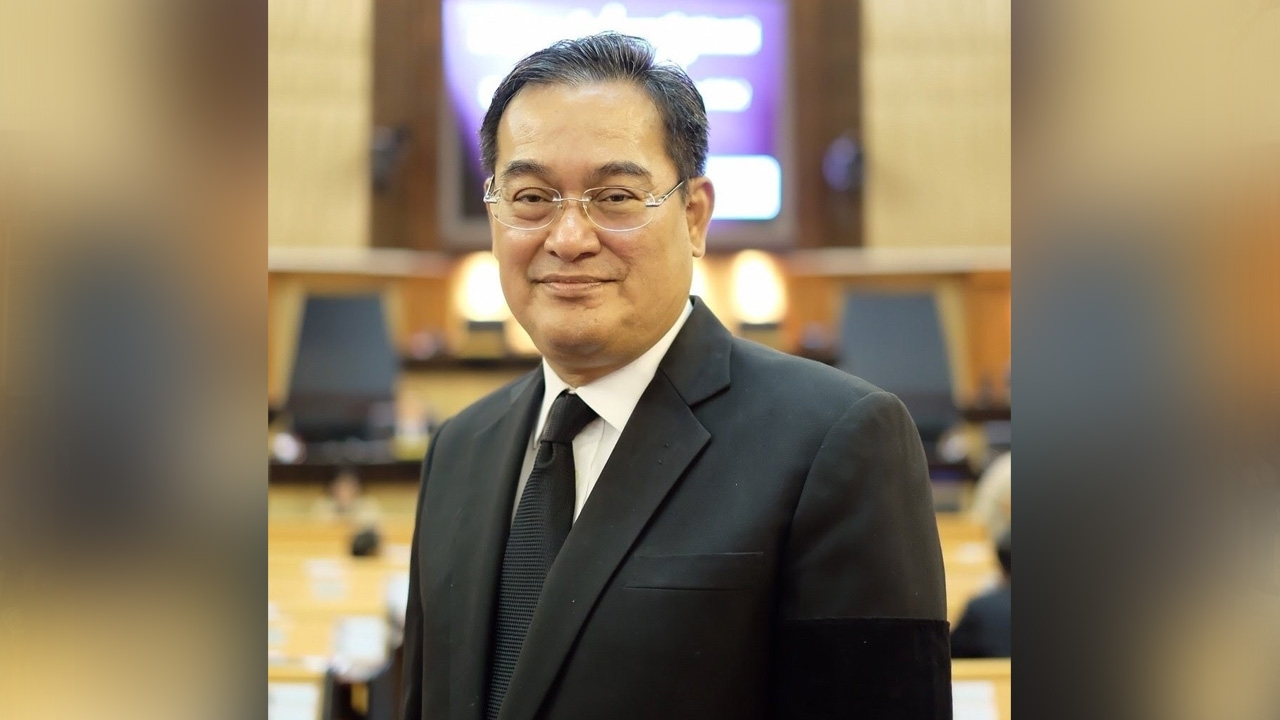
Nikorn Jamnong affirms support for a new constitution, denying it is a blank check. He outlines four main reasons and stresses there will be no problems due to three layers of safeguards in place to prevent issues arising.
On 13 Jan 2026 GMT+7, Nikorn Jamnong, Bhumjaithai Party's party-list candidate and former secretary of the referendum law committee, posted on his personal Facebook to clarify his stance regarding Anutin Charnvirakul’s statement. Anutin, Bhumjaithai Party leader, expressed support for the referendum question submitted by the Cabinet to the Election Commission, which asks: “Do you approve that there should be a new constitution?”
Subsequently, concerns and opposition arose, fearing this amounted to signing a blank check, allowing any amendments, especially to Section 112 related to the monarchy. There were also worries about severe impacts on important independent bodies. Some suggested it would be better to amend individual articles rather than rewrite the entire constitution.
Nikorn stated that, as entrusted by Bhumjaithai Party to oversee constitutional amendment issues and having been continuously involved, including participating in the referendum law amendment process, he respects all concerns regarding the constitution—the country's supreme law—and offers the following explanations for better understanding.
1. Anutin’s media statements clearly said he supports a new constitution to address many problematic issues in the current one, explicitly excluding any changes to Chapters 1 and 2, including Section 112 of the Criminal Code. Anutin also affirmed there would be no reduction of powers of key institutions; any necessary adjustments would be carefully discussed. Please review Anutin’s statements carefully again.
2. So far, Anutin and Bhumjaithai Party have maintained a firm and consistent stance in protecting the monarchy, handling constitutional amendments with great caution. For example, Anutin co-sponsored a draft amendment adding Section 256 and Chapter 15/1 concerning drafting a new constitution. This draft clearly states in Section 256/13 that any draft changing the democratic monarchy system or amending Chapters 1 and 2 of the 2017 Constitution shall be void if Parliament determines such changes violate this.
3. Regarding the prohibition against amending Chapters 1 and 2, Bhumjaithai Party steadfastly adheres to this. Even though the original draft used by the committee came from another party without such a prohibition, during the second reading this principle was reaffirmed. It was added as Section 256/26/1, stipulating that the new constitution must include Chapters 1 and 2 of the 2017 Constitution without amendment.
4. To conclude on concerns about potential problems from approving the new constitution, as supported by Anutin and Bhumjaithai Party members, such problems will certainly not occur. Structurally, the drafting process is locked with at least three layers of safeguards.
Layer 1: The policy framework and mandate. Anutin’s clear condition that Chapters 1 and 2 must not be touched is established at the very start of the drafting process.
Layer 2: Parliamentary mechanism. Even if attempts were made to breach this framework, any amendments affecting Chapters 1 and 2 or key independent bodies require at least one-third of Senate approval, which is practically impossible politically.
Layer 3: The people’s power through referendum. This is the final critical checkpoint. Even if Parliament approves, the amendments must pass two referendums: one on the new Section 256 amendment and another on the completed draft constitution. Given Thailand’s social, political, and cultural context, it is highly unlikely the public would approve any concerning amendments.
Respectfully, I affirm that constitutionally this process changes the amendment method from piecemeal changes to a constrained comprehensive revision. It is not an unlimited empowerment but a process locked politically, legislatively, and by the people. I therefore ask for support in moving toward a people’s constitution, as was achieved in 1997, with a new constitution this time as well.