

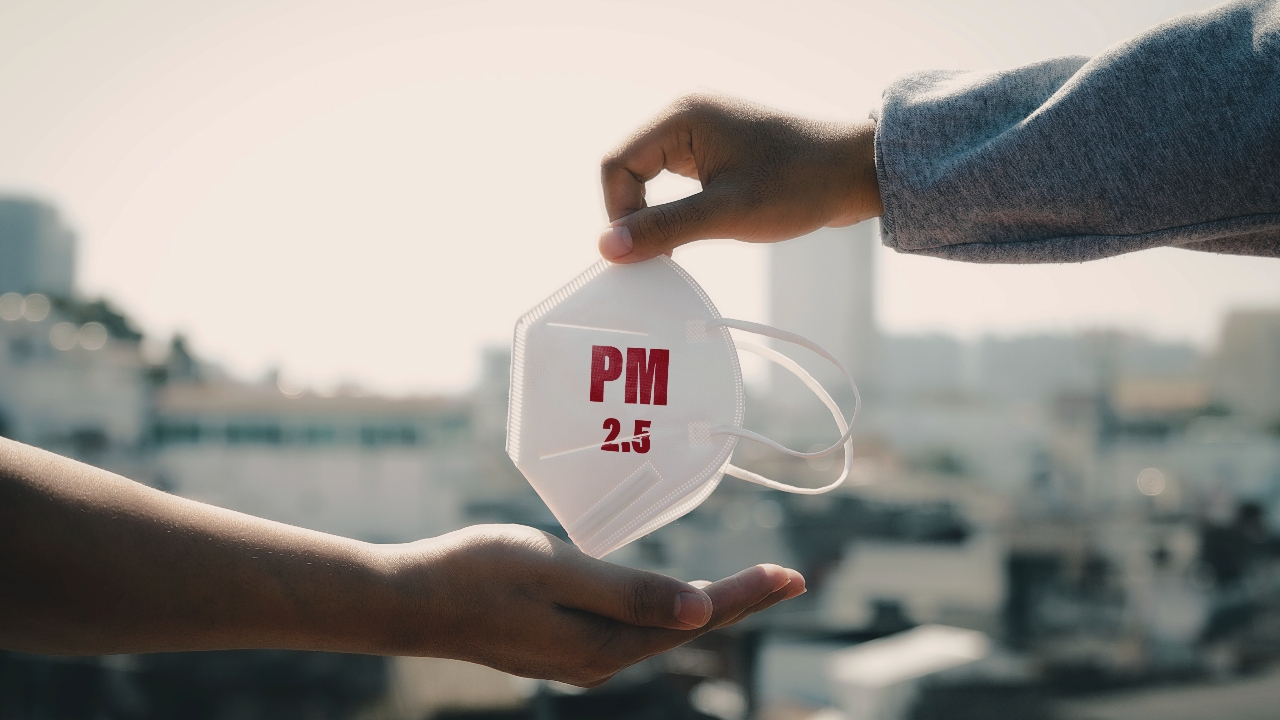
Toxic dust levels in Bangkok have surged to deep red. Although the Clean Air Bill has passed the House of Representatives, it remains pending in the Senate. If the new government does not raise the issue within 60 days after the first parliamentary session, the bill will be considered lapsed.
On 15 January 2026, the Air Pollution Problem Communication Center (APCC) of the Pollution Control Department issued a warning of rising PM2.5 fine dust levels expected between 14 and 16 January 2026. Areas requiring special monitoring include Bangkok and its metropolitan vicinity, as well as the upper central and northeastern regions. This is due to stagnant air conditions near the surface combined with low ventilation rates, causing dust accumulation that is inefficiently dispersed. The situation is expected to ease after 16 January.
Let’s review the legislative process of the Clean Air Bill, or the Clean Air Management Act B.E. .... Although the bill has passed the House of Representatives, it remains under Senate consideration. Currently, it is at the committee stage in the Senate and has yet to be enacted into law.
The key purpose of this bill is to restore the public’s right to breathe clean air by establishing clean air as a fundamental right. It creates a comprehensive air pollution management system covering standard setting, source control (factories, vehicles, burning), decentralization to local authorities, and law enforcement. The bill follows the "Polluter Pays Principle" to sustainably reduce PM2.5 and air pollution issues.
The bill guarantees the right to clean air by granting every citizen access to clean air and the ability to sue state agencies if they fail to comply with the law. The Prime Minister is designated as chair of the Clean Air Policy Committee, while the Minister of Natural Resources and Environment leads the Clean Air Management Committee.
It also empowers Clean Air officers to demand information and summon individuals for investigation, covering all pollution sources including factories, vehicles, burning, and cross-border pollution management. The bill encourages pollution reduction incentives and promotes cooperation among government agencies, the public, and data integration.
However, if a new government forms and after the first parliamentary session has lasted 60 days, if the government does not request the Senate to continue reviewing the bill, the Clean Air Bill will automatically lapse.