

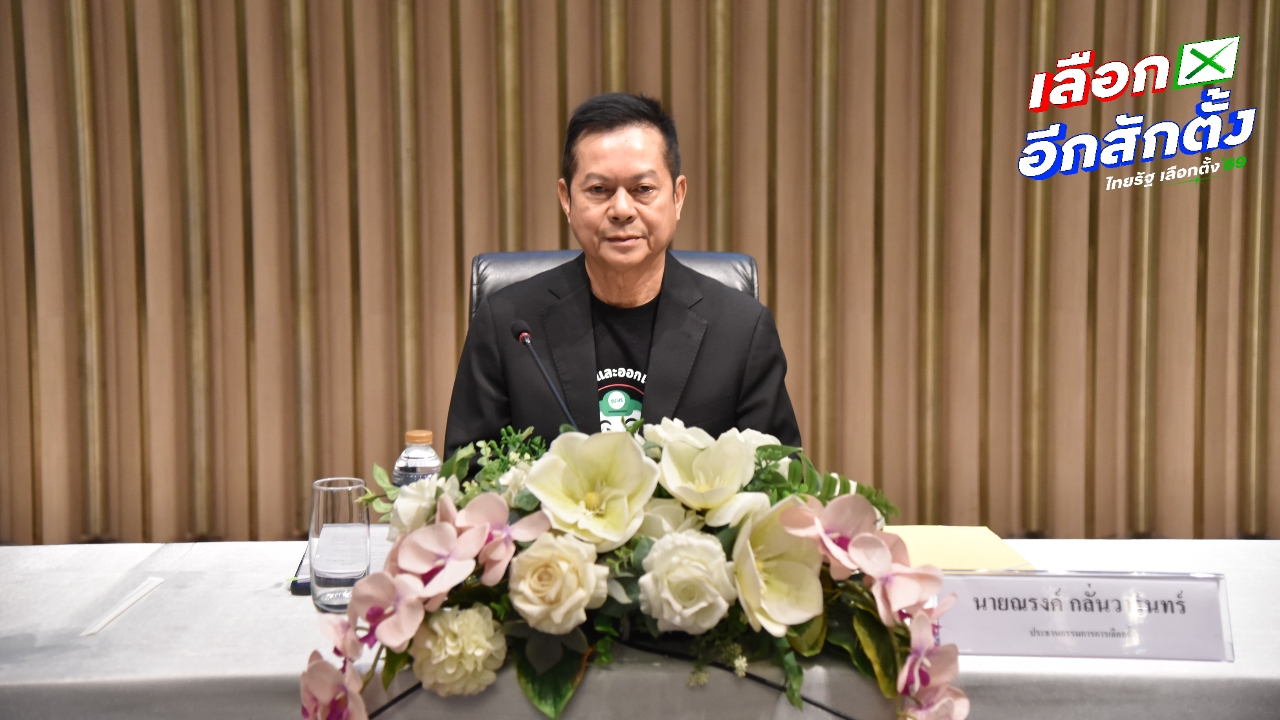
The Election Commission confirms it will not change the polling unit format, emphasizing careful consideration of citizens' rights and the law. It warns political parties and parliamentary candidates against illegal campaigning after numerous complaints have been received involving defamation and intimidation.
On 16 Jan at 9:30 a.m. at the Asawin Grand Hotel, Mr. Saweang Bunmee, Secretary-General of the Election Commission, addressed the case where a lawyer filed a lawsuit against the Commission at the Administrative Court regarding overlapping polling unit and referendum formats. He said the Commission had considered legal principles and citizens' intent when designing polling units. The first principle is to uphold voters' intent, whether choosing a candidate or voting yes/no on a referendum. The second is to facilitate voters, and the third is orderly management. These principles guided the design despite complaints filed with the court and the Commission. After reviewing all formats, the best approach supports fair elections and facilitates voters to avoid confusion between polling officials and voters, especially since two laws apply simultaneously for the parliamentary election and referendum at the same polling unit. He affirmed this design follows correct and appropriate principles.
Confident that citizens will not be confused.
Mr. Narong confirmed that the polling unit design was reviewed by the Commission and the office, with several options considered. Ultimately, the published format was chosen, placing units in the same area. Voters receive the parliamentary ballot first and then proceed to vote in the referendum, which should not cause confusion and serves to facilitate voters. Regarding early parliamentary voters coming only to vote in the referendum, a separate channel will be provided on 8 Feb to avoid passing through the parliamentary voting area. This is clear and prevents confusion. The Commission has also conducted election simulations and will inform the public to increase understanding. He believes there will be no difficulties or confusion.
Acknowledges highly competitive election.
Regarding election campaigning and the referendum, the Election Commission and its office must consider social context. The Commission Chairman noted increased competition, reflected by many parties fielding candidates. The Commission's policy is to prepare for orderly elections. He appealed to political parties to campaign based on policies or governance, encouraging voters to support their parties. Illegal campaigning, such as defamation and intimidation, is harmful and already subject to complaints being processed by the Commission. Additionally, the Commission has issued regulations; committees and subcommittees have met on party policies related to finance and budgeting, requiring submissions for Commission review of benefits and funding sources. Overall, no major issues have been reported, and the Commission hopes campaigning continues in this manner.
Appointed election inspectors to monitor.
Asked about measures against intense campaigning, Mr. Narong said he met yesterday with provincial election directors nationwide, instructing proactive work. The law empowers the Commission to monitor elections for fairness. This responsibility requires action. Initially, election inspectors have been appointed in each province, six to eight per province, tasked with monitoring reports on whether campaigning is violent or illegal.

Warns media to avoid rights violations.
Additionally, Mr. Saweang Bunmee, Secretary-General of the Election Commission, spoke about elections, referendum voting, and overseas ballot counting. Thais abroad exercising their rights may photograph vote counting and voting environments as a freedom, but must not disturb officials or take photos that make officials feel scrutinized. He also called for cooperation in referendum campaigns, noting the law protects freedom of expression, but expressions must not infringe on others' rights. Currently, some campaigning resembles pressuring individuals to declare yes or no votes. While public figures attract attention, forcing or compelling answers may violate individual freedoms.
Unofficial election results expected by no later than 11:00 p.m.
Mr. Saweang also addressed vote counting, casting, and result announcements amid concerns about transparency during voting. The Commission's four core principles are: 1. Transparency with verifiability; 2. Facilitation of voters; 3. Efficiency and accountability of budget spending; 4. Public participation. Though citizens may not see all actions, these principles guide every step. Reported vote counts must match announced results, ensuring transparency through verification at polling, district, provincial, and Commission levels, confirming votes align with voter intent. The Commission collaborates with media to report initial counts for parliamentary and referendum votes, expecting unofficial results by 11:00 p.m. It affirms transparent operations. At polling stations, voter participation details and counted results will be posted, with copies sent to provinces and entered into a computer system. Observers and political parties may photograph these documents and verify results from other polling units nationwide via the computer system.