

The Equitable Education Fund (EEF) reveals that families bear nearly 10,000 baht in hidden educational expenses annually, while only 4 percent of the budget is allocated to addressing inequality in education.
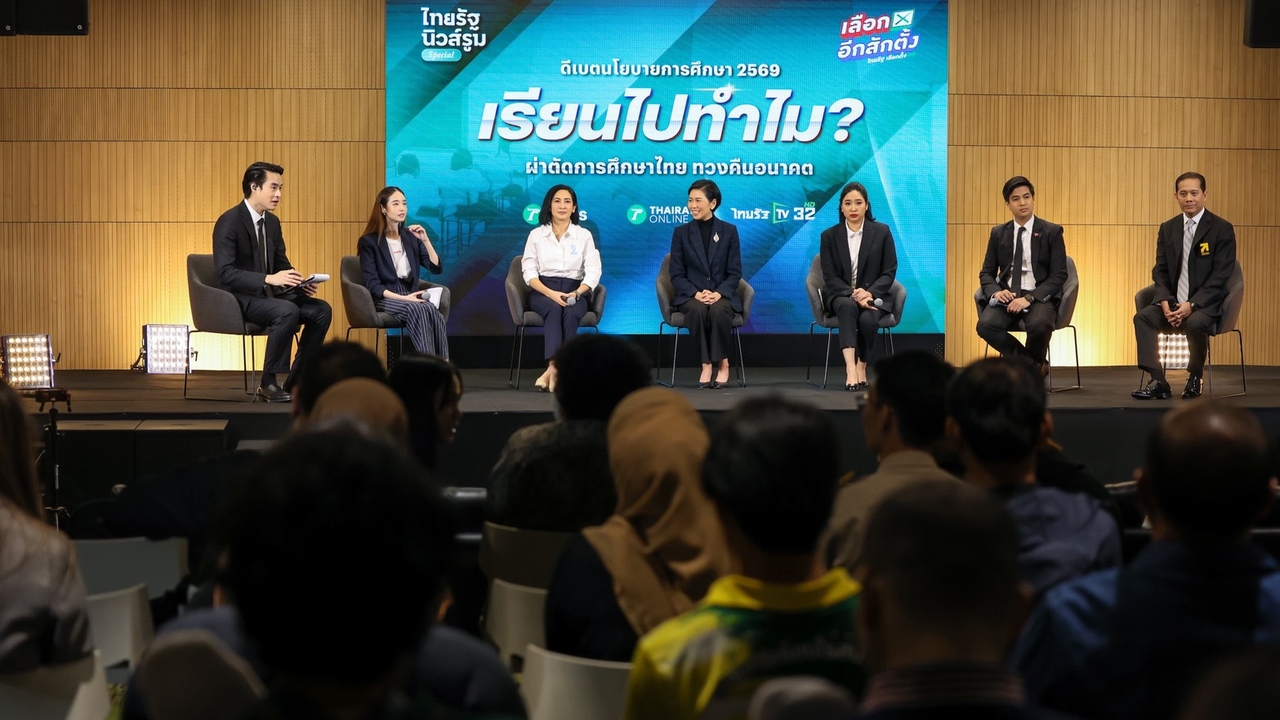
Thairath Newsroom Special organized a special program debating educational issues under the topic “Why Study? Reforming Thai Education, Reclaiming the Future.” Representatives from political parties contesting the election on 8 February 2026 participated to share their visions, including Theerapha Pairohakul from Pheu Thai, Kade Deaw Leowpiroj the Democrat Party’s prime ministerial candidate, Ratchada Thanadirek from Bhumjaithai, Janejira Rattanapian from Kla Tham Party, Parit Watcharasindhu from the Prachachon Party, and Worawich Kampu Na Ayutthaya from Thai Kao Mai Party.


Data from the Equitable Education Fund (EEF) indicates that Thailand is facing multiple overlapping crises, trapped in the middle-income trap amid low economic growth of only 2-3 percent, and intergenerational poverty. The country is confronting a social situation of fewer births, an aging population, and increasing poverty, which became particularly evident in 2025, with only 410,000 newborns compared to 950,000 elderly people.
This situation underscores that human capital is the sole way forward. However, EEF’s analysis reveals a troubling reality: entrenched inequality in human capital and lagging global competitiveness. Students in small and rural schools perform as if they are three academic years behind urban peers. Poor children are 2.5 times less likely to attend university than others. Furthermore, overall quality is declining, as reflected in Thailand’s lowest PISA scores in 20 years and the country’s creative thinking skills ranking near the bottom internationally.
Beyond quality and inequality issues, Thailand’s education system is rigid and fragile, showing a phenomenon where intelligence appears to decline with higher grade levels because teaching methods are inflexible and monotonous.
At the same time, Thailand faces natural disasters and border crises, causing school closures and interruptions in teaching, which further exacerbate learning difficulties and result in more severe learning loss among affected students compared to others.
Crucially, the 15-year free education policy is an illusion, as poor families still bear average hidden costs of 9,420 baht per year. Meanwhile, government budget allocations are uniformly distributed per student, resulting in only 4 percent of the budget being dedicated to reducing inequality. This is insufficient to effectively address disparities in resources at small schools and remote areas.

In the overall Thairath Newsroom Special debate, the audience voted for the political party representative whose vision resonated most, as follows:
| Rank | Political Party Representative | Vote Percentage |
| 1 | Theerapha Pairohakul (Pheu Thai Party) | 71.7 percent |
| 2 | Parit Watcharasindhu(Prachachon Party) | 17.3 percent |
| 3 | Kade Deaw Leowpiroj (Democrat Party) | 9.9 percent |
| 4 | Ratchada Thanadirek (Bhumjaithai Party) | 0.5 percent |
| 5 | Worawich Kampu Na Ayutthaya (Thai Kao Mai Party) | 0.4 percent |
| 6 | Janejira Rattanapian (Kla Tham Party) | 0.2 percent |
