

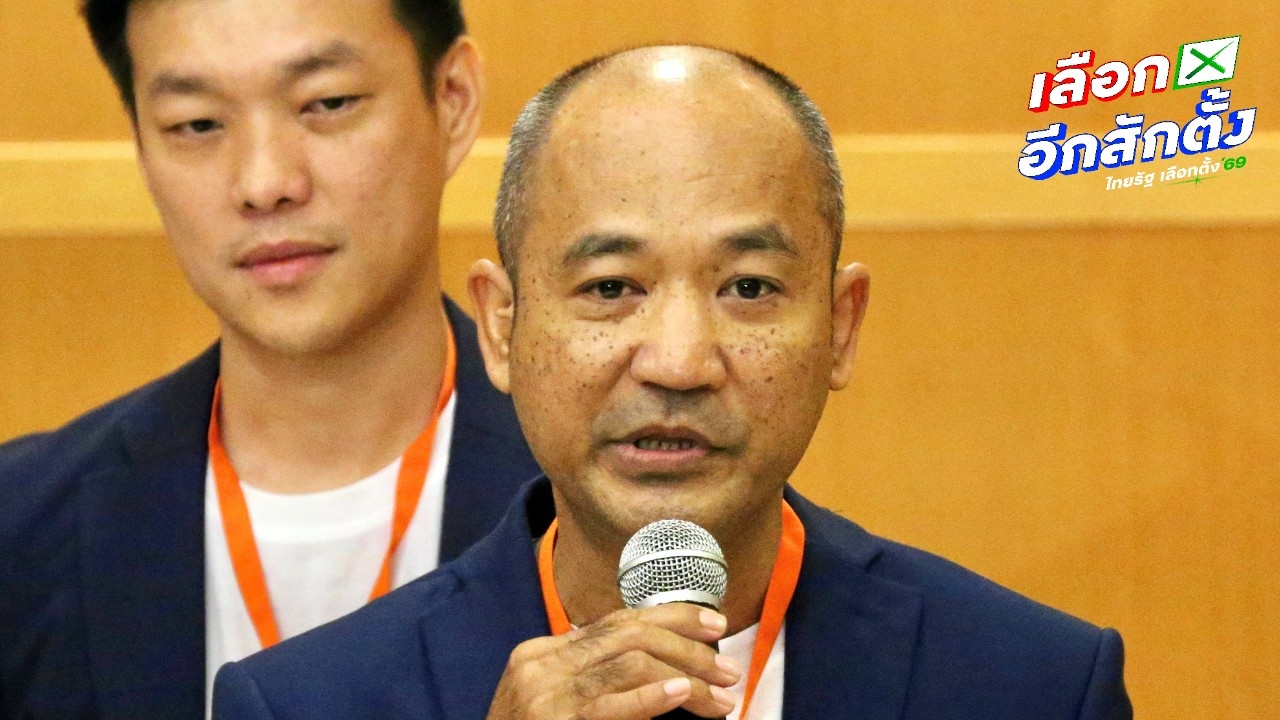
The secretary-general of the Prachachon Party denied concealing any wrongdoers within the party but insisted he truly did not know. He said those questioned confirmed they were not involved. He acknowledged the candidate selection process lacks authority for deep investigation, and based on the financial trail, the individual appears more like a player than a key operator.
On 16 Jan 2026 GMT+7, Mr. Sarayut Jailak, secretary-general of the Prachachon Party, commented on the case where Pol. Lt. Col. Theerawat Panyanthamkul, a party list MP candidate, posted a message following the arrest of Mr. Ratchapong Soisuwan, former Tak MP from the Move Forward Party and current Tak MP candidate from Prachachon, in an online gambling case. The post stated, “Two more warrants are expected to hit. If you know you've done wrong and harmed the party, take responsibility now without waiting for an arrest warrant.”
Mr. Sarayut said he had inquired and was told rumors came from various sources but without confirmation of origin or identity, so the party did not know whether the information was based on verified facts or just hearsay. The party lacks mechanisms to verify such matters when confronted with these issues.
When asked if he was concerned about allegations that the party knew the offenders but concealed them, Mr. Sarayut said the truth is they truly did not know. People passed on hearsay, which happened almost every time.
“If you ask whether I heard it too, I did, but I just did not repeat it. What I did was call those whose names were mentioned, and they 100 percent denied any involvement. This happens every time because we cannot access all the information. Everyone we summoned affirmed they were not involved, and we cannot do more than that,” Mr. Sarayut said.
Asked if the party's candidate selection process had problems, Mr. Sarayut said it is admittedly difficult for the party to access information because it is held by government agencies. They only have access to criminal records; the rest relies on environmental cues. If the candidate firmly denies allegations and no clear evidence exists, it is difficult for the party to verify independently. The party’s mechanisms are not as deep as many expect. The party is newly formed, with district representatives in fewer than 100 districts. Provincial working groups are just small groups passionate about building the party. They added listening to public voices hoping to gain deeper insights, but how far this can proceed is uncertain.
Mr. Sarayut acknowledged their process is brief due to many factors, including an election earlier than expected by several months, forcing decisions based on judgment and assessment without full facts. This creates weaknesses in the process. However, they aim to improve with broader scope and more time in future cycles. Yet, knowing extensive details, such as financial trails like in Mr. Ratchapong’s case, is impossible. They heard complaints and discussions but without evidence, their investigation consists of firm conversations with the individual. Every time, the person denies involvement, and their network confirms this. The party then finds it difficult to proceed. From publicly available data, the money transfers numbered just over 50 in two years, totaling about 200,000 baht. The explanation that the individual was a player rather than an organizer seems more convincing now. They do not know if additional evidence exists and certainly cannot know internally. Even the financial trails they saw were from news sources, not direct party access.
Of course, in the future, when such incidents occur, there will be many proposals, including full disclosure of accounts, which must be discussed after the election. The party itself needs to talk about the future of its politicians and the level of internal transparency required. But so far, they admit they have not reached that level yet.