

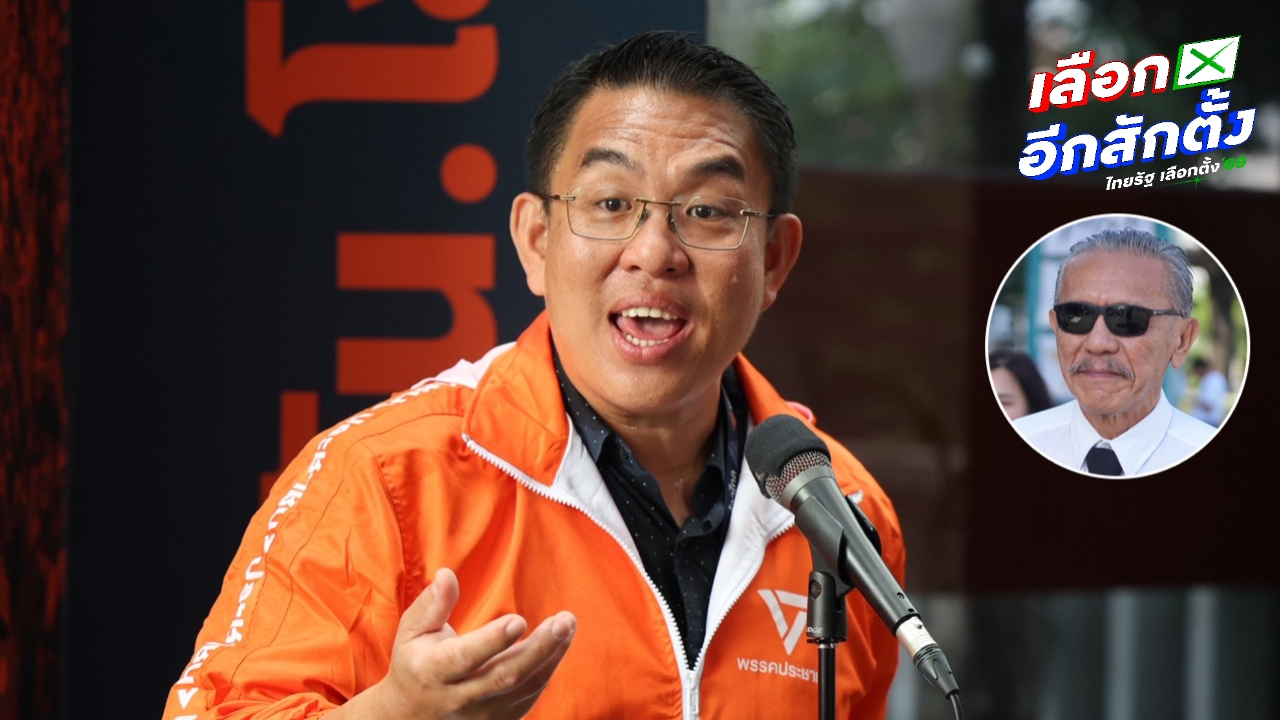
Wiroj denied Chuwit's allegations against the People's Party, rejecting claims of a secret deal with "Big Joke" to secure the deputy prime minister position. He plans to have the party's legal team file a complaint with the Election Commission to hold Chuwit accountable for defamation that damages the party's reputation. He cautioned against using imagination and stressed that while he still respects others, exposing wrongdoing requires solid evidence.
On 19 Jan 2026 GMT+7, Mr. Wiroj Lakkhanaadisorn, deputy leader of the People's Party and a party-list MP candidate, held a press conference responding to former prominent politician Mr. Chuwit Kamolvisit’s accusations. Chuwit claimed the People's Party made a secret deal with Pol. Gen. Surachate Hakparn, former Deputy Commissioner-General of Police, exchanging support for 10 parliamentary seats in the South and pushing for Surachate to become Deputy Prime Minister overseeing the National Police Agency.

Mr. Wiroj firmly denied these allegations, calling them untrue and beyond the bounds of fair political criticism. The party’s legal team is reviewing the matter and will take appropriate legal action against Mr. Chuwit. While he does not accuse Chuwit of taking any assignments, he believes Chuwit's behavior exceeds normal political bias or criticism and urged him to consider the consequences of such actions.
Mr. Wiroj added that he does not wish to respond with similar defamatory tactics as Mr. Chuwit, despite having some information to counterattack. Out of personal conscience and respect for Chuwit as an individual, he refrains from doing so. He raised concerns about the political and social influence of some high-ranking retired military officers close to Chuwit, specifically one known as “Big D.” This individual held significant positions during and after service. Wiroj pointed out that if images or behavior show close ties with certain people, the public is entitled to question the reasons and potential benefits involved. He also referenced criticism regarding a foreign national named Mr. Ben, alleged to be an advisor to Hun Sen and possibly linked to a scammer network.

Regarding the motive behind exposing Chuwit, Wiroj said it was to "teach a lesson" to the People's Party, which he sees as ambitious but possibly overreaching. Initially, he did not mind the criticism, seeing it as normal in politics, including differing views on voting for Mr. Anutin as prime minister. Even Mr. Chuwit's views were not different from party members, and although some members had personal opinions, all respected party decisions and understood political mechanisms. The party would accept honest criticism, even if it came with insults or bias from Chuwit.
Mr. Wiroj said that recently, Chuwit's accusations have involved mixing data and events with wild imagination, especially alleging a deal with Pol. Gen. Surachate to secure a deputy prime minister post—information he called fabricated and false. He questioned whether mixing some true information with falsehoods to persuade the public, and shifting the burden of proof onto the accused, is appropriate behavior. He challenged whether such conduct should be accepted and emphasized that accusations must be supported by clear evidence, inviting Chuwit to present proof.

Mr. Wiroj commented on Chuwit's planned press conference this afternoon (19 Jan 2026 GMT+7), expecting it to be another daily briefing similar to those previously held against the Bhumjaithai Party. He affirmed that the People's Party will not waste time responding daily or give it importance but will clarify matters to the public, allowing society to judge critically whether to value the information Chuwit presents. Without supporting evidence or facts, he believed the public would decide accordingly.
Regarding Chuwit's claim of hearing about the secret deal directly from Pol. Gen. Surachate, Mr. Wiroj demanded clear evidence. He reiterated the party’s refusal to respond in kind with similar tactics, although capable of doing so. While respecting Chuwit, the party must proceed legally as the accusations exceed acceptable limits. Wiroj likened the situation to taking a knife from Chuwit's hand. "After I took the knife from Chuwit's hand, I will not use that knife to stab him again. I will keep it safely and not return the knife to stab him," he said.

Mr. Wiroj explained the party’s information-gathering process, stating the party does not deny receiving data from various sources, including civil servants and individuals wanting change in government agencies.
When asked whether the party obtained whistleblower information about police corruption from Pol. Gen. Surachate, Wiroj said that was just one of many sources. Some information was anonymously submitted. The party compares, verifies, and cross-checks such data through parliamentary mechanisms. If data conflicts or appears defamatory and baseless, the party will not use it.
. "Why doesn’t Chuwit claim the People's Party plans to give the deputy prime minister position to Big D instead of Pol. Gen. Surachate? Because Big D despises traitors the most. Therefore, those involved in money laundering are considered traitors," Wiroj said.
Mr. Wiroj said many civil servants trust the People's Party because they believe it will not exploit information for personal gain or extortion like old-style politicians. When the party works transparently, well-intentioned civil servants are willing to provide information.

When asked about Chuwit revealing names of People's Party MPs linked to gray-area funding, Wiroj said the party is unfazed by the so-called "daily psychological warfare." The party has clear standards for handling such issues. Regardless of how many cases arise, the party respects the justice system. If members are implicated, they will be asked to resign to end their candidacy, showing appropriate responsibility to society and the public. This approach will be consistent no matter the number of cases, and he challenged Chuwit to present evidence. Wiroj compared this to other parties allowing candidates under investigation or convicted abroad to run for office.
Regarding legal action against Chuwit, Mr. Wiroj stated the party will pursue offenses under election law for defamation and dissemination of false information, which is currently under legal review.
When asked about a People's Party MP candidate from Trat Province criticized for resembling a scammer, and why the party did not act earlier while the candidate was still in parliament, especially since Mr. Rangsiman Rome had already worked to combat scammers in Trat, Wiroj responded.
Mr. Wiroj said the party does not blame individuals because blaming them would cause internal instability and struggles over responsibility, possibly leading to mass resignations. Instead, the party blames systemic issues, as Thai society tends to ask who is responsible when problems arise. The party asks why the problem occurred. It has set up an investigation committee, accepts complaints, and gathers more evidence. However, as a non-governmental organization, the party can only check criminal records and cannot trace financial transactions. In some cases, complainants provide verbal but unsubstantiated claims, while those accused offer reasonable explanations.
Regarding Mr. Jatuporn Buruspat, leader of the New Opportunity Party, who said if such a case occurred in his party, the leader would resign, Mr. Wiroj retorted that Jatuporn should review his own career history, especially his transparency in procurement when he was a civil servant.
Asked if Mr. Natthapong will sue Chuwit for damages, as Mr. Saksayam Chidchob and Mr. Srettha Thavisin have done after similar exposures, Mr. Wiroj confirmed they will only pursue election law cases. The party does not want Chuwit to stop criticizing but asks that criticism be based on facts, not imagination or false information, especially during elections, as this may influence voters. He urged the public to critically assess whether Chuwit's actions serve any particular individual or party and how well the allegations are supported. He noted that truthful information has value, while falsehoods lose credibility in society’s eyes.