

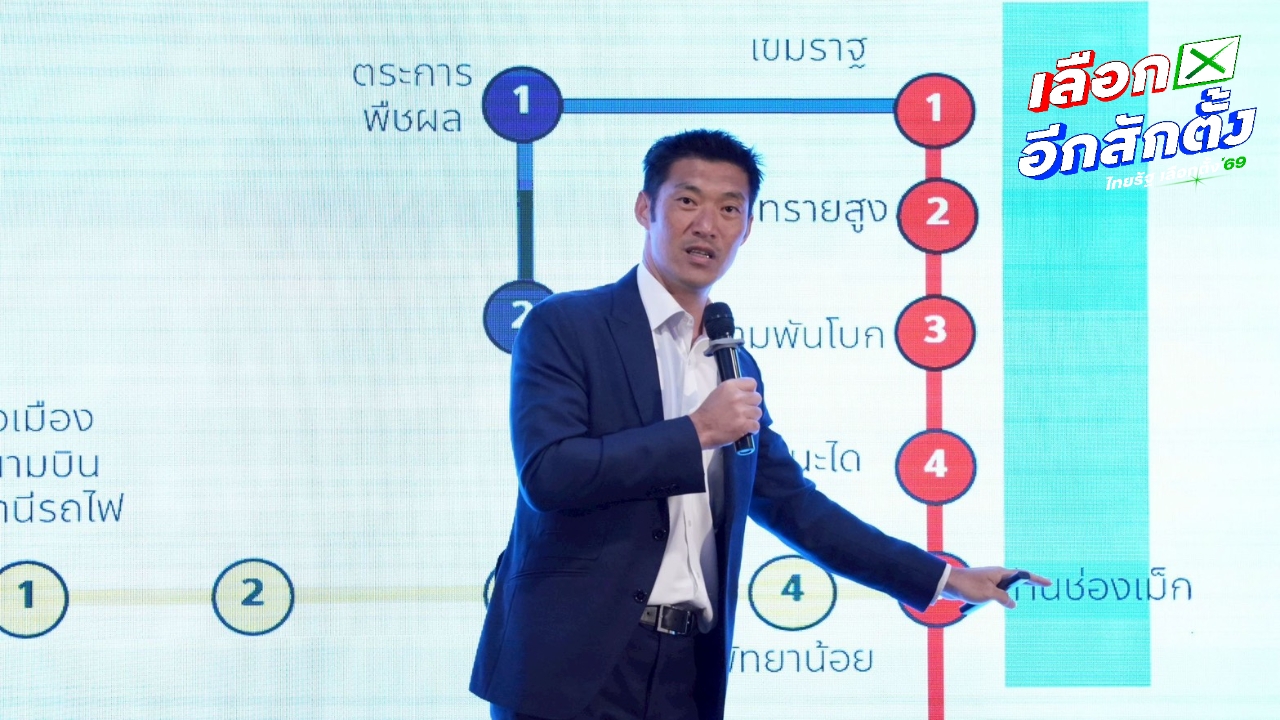
Thanathorn warns that Thailand's economy is stuck in a prolonged "Tom Yum Goong" slump and calls for accelerating 620 billion baht mega projects to build a Thai high-tech industry.
On 19 Jan 2026 GMT+7, the People's Party held a major event to unveil its industrial strategy at the Mandarin Hotel. Thanathorn Juangroongruangkit, the party's campaign assistant, delivered a keynote speech titled "Orange Megaprojects," emphasizing that Thailand must stop relying solely on the service sector and address the deep economic crisis he calls the "Tom Yum Goong" crisis.
Thanathorn stated that Thailand's current economy is more concerning than in 1997 due to structural recession and declining competitiveness. He revealed alarming data showing Thailand's capacity utilization rate in November 2025 was the lowest in five years, at only 56%. He explained that in industry, if capacity utilization is below 60-75%, new machinery investment will not occur, and that merely stimulating consumption cannot solve this problem.
The People's Party proposes the government shift from reckless spending to targeted investments that build Thai industries and technologies through seven main infrastructure projects: Smart Grid network at 192 billion baht; world-class waste management at 183 billion baht; potable water system at 75 billion baht; wastewater treatment at 60 billion baht; schools and hospitals at 80 billion baht; and public transport (electric buses) at 37 billion baht.
Thanathorn added that a key highlight is transforming the electricity system from a "single buyer" model to a "free energy market" where citizens can choose electricity packages like changing phone SIM cards. He also emphasized using Smart Grid technology to support selling electricity back from rooftop solar panels or electric vehicle batteries (V2G) into the grid, which would generate huge demand for Thailand's electronics and semiconductor industries.
Thanathorn reiterated his stance against propping up crop prices, instead proposing "productivity coupons" for farmers to hire services like rice drying or straw baling. This would turn subsidies into demand to purchase Thai-made agricultural machinery, benefiting both farmers and manufacturers. He stressed that Thailand cannot become a high-income country without its own technology. Noting that Indonesia and India already build their own trains, he urged Thais not to lose hope and to start building industries today.