

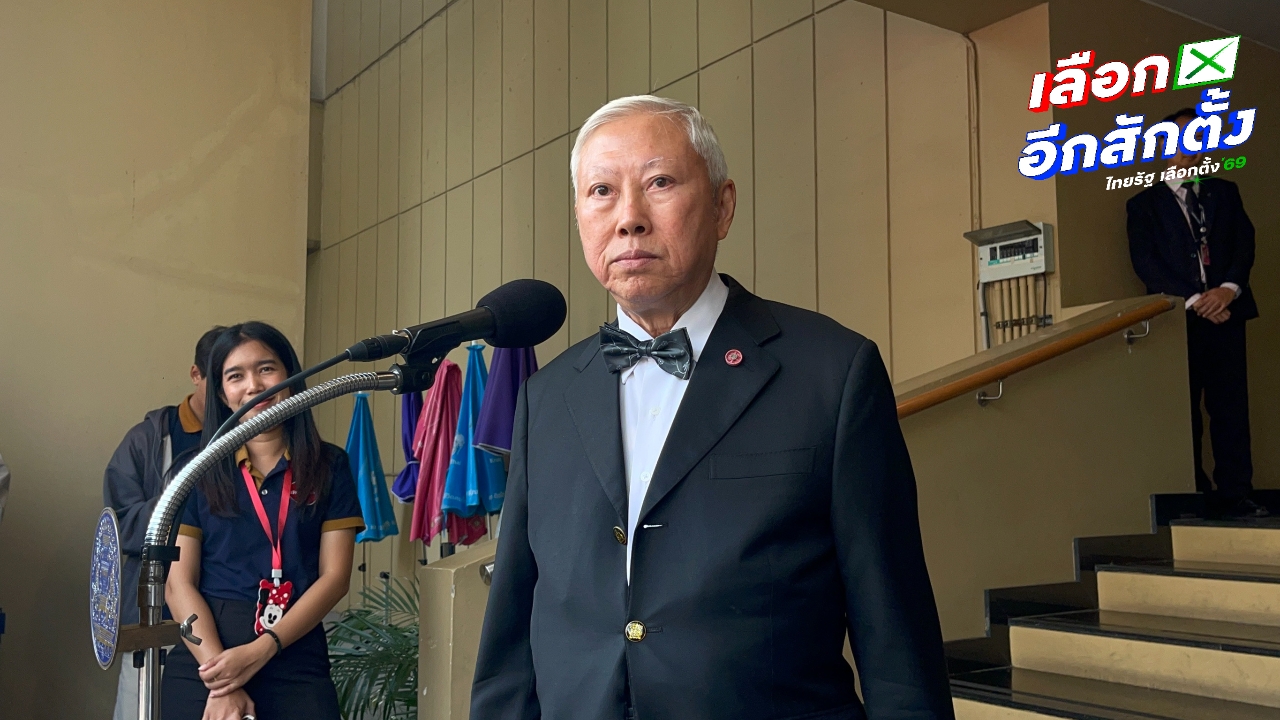
Bawornsak urges parties not to lock amendments to Chapters 1 and 2, asking them to fully disclose which parts they plan to amend. He asserts that royal powers exist in multiple chapters of the constitution, more than is commonly discussed. He advises those questioning the referendum question to refer back to the Constitutional Court’s rulings.
At 10:15 a.m. on 20 Jan 2026 GMT+7 at the Government House, Deputy Prime Minister Bawornsak Uwanno addressed concerns that the referendum question submitted by the government to the Election Commission lacks guarantees that constitutional amendments will not affect Chapters 1 and 2. He urged critics to review the Constitutional Court’s rulings, noting that the government's question aligns with those decisions. He said simply locking Chapters 1 and 2 is insufficient because matters concerning the democratic regime under a constitutional monarchy span several parts of the constitution. For example, the chapter on the Cabinet is entirely under royal authority as it relates to state administration, including royal powers to issue royal decrees, approve treaties, and dissolve parliament. The prime minister cannot dissolve parliament unilaterally; it involves royal authority. He also pointed to provisions prohibiting amendments that alter the democratic regime under the constitutional monarchy, emphasizing that constitutions approved by referendum require the monarch's royal assent to be valid, a veto power established since the 1949 constitution continuing to the present.
Therefore, if anyone proposes that once royal powers are exercised, parliament can override them, it would constitute a change to the democratic regime under the constitutional monarchy, contravening Thailand’s traditional governance. The monarch’s constitutional authority is shared with the people. Hence, anyone intending to amend the constitution should publicly declare exactly which parts they intend to change.
Asked whether this means political parties opposing locking amendments to Chapters 1 and 2 should explain which parts they want to amend, Bawornsak said yes, urging them to fully disclose all intended changes, not just those relating to Chapters 1 and 2.