

Eight health organizations have joined forces to submit a proposal titled "Quality Longevity for Thai People," urging the new government to invest in data systems and prepare for an aging society.
On 16 Jan 2026 GMT+7, a unified health team from eight national health organizations declared their intent to present proposals to the incoming government and political parties at the "Policy Watch Connect 2026" event. Their focus is on building a sustainable health system under the concept that "Good health is not a budget burden but an investment," while urging prompt solutions to the crises of low birth rates and an aging population.
Dr. Supakit Sirilak, Director of the Health Systems Research Institute (HSRI) and representative of the eight organizations, stated that the government must view improving public health as a worthwhile investment, not a budget burden. He proposed using the HALE (Healthy Adjusted Life Expectancy) indicator as the primary goal, investing in in-depth data systems, supporting the Thai National Health Examination Survey (NHES), and studying the burden of disease (BOD) to base policy planning on empirical evidence. Additionally, fiscal sustainability should be ensured by reducing spending on low-value care and adopting proven cost-effective technologies. Furthermore, medicine and vaccine security requires developing an ecosystem enabling Thailand to produce its own medicines and vaccines for self-reliance during crises.
Dr. Supakit also emphasized the government must prepare for two crises: an aging society and declining birth rates. The meeting highlighted these urgent threats. For the aging society, developing quality and accessible long-term care and palliative care systems is essential. Regarding low birth rates, the child development system must be improved to ensure high-quality growth that compensates quantitatively, while preventing chronic diseases that could cause dialysis costs to increase four to fivefold over the next decade. The state must support primary healthcare as the frontline and apply behavioral economics to motivate people to care for their health. Also, the welfare of healthcare workers must be ensured with fair income and balanced workloads to guarantee safety for both medical staff and patients.
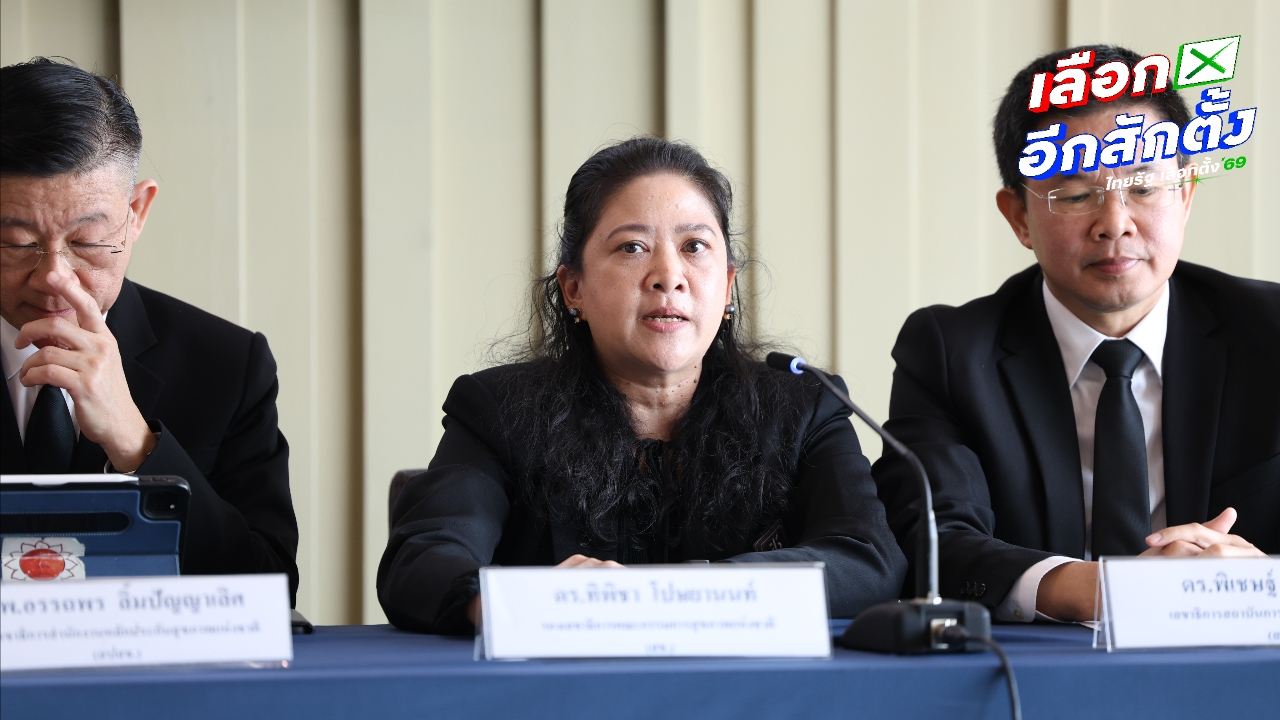
Dr. Tipicha Posayanont, Deputy Secretary-General of the National Health Commission Office (NHCO), confirmed that after the government is formed, the eight health organizations are ready to work continuously with the administration. They will use tools under the National Health Act, such as the Health Assembly and Health Charter, to transform proposals into practical action plans aimed at achieving quality and equitable longevity for Thai people.
The eight health organizations presenting proposals to the new government include the Ministry of Public Health (MOPH), Health Systems Research Institute (HSRI), National Health Commission Office (NHCO), Thai Health Promotion Foundation (ThaiHealth), National Health Security Office (NHSO), Emergency Medical Institute of Thailand (EMIT), Healthcare Accreditation Institute (HAI), and National Vaccine Institute (NVI).