

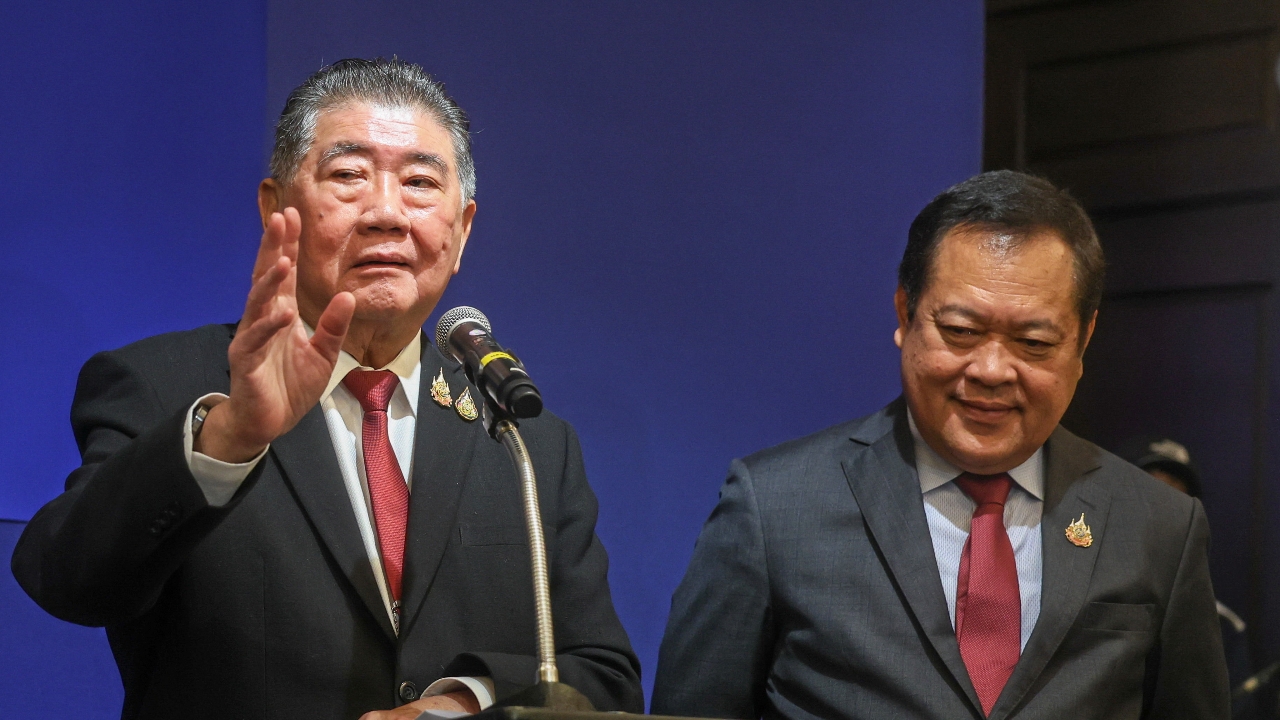
The Constitutional Court ruled on the case of Phumtham Wetchachai and Tawee Sodsong, who were petitioned by senators alleging they used the Department of Special Investigation as a tool to interfere in the rigged Senate election investigation. The court found no indications of disqualification or serious ethical violations.
On 21 Jan 2026 GMT+7, the Constitutional Court announced an oral ruling in the case submitted by the President of the Senate concerning a petition by senators requesting the court to decide under the constitution, Article 170 paragraph three, combined with Article 42, whether the ministerial status of Phumtham Wetchachai, Deputy Prime Minister and Minister of Defence (at that time), and Police Colonel Tawee Sodsong, Minister of Justice (at that time), had terminated individually. The petition alleged that both used the Department of Special Investigation to interfere in the process of verifying the Senate election by the Election Commission, amounting to harassment, pressure, intimidation, and domination over senators, the legislative branch, thereby demonstrating a lack of integrity and serious ethical misconduct under Constitution Articles 160(4) and (5), which would cause their ministerial roles to end under Article 170 paragraph one (4), combined with Articles 160(4) and (5).
Today, Mongkol Surasajja, President of the Senate, assigned Police Major General Chatwatt Saengphet, senator, to attend, while Phumtham and Police Colonel Tawee sent lawyers to represent them in hearing the ruling.
Most recently, at 15:00 GMT+7, the Constitutional Court convened to read the ruling, summarizing that no evidence showed the respondents, Phumtham and Police Colonel Tawee, had acted without integrity as alleged, thus no disqualification under Article 160(4) of the Constitution, nor did they seriously violate ethical standards as specified. They did not breach or fail to comply with ethical standards as set forth in the relevant regulations. According to the ethical standards for Constitutional Court judges and officials in independent agencies, including the Auditor General and heads of administrative units of the Constitutional Court and independent agencies, B.E. 2561 (2018), Articles 27, 5, 6, 7, 8, 11, 12, 13, 14, 16, 17, 21, 25, and 26, there was no prohibited conduct under Constitution Article 160(5) that would cause the ministerial status of the respondents to terminate individually under Article 170 paragraph one (4) and (5).
Based on these reasons, the court ruled that the ministerial status of the respondents did not terminate individually under Article 170 paragraph one (4), combined with Articles 160(4) and (5). However, their ministerial roles had already ended earlier according to the Constitutional Court ruling No. 17/2568 and Constitution Article 167 paragraph one (1), combined with Article 170.
The Constitutional Court reviewed multiple points raised by the respondents and dismissed all issues, noting that neither respondent threatened nor abused authority to interfere with the investigation of the rigged Senate election case at the Election Commission or the Department of Special Investigation.Reporters noted that the Constitutional Court's reading of the ruling todaytook about 1 hour and 30 minutes.