

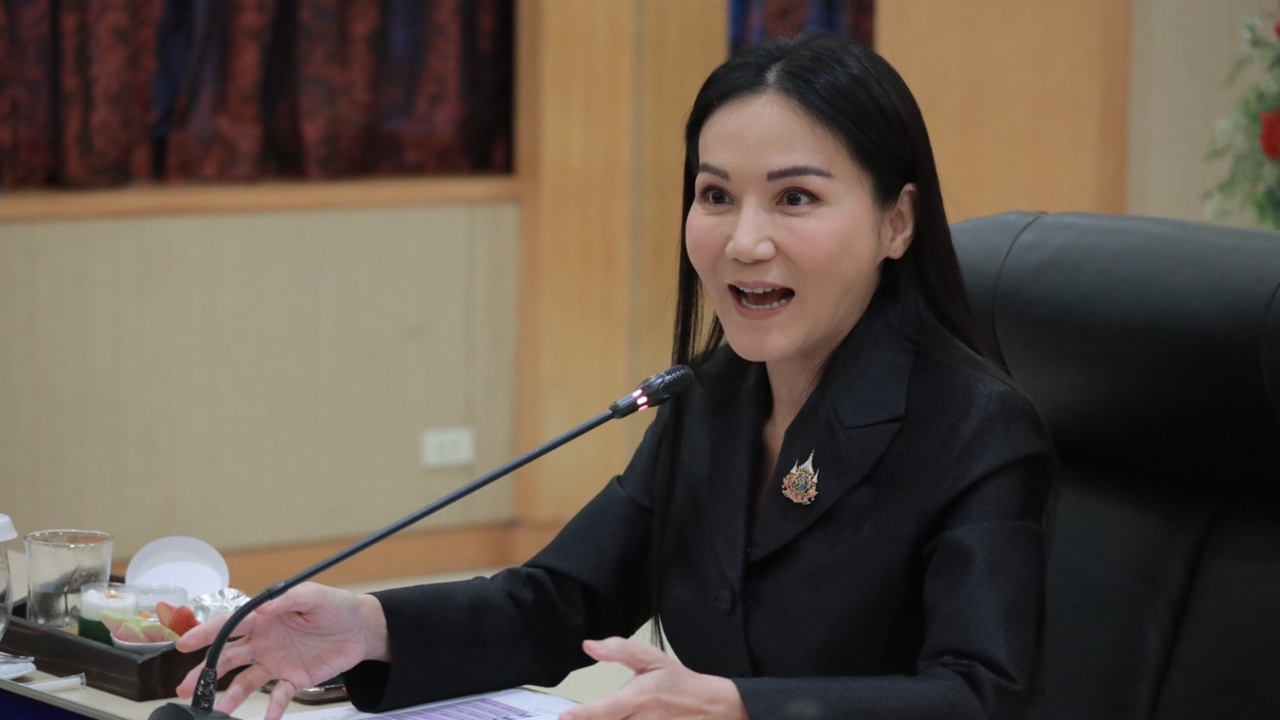
Education Minister Narumon urges the new vocational education board to accelerate the development of vocational teachers to keep pace with global changes, alongside improving their welfare. She highlights the need to update curricula to meet industry and technology demands, emphasizing the importance of field visits to understand real contexts before setting policies.
On 22 Jan 2026 at 09:30 GMT+7, Professor Dr. Narumon Pinyosinwat, Minister of Education, delivered policy directives to advance vocational education at the first meeting of the Vocational Education Committee for 2026. The meeting took place in Meeting Room 5, 1st Floor, Office of the Vocational Education Commission (OVEC), and was broadcast online to vocational institutions nationwide.

Professor Dr. Narumon stated she took the opportunity to meet with the new vocational education committee, composed of 21 members with diverse knowledge, skills, experience, and expertise across various fields. The committee is chaired by Mr. Pichet Durongkaveroj and includes members from the private sector, local administrative organizations, professional bodies, as well as experts in industry, business or services, agriculture and fisheries, law, finance and investment, workforce development, public and private vocational education management, special education management, and education quality assessment. She expressed confidence that the committee members would drive vocational education to align with government development policies and the Ministry of Education's goal of producing quality manpower.


Professor Dr. Narumon further urged collective efforts to push forward key issues, particularly focusing on personnel who serve as the foundation for developing our children and youth for the workforce. Previously, the focus was solely on students; now, she requests support for teachers and staff to develop skills and competencies that keep pace with global changes, alongside improving welfare for better living conditions. This is central to vocational education, including skill development and advancement opportunities aligned with the Ministry of Education's policy, which has expanded professional advancement options to three pathways: research, innovation, and national or international awards recognized by the Teachers’ Civil Service and Educational Personnel Commission. She noted that vocational teachers have actively contributed innovations and inventions that are practically applied in teaching and industry, also training students to compete internationally, earning numerous awards that affirm the motto “Thai youth are second to none.”

Beyond upgrading vocational teachers and staff, curriculum modernization is crucial to meet industry demands and keep up with new technologies through Active Learning and hands-on practice. Students must also learn Thai history and strong citizenship values to graduate as well-rounded individuals equipped with both vocational and life skills applicable in the workforce. Additionally, special needs students enrolled in vocational education should be supported to develop skills aligned with their abilities, enabling them to earn a dignified living and live happily in society.
“Another important request to this committee, which comprises top experts with broad knowledge and experience across many dimensions, is to help propel vocational education to an international level. Teachers have had opportunities to visit and meet vocational students, witnessing their pride in choosing vocational education fields, evident in their bright eyes and hopeful outlook on their careers and futures. I therefore urge all members to conduct field visits to understand local contexts, labor demands, and capacities—fundamental factors that vary by area and have distinct identities. If possible, please observe firsthand before issuing any policies. This will ensure that vocational education not only produces skilled workers for the country but also meets community and social needs, helping preserve the unique identities of each locality.”