

The Election Commission (EC) has yet to determine whether 'Tao Mongkolkit's' policy violates the law, stating it will consider the law alongside the Thai social context. The EC emphasizes that political parties proposing campaign policies must clearly disclose their funding sources. The EC only raises observations but cannot cancel policies.
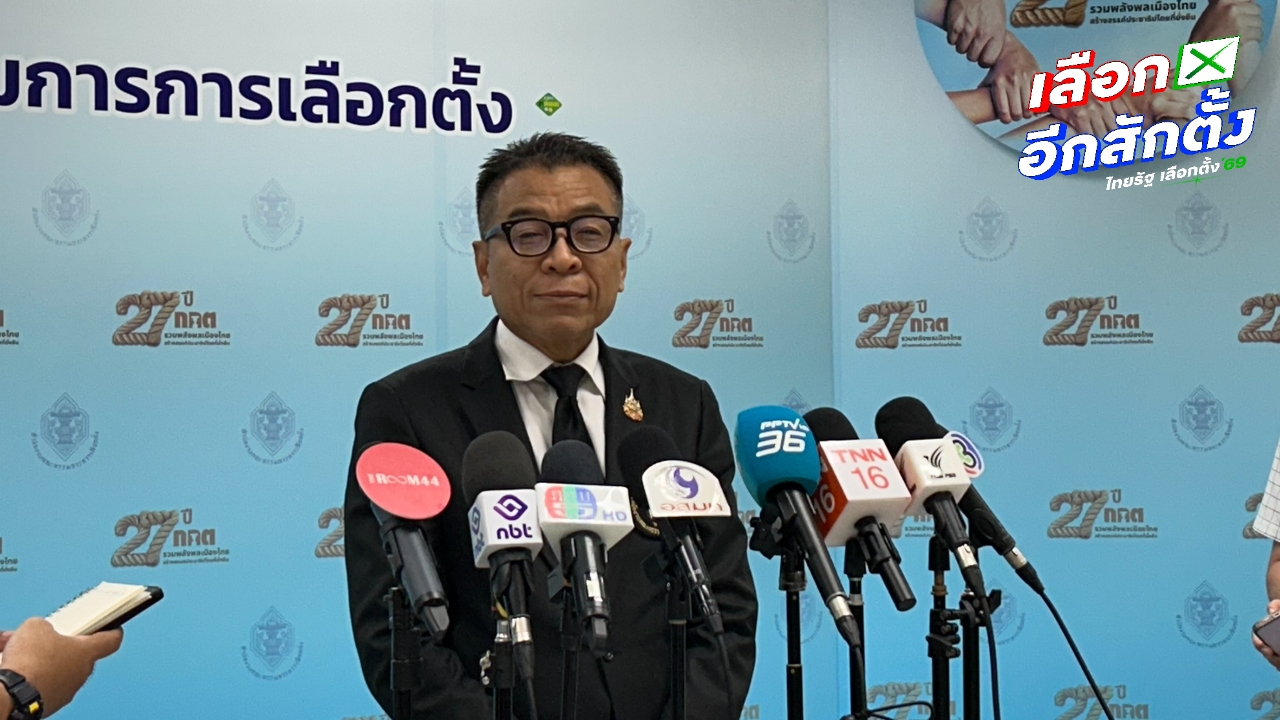
On 22 Jan 2026 at 15:30 GMT+7, at the Election Commission office, Mr. Sa-ngaeng Boonmee, EC Secretary-General, addressed the case where Mr. Ruangkrai Likitwattana, a Palang Pracharath Party MP candidate, filed a request for the EC to investigate the campaign policy of Mr. Mongkolkit Suksintharanon, MP candidate and prime minister candidate of the New Alternative Party, who proposed that women can have four husbands, referencing Islamic law. He said he believes the public is intelligent in choosing. The EC has considered this and raised some observations, but it is Mr. Ruangkrai’s right to file complaints, and the EC accepts all cases. Whether the policy violates the law remains to be examined.
“As for whether the policy violates public morality, it cannot yet be judged. The feasibility must be reviewed in accordance with the law alongside the characteristics of Thai society. Ultimately, it depends on whether the public finds the policy appealing enough to vote for. If the policy were illegal, it likely would not arise. We need to examine details because the policy proposer and the political party may be different individuals, so verification is needed on how the party presents the policy,” the Secretary-General explained.
Regarding whether Mr. Mongkolkit’s statement constitutes deception, Mr. Sa-ngaeng said it depends on whether the party officially proposes the policy. Whether a policy is impossible or deceptive must be assessed considering other factors.
He emphasized that political parties proposing campaign policies must clearly explain the funding sources.
Mr. Sa-ngaeng also spoke after the meeting of the committee reviewing political parties’ policies involving expenditure for election campaign advertising, saying that currently 51 parties have submitted information, with 17 parties still needing to provide additional details. Completion is expected by the end of this month. The EC will issue observations and publish them for public awareness, including the parties’ policies and the EC’s comments. He noted he advised the committee to try to write the observations in a way that is easy for the public to understand since the matter involves money and public debt, which can be complex. They aim to limit each party’s explanation to two pages.
When asked if there are currently any problems with policies that parties can or cannot implement, Mr. Sa-ngaeng said there are all kinds: some projects are feasible but may not be cost-effective or carry risks, while others are simply impossible.
He clarified that the EC only raises observations but cannot cancel policies.
When asked whether impossible policies will be canceled before publication, Mr. Sa-ngaeng said the EC has no authority to cancel; it can only provide observations.
Asked if there are particular concerns in the policy review, Mr. Sa-ngaeng said that in the previous meeting, all parties were instructed to specify or clarify their funding sources. The EC will judge the cost-effectiveness and risks themselves. They want parties to clearly categorize and explain whether the funds come from budgets or funds.
Asked whether the EC’s observations might influence voters’ decisions and make the EC appear as a participant in the election, Mr. Sa-ngaeng acknowledged the observations do have an effect but stressed the EC operates on clear principles. He noted that previously voters might choose parties based on liking and policies, but now they may also consider the EC’s observations, and parties might also use these observations to their advantage.
Asked about the impact if a policy violates fiscal discipline, Mr. Sa-ngaeng said it likely does not violate it now; the EC is merely raising observations about appropriateness, not making definitive judgments on compliance.