

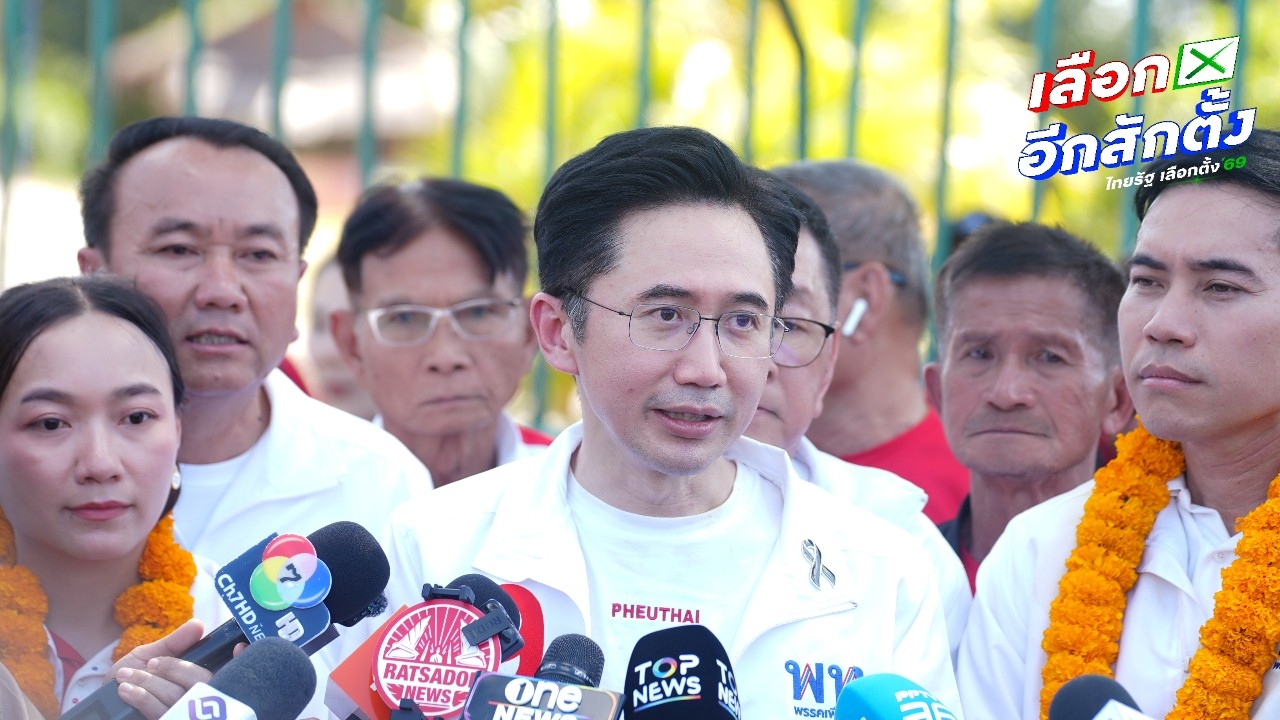
Yotsanan affirms that the "9 Million Baht Daily Millionaire Lottery" policy is not a pipe dream and is confident it can be realized. The policy aims to draw people into the tax system. He accepts criticisms from Abhisit and Korn but insists that after legal study, it is feasible. The proposal will be submitted to the Election Commission soon.
At 1:00 p.m. on 24 January 2026, Yotsanan Wongsawat, the Pheu Thai party's prime ministerial candidate, spoke about confidence in the "9 Million Baht Daily Millionaire" policy and whether it would resonate with voters to win votes for Pheu Thai. He said the goal is to consolidate all data related to transactions so that they can monitor pricing mechanisms. When everyone submits receipts into the system, it provides information ranging from farmers to the elderly. The focus is on bringing the informal economy into the formal system. This is crucial for promoting a digital government, enabling understanding of individuals’ hardships and market prices, allowing forecasts of GDP, revenues, and expenditures, and designing the most effective government aid. Regarding budget, knowing that integrating the informal economy into the system enables providing 9 million baht to eligible Thai citizens, which can be managed appropriately. The team has reviewed this and will submit the matter to the Election Commission (EC).

When asked what funds would be used if taxes cannot be collected from the system, Yotsanan said he is confident, having conducted assessments and studies over some time before releasing this policy. When pressed on whether this policy is just a vote-winning fantasy like the previous 10,000 baht digital money scheme, he said this requires extensive communication to establish a fully digital government system. Without transaction data, this cannot work. The effort is to collect data on incomes and expenses of farmers in distress, identify where prices are high or where commerce is thriving, so assistance can be targeted properly. This will bring budget circulation from the informal into the formal economy, enabling management. Calculations have shown this is achievable.

Regarding how many rounds the policy would be distributed, Yotsanan said it would continue annually, aligned with the tax base system. About criticisms from Abhisit Vejjajiva, leader of the Democrat Party and prime ministerial candidate, and Korn Chatikavanij, deputy leader of the Democrat Party, who said this wastes taxpayers’ money and does not target economic issues, Yotsanan said the focus is on data centralization. Implementing a fully digital government system nationwide is a current trend. With all receipts entering the system, small businesses can benefit from tax deductions (e-Receipt). Knowing everyone’s expenses and commerce patterns helps the country provide better assistance. He urged people to see this as data consolidation for a digital government.
Regarding views that the lottery policy does not address poverty structurally but changes only some people's lives, Yotsanan said they have policies in every form. Yesterday (23 Jan), he communicated about an economic wellness approach to become a high-income country. This is still modest, alongside water management issues and the digital government proposal. They are also addressing a Thailand without poverty, care for bedridden patients, and moving the country forward requires helping these groups.

When asked if he had reviewed the legal issues to ensure the policy would not be blocked like the digital wallet project, Yotsanan said it would not be blocked and that the legal approach has been thoroughly examined. When asked about ongoing criticisms of Pheu Thai’s policies, he said everyone has the right to criticize, which they accept and have studied thoroughly. They are now communicating with the public that this is not only about money but also generating national revenue. This is another mechanism and milestone. By integrating data from public health schemes like the 30 Baht AI system, they understand which direction the country should go. This will make policy delivery more precise. They view this as a comprehensive system that can be implemented.
Asked whether this conflicts with his academic image since it seems to encourage reliance on luck, Yotsanan said this is about consolidating data for a digital government. It’s the same issue. Thailand has 60 million people, and they can be all cared for to avoid inequality. This is a fundamental law. The policy is part of the mechanism to attract people into the tax system.
When asked if he is confident the policy will win votes from the public, Yotsanan said he is confident and ready to communicate. They always say this is about data and using science to support it. Many countries have more businesses in the tax system than Thailand, so this is part of their push. He urged focusing on the data foundation. AI will be useless if they do not know the Thai people. This policy involves Thai people submitting their own data which will be connected. They have studied this carefully.
When asked why they do not first fix tax issues at the source, Yotsanan said they are reforming the whole system. They have always communicated that this is a full overhaul of Thailand. They cannot address just one issue but must fix all parts. They want everyone to consider policies from the start. This is another policy they have announced. When asked if the 3 billion baht needed is realistic, Yotsanan did not answer but smiled, nodded, and gave a thumbs-up.