

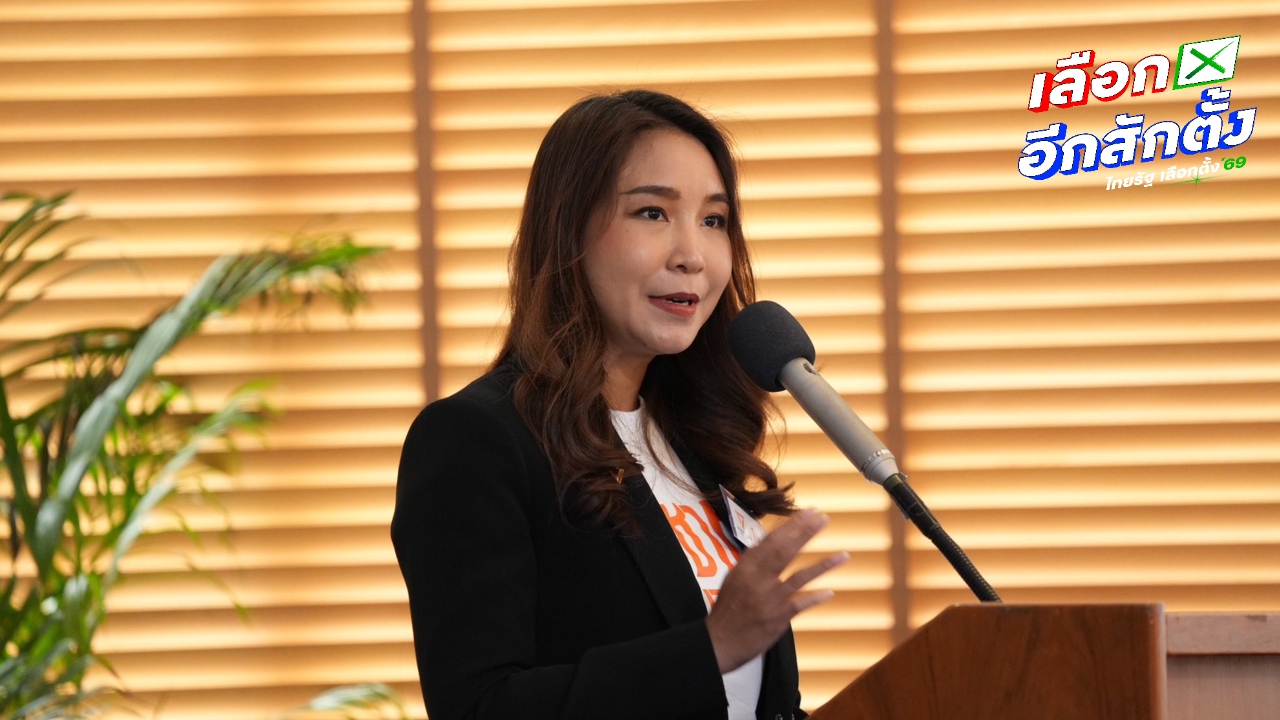
Sirikanya launched the People's Party's environmental policy highlighting three solutions: prevention at the source, holding polluters accountable, and empowering local authorities to manage environmental issues. She also unveiled a 100-day plan focused on structural reforms.
On 24 Jan 2026 GMT+7 at the Foreign Correspondents' Club, the People's Party introduced its environmental policy along with its environmental team, including constituency candidates: Ms. Nittaya Meesri for Samut Prakan's 5th district, Mr. Phattharapong Leelaphat for Chiang Mai's 8th district, Mr. Natthapong Prempoolsawat for Bangkok's 21st district; and party-list candidates Dr. Poonsak Janjampee, Mr. Wisut Tantinun, Dr. Saniwar Buaban, and Mr. Nitipon Piwmo.
Also included were Dr. Songtham Suksawang, Mr. Channarong Wongla, Ms. Benjamaporn Srilabutr, and Mr. Chaisak Suntharawipat.
Ms. Sirikanya Tansakul, Deputy Leader of the People's Party for policy, said at the launch that no one can deny that environmental issues and livelihoods are inseparable and increasingly urgent. Problems such as PM2.5 pollution have forced school closures; recurrent flooding has damaged agriculture and livelihoods, forcing people to start over; drought has directly impacted farmers’ crops and rice planting; and toxins in public water sources have rendered some water unusable for consumption or farming. Additionally, marine degradation threatens fishermen’s catch. These issues are not accidents but result from development structures viewing nature merely as an endlessly exploitable resource and environment as a cost to sacrifice. Historically, environmental problems have been addressed without cause by waiting for crises to pay compensation.
However, the root causes have never been effectively addressed, such as deteriorating air quality affecting quality of life.
Environment is as fundamental as infrastructure like the internet. The People's Party's three policies are: 1) prevention at the source, 2) polluters must take responsibility for their actions, and 3) citizens and localities must have authority to decide and manage pollution issues.
Currently, in global competition, success depends on who can produce cleaner, more stable air. The People's Party’s environmental policy looks beyond government terms to 20-30 years ahead, aiming to create cleaner air and more livable cities.
Dr. Poonsak Janjampee, party-list candidate, revealed the first 100-day environmental policy plan after taking office, focusing on structural solutions and immediate effective measures in five main areas. The EIA plan aims to reform and enhance community participation in Environmental Impact Assessment (EIA) processes, improve monitoring of environmental quality after project approval with stricter supervision, require all community waste incinerators to complete EIA, accelerate Strategic Environmental Assessment (SEA), and revise regulations on using environmental funds to effectively address pollution.
Regarding natural resources and biodiversity, the People's Party plans to promote the Wetlands Act and biodiversity laws, issue economic regulations supporting private forest plantations, apply land tax tools, designate appropriate water catchment areas, and inspect mangrove forests nationwide to resolve land title issues and restore state areas. This will be accompanied by supporting economic forestry and strictly monitoring timber exports from forest zones.
On disaster management, Dr. Poonsak said the plan includes assessing climate change impacts on 22 main river basins to improve prevention, emergency drills, and relief systems for disaster victims, making them more effective and timely.
On forest land issues, the plan will expedite completing and enforcing the ONEMAP project across all groups, temporarily halt related legal cases to ensure fair problem-solving, and accelerate basic public utility development for residents living in forest areas.
Regarding climate change, the People's Party intends to promote a Climate Change Act alongside establishing financial mechanisms to reduce greenhouse gas emissions at the source, oversee ecosystem and biodiversity conservation, and implement adaptation and disaster response mechanisms linked to global climate funds.