

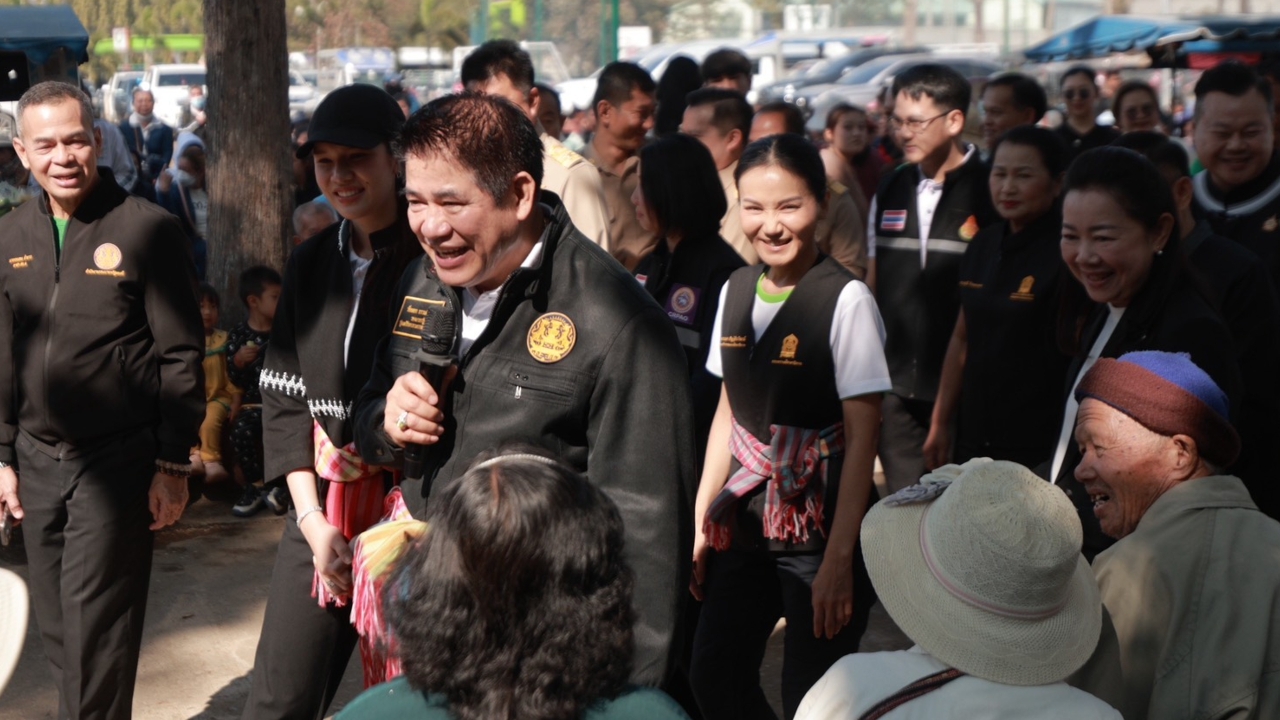
Deputy Prime Minister Thammanat and Minister Narumon visited Chiang Rai to listen to teachers and students. They are advancing plans to revise school principal selection criteria to solve leadership shortages, reform teacher PA into three pathways, restore over 2,000 administrative positions, promote One District One Quality School with a Zero Dropout goal, and highlight the idea of vanilla cultivation as a career path.
On 24 Jan 2026 GMT+7, Lieutenant Colonel Thammanat Prompao, Deputy Prime Minister overseeing the Ministry of Education, and Professor Dr. Narumon Pinyosinwat, Minister of Education, along with Mrs. Ketsadip Supawanich, Deputy Secretary-General of the Basic Education Commission, conducted an inspection in Chiang Rai Province. They monitored operations and listened to real problems in educational management from school administrators, teachers, and education personnel in the area. They emphasized that this visit was not a mere formality but aimed to hear frontline feedback so that central and regional administrators could work cohesively and address issues precisely.

Professor Dr. Narumon hosted a forum to hear classroom feedback at Chiangkhongwittayakom School. Student representatives openly shared needs directly impacting their quality of life, including raising standards for school cafeterias and nutrition to ensure complete nourishment, improving infrastructure and safe travel routes to assure confidence in nearby schools, and emphasizing mental health as a fundamental basis for learning readiness. Both ministers listened attentively and confirmed they would drive all suggestions into concrete actions so students could be happy physically and mentally and grow into vital national contributors.
Professor Dr. Narumon stated that during the visit to hear problems, many areas face a critical shortage of school leaders. For example, in Nakhon Sawan Province, over 20 principal positions were open, but no qualified candidates applied due to overly strict existing criteria. The Ministry of Education plans to discuss with the Teachers’ Civil Service and Educational Personnel Commission (ก.ค.ศ.) to revise principal selection criteria to align with real contexts, enabling schools to appoint leaders immediately and avoid leadership vacancies.
Regarding teacher professional advancement, the Minister of Education acknowledged teachers’ frustrations with the current PA assessment, which focuses heavily on research and whose evaluators may not understand the work context. The Teachers’ Civil Service and Educational Personnel Commission is urgently revising regulations to introduce "three pathways" allowing teachers to choose based on their strengths: 1) Academic track focusing on research; 2) Vocational/practical track emphasizing innovations, inventions, or software usable by industry; and 3) Achievement track focusing on nationally or internationally recognized awards endorsed by the commission. The award-related criteria are expected to be finalized by May.

The Minister added that to truly return teachers to classrooms, the commission has approved restoring over 2,000 support staff positions (such as administrative staff and janitors). These will be gradually allocated to schools in need so teachers are relieved from managing financial and supplies tasks. Additionally, efforts are underway to unlock career advancement for education supervisors, who act as teachers of teachers, making it easier for them to grow professionally. The Office of Basic Education Commission is studying ways to revise regulations so education supervisors no longer work behind the scenes without recognition.
Concerning the development of education quality in Chiang Rai, the Minister agreed with local proposals and reaffirmed commitment to continuously implement the “One District One Quality School” policy. This aims to alleviate urban traffic and reduce inequality by enabling children to attend good schools near home. Regarding budget requests for building repairs, such as damaged school fences, she advised school administrators to prioritize and manage budgets efficiently since the national budget is limited.
“Today, central and regional administrators must work in unison, not separately as in the past. The Teachers’ Civil Service and Educational Personnel Commission is beginning to understand and is ready to relax regulations to remove obstacles for teachers. Rest assured, the Ministry of Education under this administration is open to listening and solving every problem to ensure teachers’ happiness and pass on the best quality education to our children,” the Minister concluded.

After delivering policies, the two ministers and their delegation toured educational exhibition booths and community products displayed by local administrative organizations and schools, showcasing impressive integration of learning with local wisdom. They then visited the Mae Suai Subdistrict Public Library, an important lifelong learning community resource, and followed up on educational activities at the Border People’s Vocational Training Center, observing efforts to promote vocational skills among remote residents. Professor Dr. Narumon encouraged and praised staff dedication in creating strong educational opportunities in border areas.
Next, Professor Dr. Narumon joined the 2026 fiscal year project to promote and develop student vocational skills, organized by the Lum Nam Lao District Learning Promotion Centers at the Mae Suai Subdistrict Learning Center in Chiang Rai. This network includes several Learning Promotion Centers (สกร.) from areas such as Lum Nam Lao group (Mae Suai, Pa Daet, Phan, Mae Lao, Wiang Pa Pao districts) and the Mekong group (Mae Chan, Mae Fah Luang districts) along with the Chiang Rai Border People’s Vocational Training and Development Center.

Professor Dr. Narumon expressed gratitude to all Learning Promotion Centers for their crucial role in assisting out-of-school children and youth to return to learning, aiming for the “Zero Dropout” goal to eliminate school dropouts. She emphasized that current education must also focus on future career directions, not just further study without clear work prospects. She encouraged all students to succeed in their studies and not abandon education, assuring that the government and Ministry of Education will fully support everyone.
Professor Dr. Narumon revealed her idea to promote vanilla cultivation in suitable areas, as vanilla is in high demand in food, beverage, and processing industries. She has advised Ms. Ketsadip to coordinate with the Ministry of Agriculture and Cooperatives to support plant varieties and knowledge transfer. Training will be provided from planting to processing for families of local children. In the future, vanilla is expected to become an important economic crop for Chiang Rai Province, generating stable income for local communities.

