

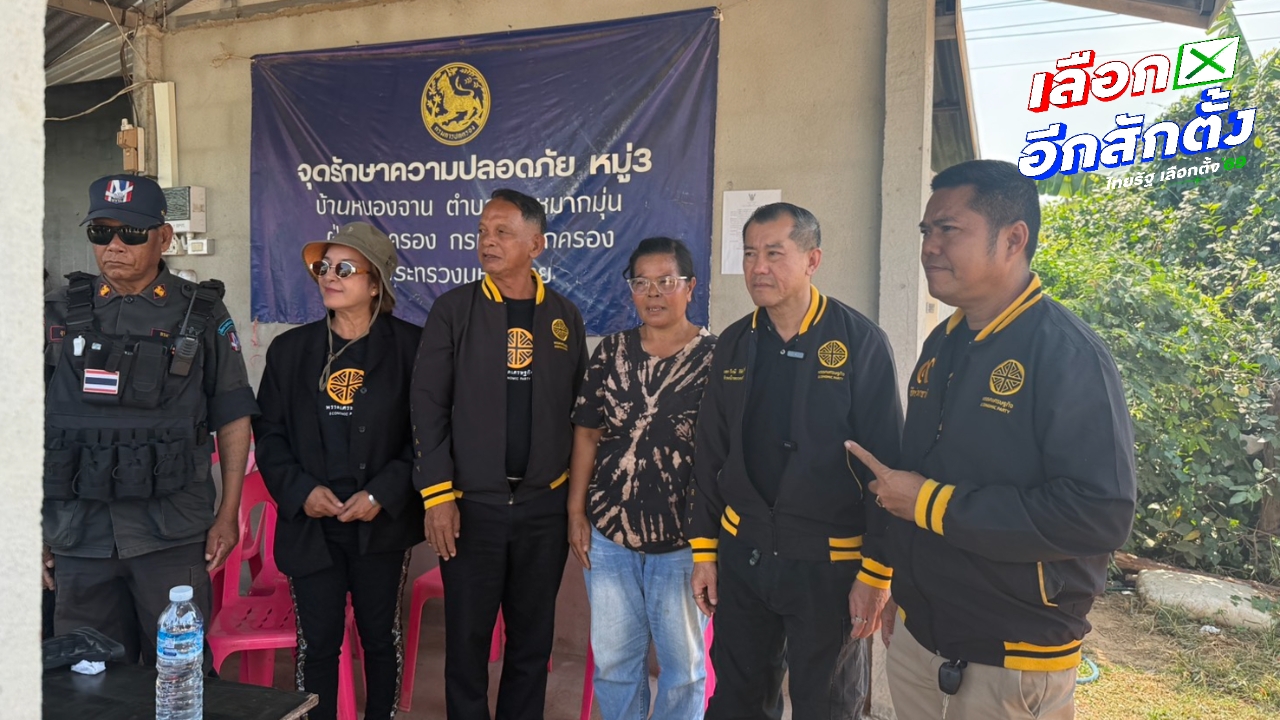
General Rangsi openly confronts the final stretch, exposing a widespread vote-buying scheme nationwide at 5,000 baht per head, with an estimated turnover exceeding 12 billion baht. He says the money comes from gray businesses and scammer groups, and denies claims about Panthap’s placement at No. 10 on the party list, stating it is a strategic division of labor.
On 30 Jan 2026 GMT+7, General Rangsi Kittiyanansap, prime ministerial candidate and leader of the Economic Party, revealed that in the final stage before the election, intense competition is ongoing through debates to inform the public. However, he expressed concern over reports of widespread electoral corruption, with vote buying reaching as high as 5,000 baht per person across all regions of Thailand—the North, Northeast, South, and Bangkok.
General Rangsi speculated that the vast sums used for vote buying might stem from gray businesses or scammer groups circulating over 200 billion baht in Thailand. The payment method involves installments: an advance of 2,000 baht is paid while holding onto the voter’s ID card, which must be returned before election day to receive the remaining 3,000 baht.
"If you calculate based on the goal of securing 250 parliamentary seats, the total money involved is estimated to exceed 12.5 billion baht. I urge the public to be alert: if you accept money from corrupt individuals, the country will face disaster. You may accept money but do not vote for them. Instead, choose parties with clear policies, because the people decide the country's future," said the Economic Party leader.

Clarifying the controversy around the 'No. 10 party list' position, affirming it is a division of work according to expertise.
Additionally, General Rangsi addressed comments by Panthap Puapongphan, dean of the College of Eastern Medicine at Rangsit University, who questioned via Facebook the internal power structure of the Economic Party. Panthap noted that party chairman Chris Potranan holds decision-making power over key issues and questioned why the party leader is listed only as No. 10 on the party list.
General Rangsi explained that this is a strategic decision made within the party to clarify responsibilities. The party’s five main policies are clearly divided: items 1, 2, and 5—related to mega projects and reducing public expenses—fall under the 'executive branch,' which he personally is skilled in and will directly oversee.
Items 3 and 4, concerning legal reforms, the death penalty for corruption cases, and justice system reform, are the responsibility of the 'legislative branch.' Therefore, candidates listed from No. 1 to 9, who specialize in law, will drive these policies in parliament.
"I practice politics as a new generation. It is not necessary for the party leader to monopolize the No. 1 spot or centralize power alone. We have seen that parties with a leader holding absolute power eventually split, with MPs resigning. Our Economic Party operates on trust, decentralization, and management, which is good and represents true democracy," said the Economic Party leader.
General Rangsi concluded by emphasizing that his entry into politics is not to seek a parliamentary or ministerial position but to resolve the country’s deadlock crises, especially economic and corruption crises. Therefore, he seeks a landslide vote to ensure party stability in pushing policies forward and awaits the public’s decision in the upcoming election to determine the political future.