

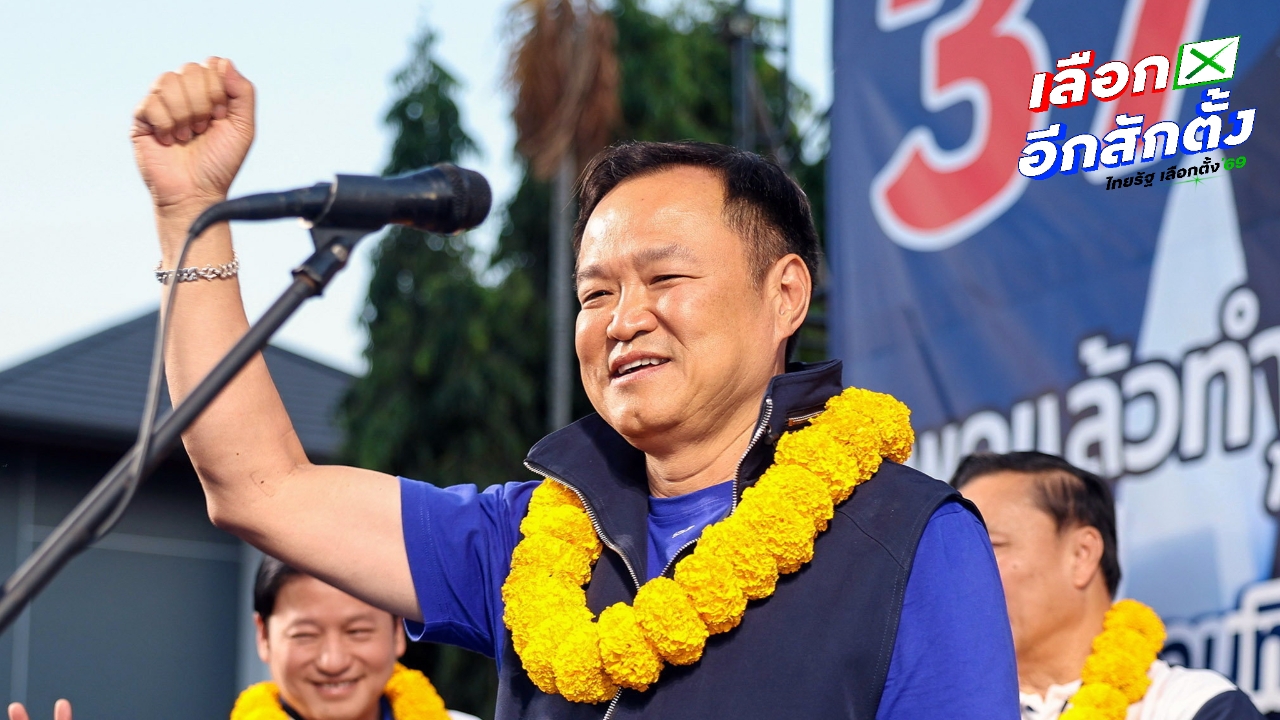
KPI Poll shows Anutin ranks second as the person believed to genuinely solve the country's problems, while the top spot remains unclaimed by any suitable individual. It also reveals that in the 2026 election, the public desires new changes, with the constitutional referendum trending over 53% approval.
On 30 January 2026, the King Prajadhipok's Institute released survey results. KPI Poll Regarding “Election 69... Who is Suitable as the New Prime Minister and the Direction of the Constitutional Referendum,” the survey was conducted from 16-19 January 2026 among 2,000 citizens aged 18 and above, nationwide across regions. The key findings are as follows:
1. Who is believed to truly solve the country's problems? (Second survey)
Notable increases among groups:
The initial thoughts when going to vote this time (surveyed by LINE TODAY) found that
The poll summary indicates the final stretch remains open for gaining confidence, with a shift from uncertainty to more decisive choices. The scores for those seen as capable of solving problems fluctuate clearly, reflecting that political parties can still turn the game through credibility and tangible communication. The LINE survey shows this election is mainly driven by hope for change.
2. Trend in voting on the referendum question
Overall, the referendum approval leads by more than half, but a high level of hesitation remains. Generational differences show younger people are more supportive and increasingly ready to move forward with change through the referendum, while older groups show a clear increase in disapproval. This likely reflects concerns about risks, uncertainty, and lack of detailed understanding. The key challenge is communication that clarifies, reduces worries, and avoids bias.
3. Top three constitutional issues needing the most amendment (Highest average scores out of 5 points)
People want to revise the rules and the rule-makers, especially the Senate and independent agencies. This reflects public concern about current transparency and oversight standards, as well as expectations to make political systems more accountable and reduce legitimacy doubts.
4. Who is helping campaign for the referendum?
Media reach the public more than main agencies. Political parties and the Election Commission are seen as having minimal roles in campaigning, highlighting communication gaps.

The sixth KPI Poll concludes that the leadership field remains open with fluctuating and dispersed support. Meanwhile, voter momentum focuses on desire for change. Regarding the constitutional referendum, the overall trend is approving, though many remain undecided, with distinct age group differences. The most prominent issues to amend are the Senate election system and independent agencies. Public awareness of the referendum mainly comes from media and private sectors, more than the Election Commission.
The key point is that when people vote wanting change, political parties must clearly explain what they will do, when, to what extent results will be seen, and who is responsible—not just slogans selling dreams. The Election Commission must reclaim its role as a central information hub with consistent standards, shifting from mere public relations to providing accessible data immediately usable by media (easy FAQs, infographics, short clips, fact-checking).
Regarding the referendum, the issue is not only about approval or disapproval, but high uncertainty remains. Communication must be tailored by age to explain clearly, focusing on real-life impacts and reducing worries without bias or pushing belief.