

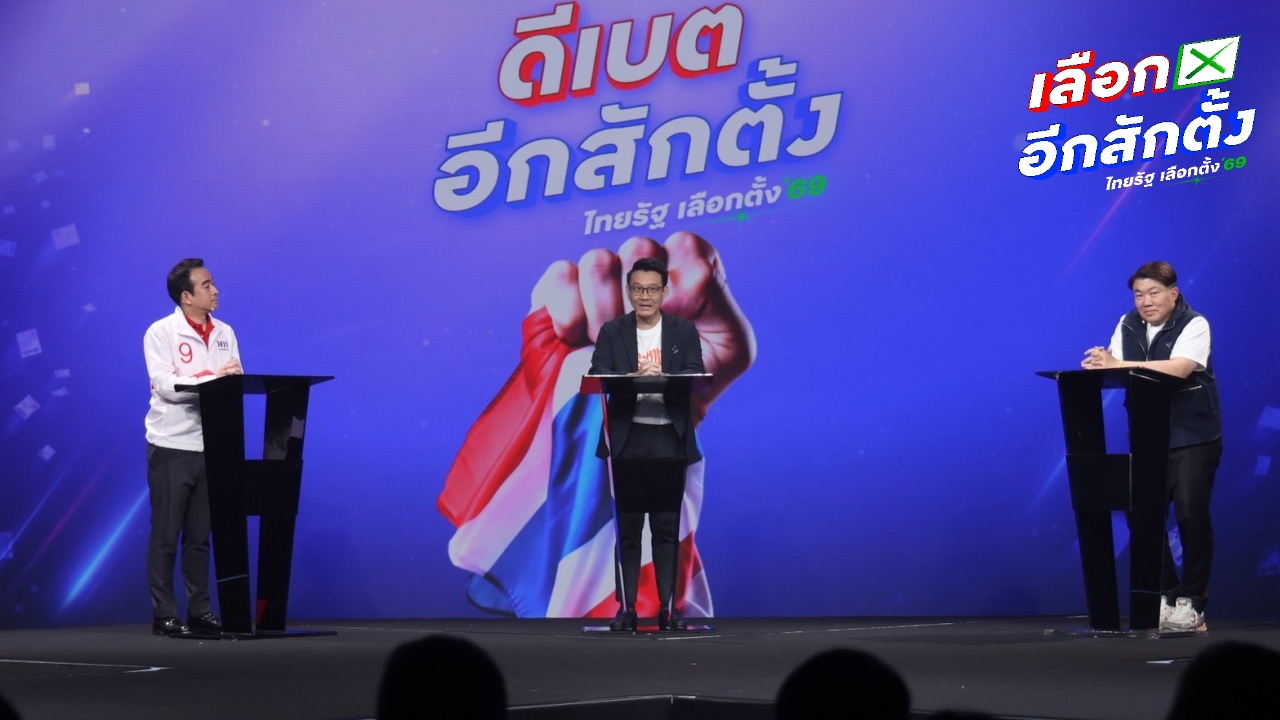
"Bhumjaithai-Pheu Thai" responded to the question from the "Prachachon Party" about how, if leading government formation, they would select who should occupy which ministerial seats and by what criteria.
On 30 Jan 2026 GMT+7, the final stretch before the 2026 election "One More Debate with Thairath Election 69" Hosted by Kai Pongsakem, the debate resumed for the final pre-election round with representatives from each party: Mr. Phaopoom Rojanasakul, Deputy Leader of Phuea Thai Party; Mr. Siripong Angsakulkiat, Deputy Leader of Bhumjaithai Party; and Dr. Weerayut Kanchuchat, Prachachon Party's prime minister candidate.
During the 'one asks two debate' segment, the second questioner, Dr. Weerayut, asked, “In this election, the Prachachon Party aims to push a new political agenda further. Besides presenting concrete policies with a policy book and a website for public review, we also present our management team. If the public trusts the Orange Party, we reveal in advance who will manage which area. This approach avoids guesswork and is what political parties should do. So I want to ask, if you become the government leader, how will you select who should hold which ministerial position? What principles will you use?”
Mr. Siripong replied that Bhumjaithai has already demonstrated this. When Anutin was prime minister, they openly stated that three ministries must be led by external specialists only: Mr. Ekniti, Ms. Supachai, and Mr. Sihasak took responsibility for three critical issues that were problematic and vital for national development.
Furthermore, they believe that regarding other ministries, many ask why their appointments are not yet announced. He thinks unveiling ministerial appointments isn’t solely about credentials but involves multiple factors. For example, some question why MPs become ministers and why politicians dominate, but when in opposition, they brought people from various professions into politics. Or to deny that once someone becomes a politician with an NGO background, they forget that experience. He believes that's not the case; ultimately, it depends on management capability.
For instance, Khun King did quite well as Industry Minister, possessing extensive detail knowledge. Even Mr. Permpoon Chidchob was once labeled a 'big house quota,' but over the past two years, he has proven effective in education.
Meanwhile, Mr. Phaopoom said that Phuea Thai has long administered the government and understands the process of selecting suitable ministers. The selection criteria are: 1. They must be honest, 2. knowledgeable, and 3. capable of pushing forward campaign policies and working as a team with others. These are fundamental qualifications for becoming a minister.
He added that having been an academic and involved in politics, he sees the value of academic knowledge. Equally important is maintaining ties with the public. Being part of a party and witnessing its work with citizens, as well as engaging directly with them, builds connection. Going to the people allows one to see their eyes and sufferings, understand their needs, and experience these structures. He believes this balance of knowledge, public connection, honesty, and policy-driving ability forms a well-rounded selection process.
Therefore, in answering this question, he believes the balance lies between expertise and the willingness to implement policies successfully and resolve problems for the people.