

“Pheu Thai” party unveils a 3-dimensional diplomatic stance, setting a strategy to encircle “Cambodia” to put an end to scammers, while “People’s Party” states a position aligned with its agenda, declaring diplomacy does not pick sides
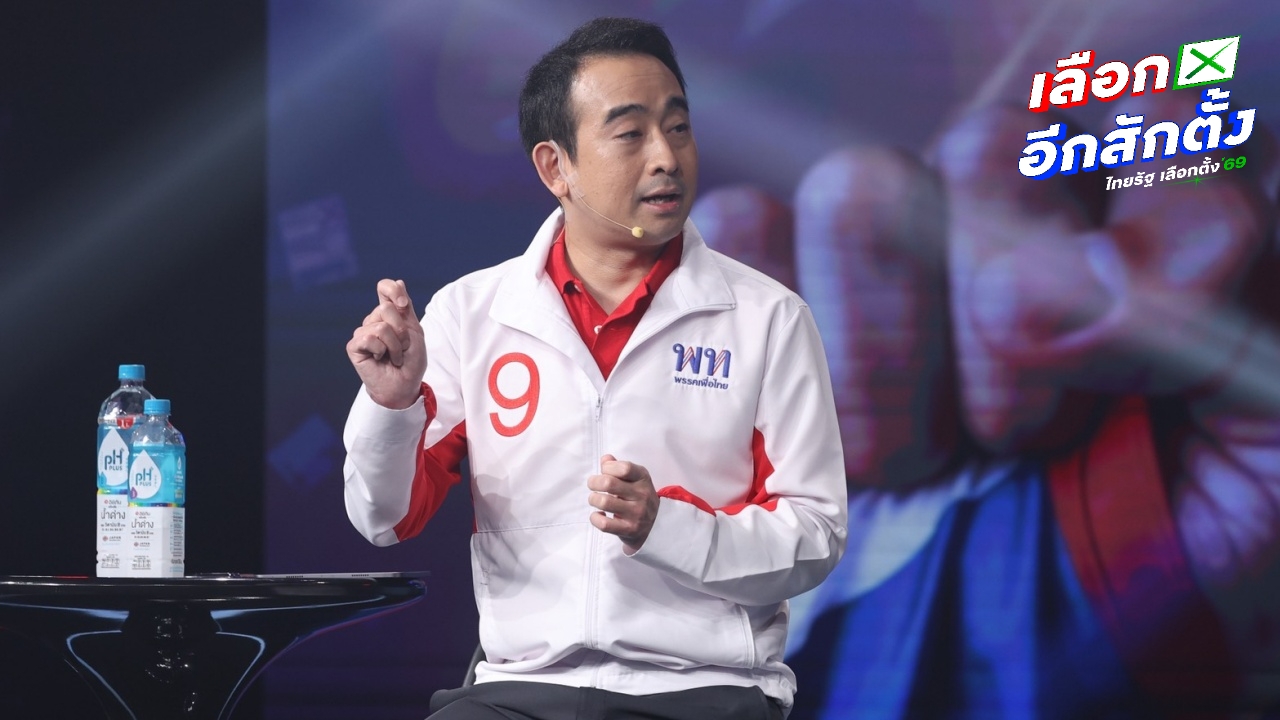
On 30 Jan 2026, the final stretch before the 2026 election, the debate “One More Round with Thairath Election 69” featured participants including Mr. Weerayut Kanchuchat, Prime Ministerial candidate of the People’s Party; Mr. Paopoom Rojanasakul, Deputy Leader of Pheu Thai; and Mr. Siripong Angsakulkiat, Deputy Leader of Bhumjaithai Party. The event was hosted by Kai Pongsakem Satyaprasert and broadcast on Thairath TV Channel 32 and all Thairath online platforms.
When the question was posed about how they would manage relationships with each leader (US-China-Cambodia) if they formed the government,
Dr. Weerayut explained that their foreign strategy for this election is called Pro-Thailand, meaning choosing what benefits Thailand in negotiations with neighbors and great powers. He stressed not taking sides with China, America, or Europe—avoiding choosing to love or hate any. Instead, focus on issues. Taking a side leads to problems immediately.
He added that Thailand should not rush in blindly but seek middle-power allies. Thailand should view itself not as small, but as a medium power with bargaining strength. Engage with Singapore, Malaysia, Indonesia, Japan, South Korea to understand their views and build alliances. Do not think of facing each country alone, which is unproductive and risky. Pro-Thailand starts with not taking anyone’s side since every country has positives and negatives for us.
As an example with China, for specific issues like pollution in the Kok River in the north, multiple parties—Myanmar, China, Thailand—must negotiate and establish enforceable multilateral mechanisms for monitoring. Otherwise, the problem cannot be resolved. Engage China directly but recognize there are economic areas where cooperation can grow. With major countries like China, identify points for cooperation and points requiring negotiation. Never choose a side; always choose Pro-Thailand and address issues individually.
Regarding Cambodia, the scammer problem must be addressed, which benefits Thailand as well. He emphasized that previous MOUs between agencies have not solved the issue. Thailand must establish a recognized anti-scammer center to collaborate internationally, exchange information, extradite criminals, and track financial flows to tackle the root causes.

Mr. Paopoom said each relationship must be viewed by dimension: 1) trade and investment, 2) scammer issues, and 3) border security. These three dimensions differ across the three countries, so a single formula does not apply. Each dimension and issue must be considered separately. For trade and investment with the US and China, Thailand should be a flexible sponge, able to stand regardless of shifts in power blocs.
For scammers, Thailand aims to become the regional leader in their suppression, raising its role prominently and using a strategy to encircle Cambodia, which faces problems, by applying political, economic, and trade pressure, building alliances to become the dominant player surrounding the problematic area.
Regarding borders, Thailand believes in bilateral systems to resolve issues with Cambodia through direct negotiation and agreement. Involving multiple parties may not be beneficial. In summary, for trade, Thailand acts as a sponge between two poles; for scammers, it uses both sides to encircle the problem; for borders, it negotiates directly with the country involved to resolve issues.