

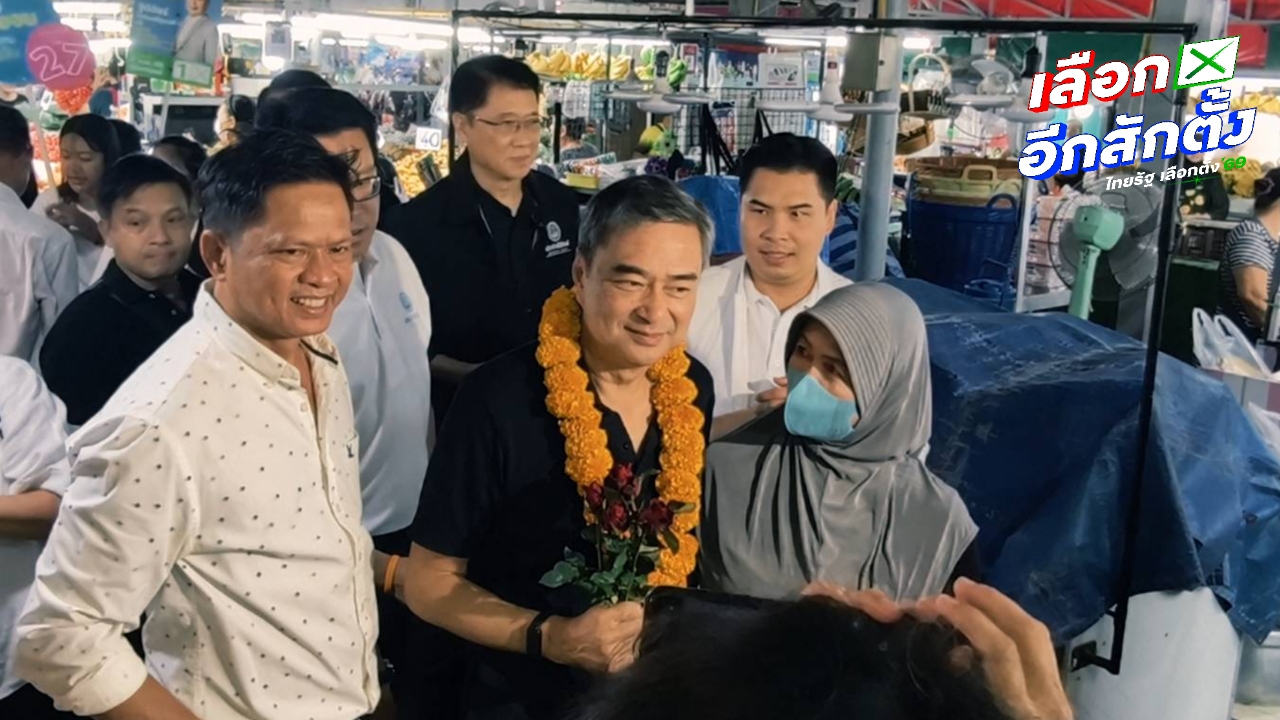
Abhisit campaigns in northern and eastern Bangkok to support party candidates. He reveals reports of severe vote-buying in the southern region and urges the Election Commission to punish offenders as an example, believing this will help deter widespread election fraud.
At 07:00 on 31 Jan 2026, Abhisit Vejjajiva, leader of the Democrat Party, accompanied by senior party leaders including Sakolthee Phattiyakul, deputy party leader overseeing Bangkok, began campaigning in eastern and northern Bangkok from morning until afternoon. They supported five candidates running for MPs in Bangkok’s constituencies 17, 18, 9, 15, and 13.
The first stop was constituency 17, Nong Chok-Khlong Sam Wa, at Nong Chok Market, Khaeha Chalong Krung Market, and Ying Charoen Market. Vendors and local residents who came to shop welcomed them, offered encouragement, requested photos, and engaged in conversations exchanging opinions.


Later, at 10:00 at Ying Charoen Market in Sai Mai District, Abhisit spoke about his upcoming visit to the South from 1-3 February to campaign for honest politics. He said he had received reports that vote-buying was intensifying in the southern region. He aims to encourage southern voters to join the fight for a fair and honest election. He will then focus on campaigning in Bangkok closer to the 8 February election date. Regarding viral videos of vote-buying on social media, Abhisit noted that although most clips are old, they still reflect inappropriate behavior. He called on the Election Commission to take more proactive measures because arresting or legally prosecuting even one or two offenders visibly would help deter widespread election fraud.


Suggested solution to the Thai-Cambodian border dispute
Regarding concerns about unrest on the Thai-Cambodian border before the election, Abhisit proposed that the government use diplomatic channels to invite international observers to monitor the situation. This would help prevent troop movements and violations of Cambodia’s ceasefire agreement. He emphasized that Thailand’s main goal is to protect lives and maintain peace, not to use the issue as a reason to postpone the election. He cited the 2011 border incident, which was resolved within 12 days, as a model for handling such events. When asked if the situation might lead to election delays, Abhisit said that was a secondary concern. His priority is to prevent conflicts or further losses. Since both sides agreed to ceasefire, they must abide by the rules; if Cambodia fails to comply, external parties should be invited to pressure them to desist.
Resolving the PM 2.5 crisis requires decisive action
On the environmental issue of PM 2.5 dust affecting the public, Abhisit said he has proposed firm measures to address smoke from agricultural burning. Economic policies should be used, including refusing to buy crops from areas where illegal burning occurs. Laws must be strictly enforced, with the government and local authorities using official mechanisms to manage source areas, especially around Bangkok and in the north where the crisis has persisted for days. When asked about some parties emphasizing patriotism to attract votes in the final campaign stretch, Abhisit said it is each party’s right to present their platform. However, he urged voters to decide based on reason and facts since all leave digital traces. The public can review past performance to determine who is truly suitable and effective in solving national problems.