

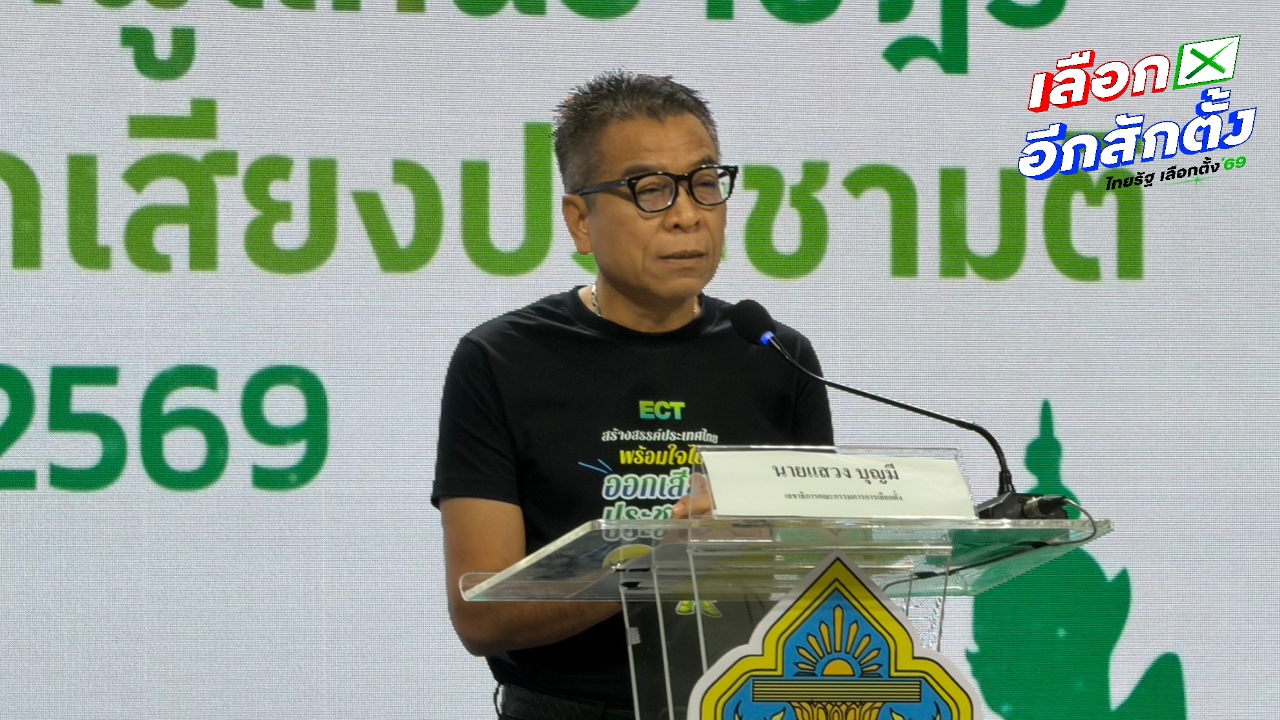
Sawang Bunmee, Secretary-General of the Election Commission (EC), revealed that overall advance voting went smoothly. He explained that the disappearance of People's Party candidates' numbers from polling station boards in Chonburi and Lampang provinces has been corrected. He admitted that detecting vote-buying during the preparation phase is more difficult than preventing it.
At approximately 10:45 AM on 1 Feb 2026 GMT+7, Mr. Sawang Bunmee, Secretary-General of the Election Commission, held a press conference on the overall opening of advance voting sites for MPs outside and inside electoral districts nationwide, stating that the number of registered voters for advance voting inside the districts is 8,610 people. The number registered for advance voting outside districts is 2,206,138 people, and 1,666 registered voters are persons with disabilities, the disabled, and the elderly. There are 521 polling stations inside districts, 524 outside districts, and 22 stations designated for persons with disabilities, the disabled, and the elderly.
Overall, from 8:00 AM to two hours after, the process was orderly. The district with the highest number of registered advance voters is Bangkapi, with over 58,000. Some stations may have insufficient capacity for the large number of registrants, or areas with heavy traffic congestion have been reported, including Bangkapi, Chatuchak districts, and Chiang Mai province. These areas have over 50,000 registrants but were still able to facilitate voters smoothly. Coordination with police helped resolve traffic issues to allow voters to access polling stations quickly.
In Chonburi province, the People's Party MP candidate numbers displayed at polling stations disappeared, but the province has corrected this. In Lampang province, duplicate candidate numbers were found—number 6 was duplicated and number 8 was missing; these issues have also been resolved. He warned the public to be cautious after voting, noting that stating whom they voted for or which party could lead to complaints, depending on the facts and the intent behind such statements.
When asked about reports of vote-buying, Mr. Sawang said that from the election management period until 8 Feb, there are two main focuses: first, creating a positive atmosphere by campaigning without aggressive language, hate speech, or defamation; second, ensuring the election is honest and fair without vote-buying. Both EC officials and the Royal Thai Police are involved, deploying officers from nearly half the country to monitor for vote-buying activities, focusing on prevention. He acknowledged that it is difficult to catch vote-buying during the preparation phase and to find witnesses for such offenses. Knowing this challenge, the EC emphasizes prevention and deterrence to prevent the use of money. Complaints about vote-buying are not the main issue; most complaints relate to social media campaigning.

Asked about his previous statement that money might be prepared but vote-buying should not occur, the EC Secretary-General clarified that Section 76 of the law prohibits both preparing money and buying votes; both are offenses. He said he may have spoken too quickly yesterday and clarified that measures are in place to prevent and deter vote-buying and to pressure offenders by conveying the message that "Even if you have money, you cannot buy votes." He also ordered the EC offices in 42 provinces with intense competition to prevent vote-buying. He admitted that some activities occur secretly and have not yet reached voters, making detection difficult. Thus, the focus remains on prevention and deterrence. Additionally, when the Bank of Thailand provides data, the EC uses it to analyze whether people withdrawing money have connections to candidates or parties and the purpose of the withdrawals. These are the measures currently undertaken by the EC.
"Our intention aligns with that of the public: we do not want money used for vote-buying. I believe some money is prepared, as mentioned, but catching offenders during preparation is harder than prevention and stopping the use of money."
Regarding whether preparations fall under Section 73, Mr. Sawang said preparations are already illegal, but obtaining search warrants requires sufficient evidence. The EC lacks arrest powers like investigators; it must report to the police, who then request court warrants. However, if vote-buying has occurred and clear evidence exists, with good intelligence and sufficient proof, warrants can be issued and arrests made immediately.
Concerning the issue of 7,000 baht that a vendor posted on social media and which was used to accuse vote-buying, Mr. Sawang stated that it was not money for vote-buying. Investigations revealed it was money from the vendor's trade posted on Instagram. Someone captured the Instagram post and made content alleging vote-buying. The EC officials are investigating, with three individuals involved.
When asked about the abnormal cash withdrawals reported by the Bank of Thailand and their amounts, Mr. Sawang said, investigators are currently examining the matter. It is known that there are two large sums involving six people in total. The EC is examining the connections among these individuals, the reasons for the withdrawals, and whether the money has been used. The situation is becoming clearer but fairness must be maintained. Whether those who withdrew money will be summoned depends on the investigators. Other details are not yet known. The matter will be brought to the EC meeting on Monday.