

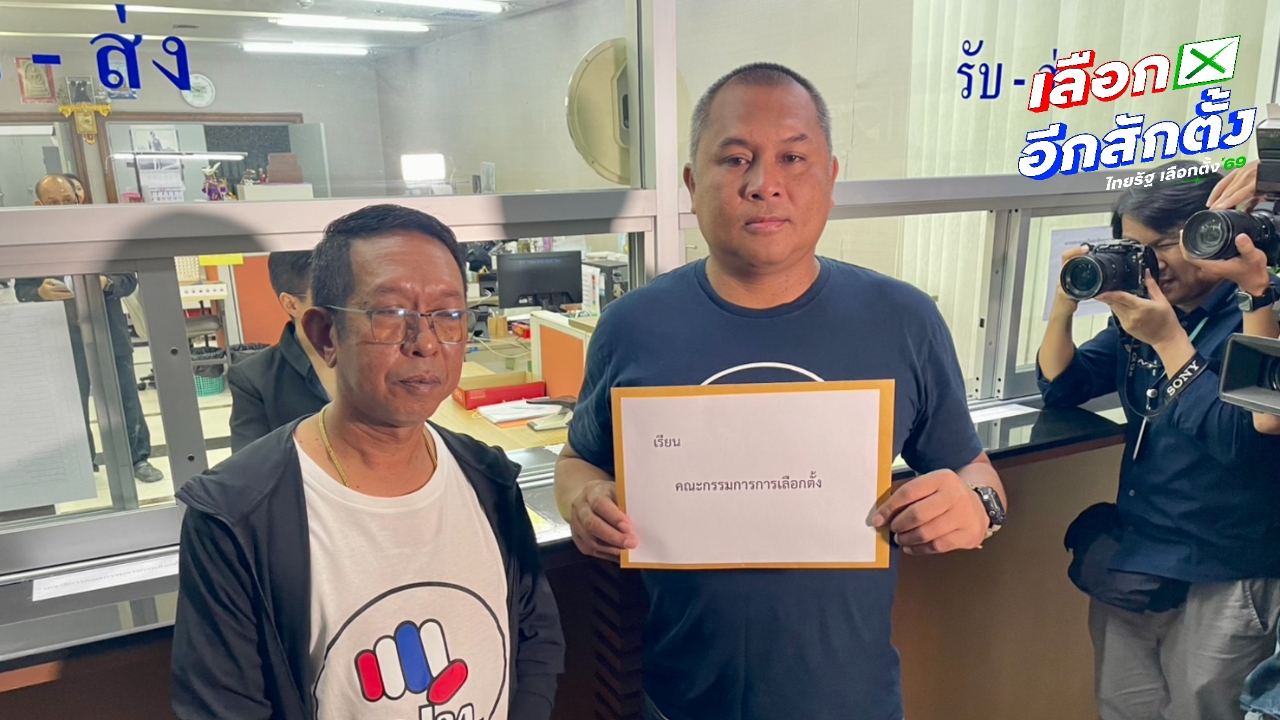
The People's Democratic Reform Committee (PDRC) filed a complaint with the Election Commission (EC) regarding the constitutional amendment referendum, highlighting concerns of voter bias and issuing what they called a 'blank check,' fearing the process may be unlawful. They also expressed worries about the EC’s lack of preparedness for the 8 February election after multiple errors during advance voting.
On 3 February 2026 at 10:00 a.m., Mr. Pichit Chaimongkol, a leader of the Network of Students and People for Thailand Reform (PDRC), representing the United People's Coalition, submitted a letter to the Election Commission (EC) to object to and raise concerns about the conduct of the constitutional amendment referendum.
Mr. Pichit revealed that today’s letter submission followed discussions and meetings within the United People's Coalition, agreeing that the PDRC would act as their representative to formally object to the EC. This was due to doubts over the referendum’s approach, which appeared to lead voters in a single direction, almost compelling or coercing them to approve the full constitutional amendment.

Mr. Pichit stated that the United People's Coalition believes some parts of the constitution can be amended, while others should be revised section by section. However, the public promotion resembling a 'blank check' effectively guides voters to approve the entire amendment, creating the impression that the whole constitution is flawed, despite the current constitution having already been approved by referendum. Such guidance has caused widespread misunderstanding among the public. As the PDRC and United People's Coalition, they submitted this objection now to officially document their concerns.
Mr. Pichit also noted that this process might lead to an unlawful referendum. The coalition’s legal team has gathered facts and raised several points, including whether private organizations like iLaw, which have expressed opinions or communicated in a potentially leading manner, might be violating the law. The principle of referenda requires no direction toward any particular outcome.

They also expressed concern for a portion of the public who believe the current constitution remains necessary, especially regarding anti-corruption measures and ethics offenses. If the referendum is held without clear amendment content but instead guides approval, it would effectively result in a de facto overthrow of the constitution.
Mr. Pichit further questioned future outcomes if the referendum passes, particularly which constitutional sections will be amended, and whether any amnesty provisions would apply to specific individuals or political prisoner groups. These issues should be clearly explained by the EC, including providing the public with an understandable basic explanation.
Therefore, today's letter submission serves as an official objection by the United People's Coalition to document their protest. Plans for further legal action will be clarified in a major meeting and press conference scheduled for 5 February.
Meanwhile, Mr. Pichit commented that recent advance voting exposed clear unpreparedness by the EC, raising serious concerns about the main election on 8 February. Problems included lack of readiness and transparency, and the EC’s inability to satisfactorily explain various issues, marking multiple significant errors.
There are also worries about whether the 8 February election and referendum can be conducted smoothly, quickly, and transparently.
Another issue raised by the United People's Coalition concerns the separation of advance voting and the referendum both scheduled for 8 February. They questioned why these processes are separated when most advance voters cannot vote on the main day but must return to vote in the referendum on 8 February. They asked whether this separation is legal or not, and why the procedures are divided.