

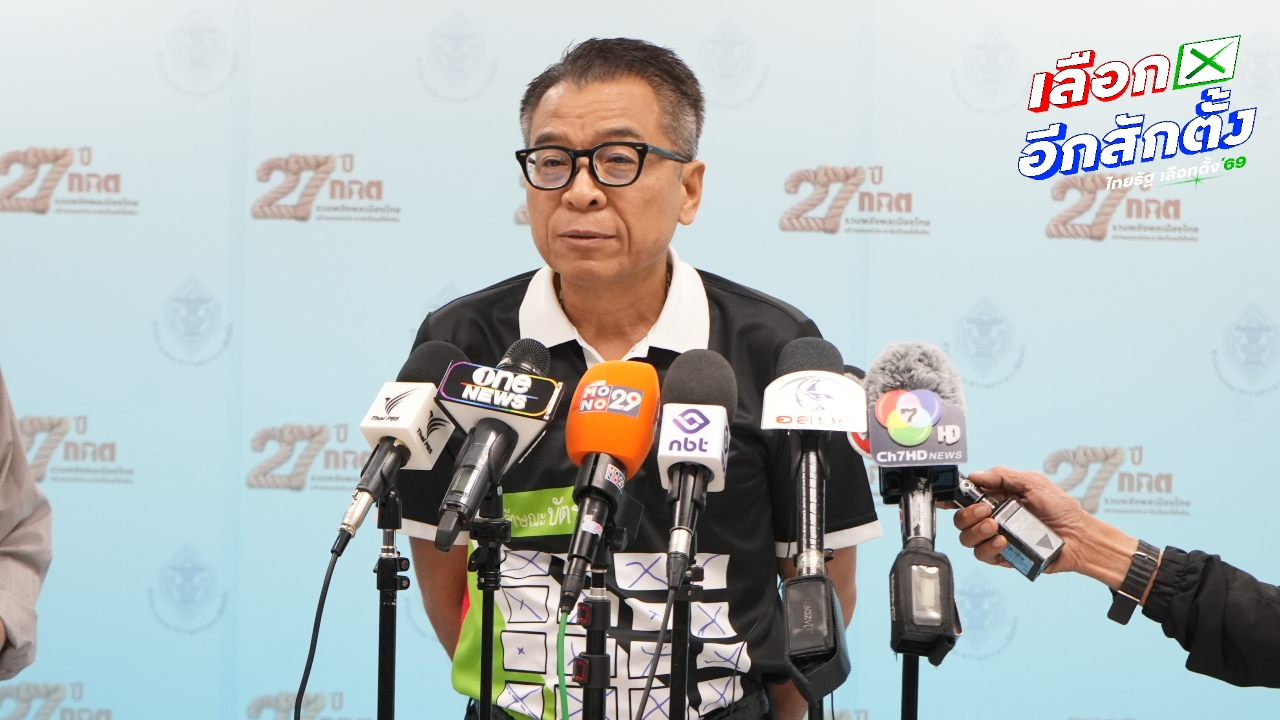
Sawang Boonmee, Secretary-General of the Election Commission (EC), explained that the removal of 28 parliamentary candidates' names will not affect the election. He is confident the February 8 election will not repeat the issues from early voting and has ordered all provincial EC offices to post candidate documents at every polling station.
At 1:30 p.m. on February 4, 2026, at the Election Commission office, Sawang Boonmee, Secretary-General of the EC, spoke about preparations for the election and referendum on February 8. He urged trust in the process, the candidates, and the officials. He explained that the February 8 election will differ from the early voting on February 1, when voters from 400 constituencies gathered at single locations, with some sites seeing 50,000 to 60,000 voters. Early voting also involved placing ballots in envelopes with addresses on them. The February 8 election will not have these procedures. Each polling station is expected to serve about 500 voters on average, across 100,000 polling stations. He is confident there will be no issues like those during early voting. To reassure voters, he has instructed every province and polling station committee to post candidate information outside all polling stations. If the notices are lost overnight—for example, due to wind—officials will replace them before polling begins the next morning.

Sawang added that he personally did not see the early voting on February 1 as problematic. The EC has reviewed all errors. On February 3, the Prachachon Party submitted inquiries about two issues: missing candidate introduction documents in Chonburi province and whether incorrectly addressed envelopes would reach polling stations. The EC is investigating these claims, checking who made them, where, and how. Officials have collected reports from polling stations and examined whether any incidents occurred. The party's concerns were found only in Chonburi province.

“Regarding other issues raised by political parties or others, the EC is gathering information on where these occurred. The EC has ordered all provincial offices to submit reports from polling station incident logs detailing any events and complaints recorded on February 1. For example, concerns about ballot envelope addressing arose because the EC originally designed ballots without constituency codes, only specifying province and constituency, assuming proper delivery. The postal service, responsible for delivery and familiar with codes, suggested adding constituency codes. This was a postal service initiative and was not communicated to the public. The EC emphasizes that province and constituency information alone ensures delivery. The codes are checked by polling station committees and voters, who can raise objections if mismatched. After polls close, officials verify all envelopes have complete information. Reports indicate no envelopes were missing any of the three required details.”
Sawang also addressed the case of the EC's resolution to submit the removal of 28 parliamentary candidates' names to the Supreme Court due to disqualification from not voting. These candidates are currently under restricted rights. The process took time to ensure fairness and allow them to respond, delaying the decision. All affected candidates are from party lists across various parties. If the court does not rule before February 8, it will not affect the election like in constituency races, since the party list order can be adjusted by promoting alternate candidates.