

2026 election: A political science professor at Chiang Mai University analyzed why the Pheu Thai Party lost its influence, being defeated in all 10 constituencies of Chiang Mai province. The party lost ground to the People’s Party, which won 6 seats, and the Kla Tham Party, which secured 4 seats.
It became a political phenomenon that many did not expect when the Pheu Thai Party was defeated in all 10 constituencies in Chiang Mai province, failing to win a single seat despite Chiang Mai being a key area and considered the party’s stronghold. The election results, with the People’s Party taking 6 seats and the Kla Tham Party 4, led many to see this as the end of Pheu Thai’s influence.
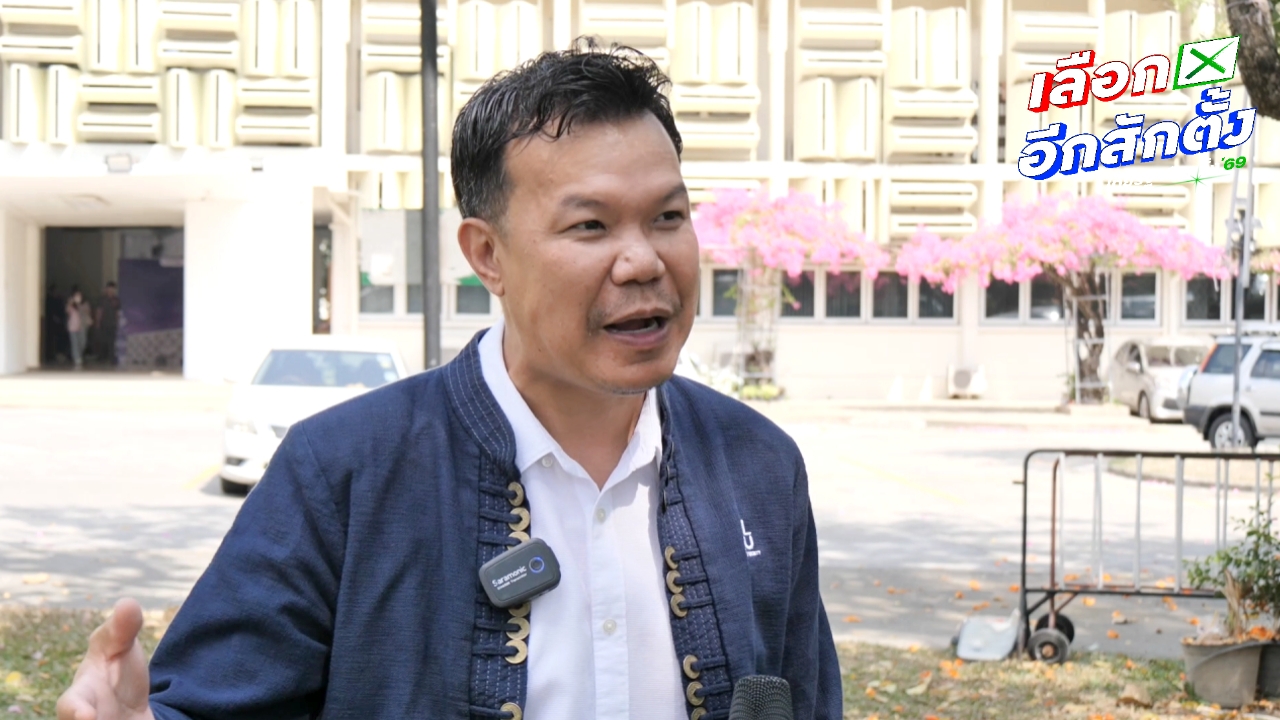
Most recently (9 Feb 2026) Assistant Professor Dr. Natthakorn Wititanon a faculty member at the School of Politics and Governance, Faculty of Political Science and Public Administration, Chiang Mai University, analyzed why the Pheu Thai Party was thoroughly defeated in Chiang Mai. He observed that this time Pheu Thai was unclear about its political stance — whether to follow the old politics like the Kla Tham Party or to transform into a new political style focused on ideology like the People’s Party. This half-hearted approach caused Pheu Thai to become the third-ranked party in this election.

Additionally, regarding the candidates, although the party selected those with knowledge and capability, compared to the Kla Tham Party, which chose candidates with established local political bases and personal readiness for competition, this was likely another reason for Pheu Thai’s defeat.
Asked whether the Pheu Thai Party still has a chance to make a comeback, Assistant Professor Dr. Natthakorn believes it is now difficult. Even though the party announced a complete overhaul by sending candidates with strong profiles to compete, people still did not vote for them. Even Dr. Chen Yotchanan Wongsawat, born in Chiang Mai and a direct nephew of former Prime Minister Thaksin Shinawatra, campaigned multiple times locally hoping to attract old fans impressed by policies from Thaksin’s era, but ultimately failed.

Assistant Professor Dr. Natthakorn admitted surprise at the results, especially in constituency 10 where Ms. Srisopa Kotkamlue, a Pheu Thai candidate with a strong local base considered very difficult for other parties to penetrate, was defeated by Mr. Noraphol Tantimontri, a former MP of this area nearly ten years ago who ran for the Kla Tham Party this time. This shows that Chiang Mai has become open to all parties.
When asked whether the election results reflect a loss of public confidence in Pheu Thai’s policies, Assistant Professor Dr. Natthakorn said there are multiple factors, including betrayal in crossing political lines to form the government and lack of outstanding achievements, as the party was not the majority government like in Thaksin’s time. Therefore, this election offered no tangible accomplishments to present to voters.

Regarding the Kla Tham Party’s surprising success in winning 4 seats, Assistant Professor Natthakorn attributes this to the party’s clear strategy, especially in selecting candidates who are local and can immediately address people’s issues. Their focus on districts remote from the city helped the party succeed, reflecting victories in northern and southern zones of the province: constituency 6 (Chiang Dao, Wiang Haeng, Phrao districts), constituency 7 (Fang, Mae Ai, Chai Prakan districts), constituency 9 (Doi Lo, Chom Thong districts), and constituency 10 (Omkoi, Doi Tao, Hod, and Mae Chaem districts).