

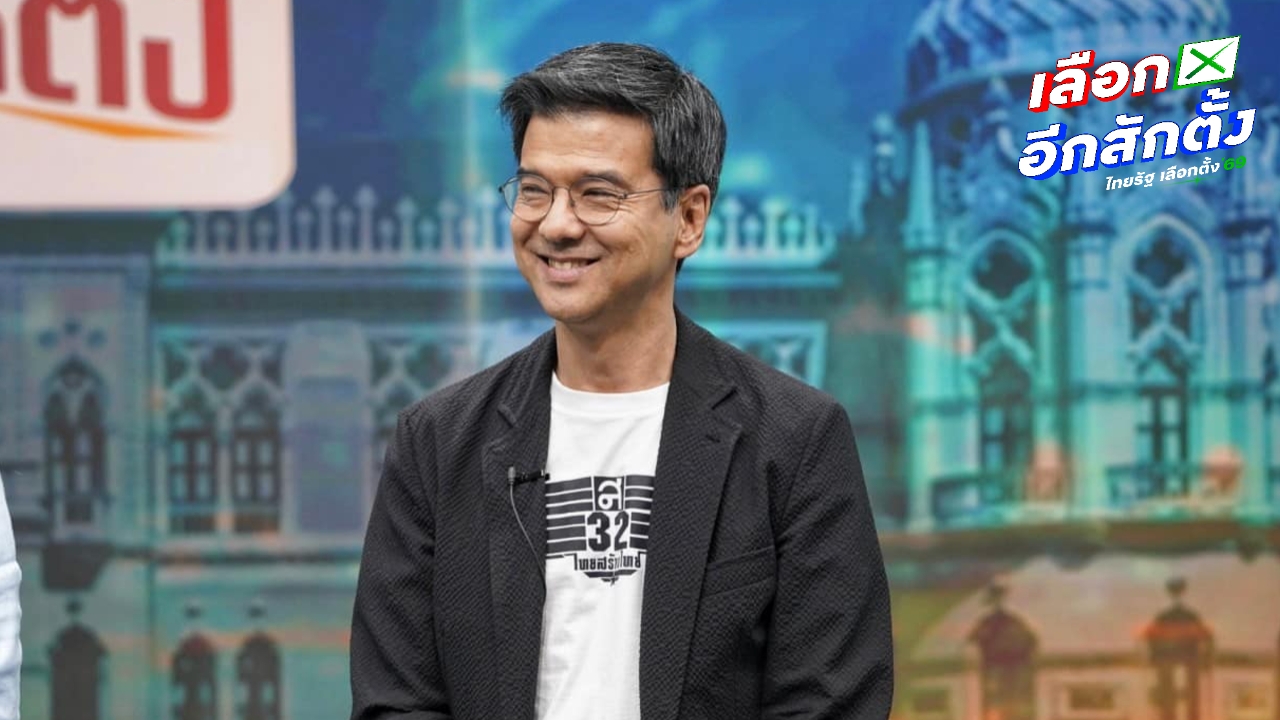
Sita Tiwari cited the 2017 Constitution emphasizing that election voting must be by secret ballot. He referred to the 2006 Constitutional Court ruling where merely arranging the voting booths facing the wrong way resulted in election nullification. He noted the enormity of the problem and asked how such a large issue could possibly be resolved.
On 13 Feb 2026 GMT+7, Lieutenant Sita Tiwari, former member of the Thai Sang Thai Party, posted on Facebook that if the barcode on the ballots is as explained by the Election Commission (EC), it means the EC is aware of the creation of barcodes on each ballot. The EC stated that the reason for barcoding every ballot is a security measure to track printing batches, including when and how they were printed and distributed to districts. This is confirmed as a control measure by the EC, which implies the EC acknowledges the barcodes are intended to allow scanning and later traceability.
Lieutenant Sita also stated that the 2017 Constitution, Article 85, specifies that MP elections must be “direct and secret voting.” The 2018 Organic Act on MP Elections, Article 96, prohibits anyone from deliberately marking ballots in any way to make them identifiable.
In this case, it must be examined whether barcodes within the same unit or district are identical, and whether retrospective checks can only go as far as the polling station level without linking to the individual voter. If so, the barcodes may be interpreted as not violating the Constitution because they cannot be traced back to identify who cast that particular ballot. However, if each ballot's barcode is unique (a Unique Running Number), especially if scanning the barcode links to the stub number signed by the voter, this could violate constitutional provisions.
“Comparing to the previous standard, the Constitutional Court ruling that nullified the 2 April 2006 election was based on certain polling stations where booths faced the wrong direction, mainly because the arrangement failed to preserve voter secrecy. This violated the principle of direct and secret voting under the Constitution. The Court did not consider whether anyone actually knew the secret vote, but rather whether the system’s structure allowed secrecy to be breached. The key point is that the system must not permit tracing back to identify voters.”
Lieutenant Sita concluded by comparing to current systems employing concepts like zero knowledge, zero knowledge proof, and zero knowledge encryption, meaning there must be no way in the world to trace back to the origin.
In this election, if the barcodes on ballots are Unique Running Numbers matching stubs that contain voter signatures,
it means not a single ballot is truly zero knowledge. That is, every ballot’s barcode can be scanned and traced back to the stub with the voter’s name, revealing who cast that vote. “This is a huge problem. It’s so massive, I can’t even imagine how they could get out of it.”