

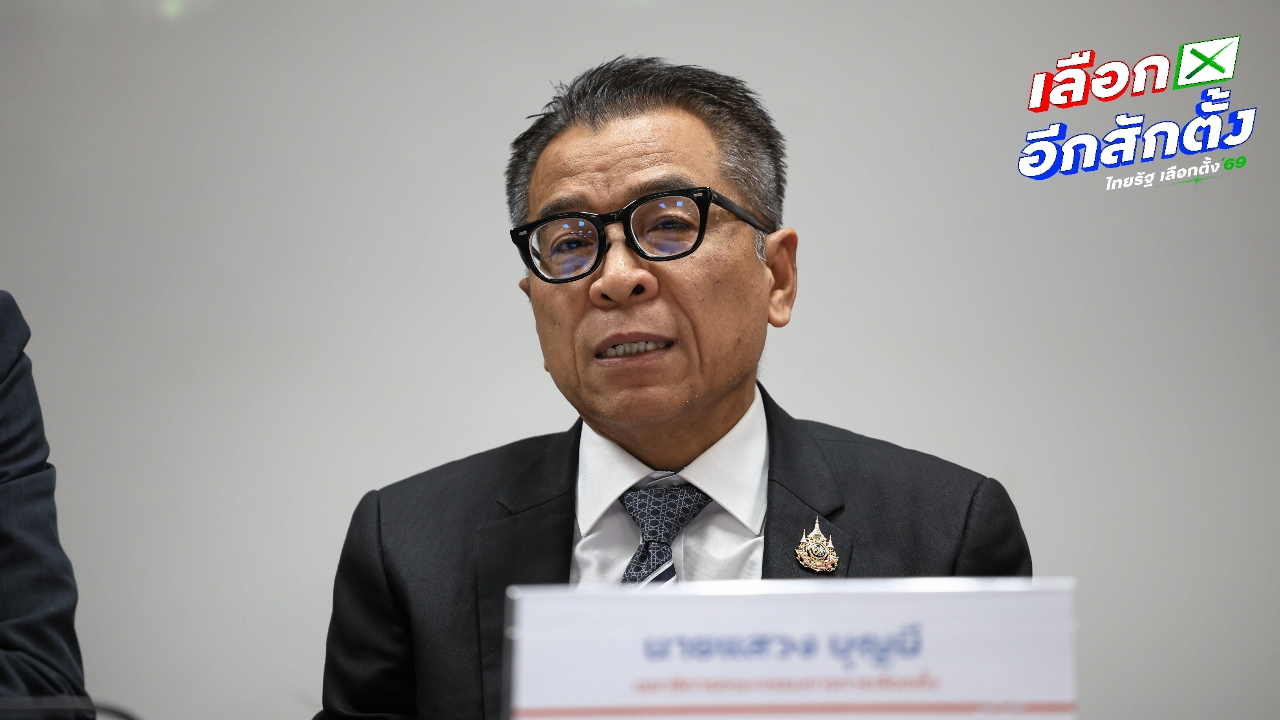
Saeng clarified the barcode on the election ballot, assuring that the public's voting remains confidential under the election's processes and principles. He stressed that verification components are separated for safety, and no one can access them without a court order.
At 08:48 on 15 Feb 2026 GMT+7. Mr. Saeng Boonmee, Secretary-General of the Election Commission. Posted a photo of a party-list ballot.Via his personal Facebook page.He affirmed directly the principles and security of the ballot and election, stating that the barcode relates to two principles: direct and secret voting.
1. The principle of direct and secret voting is a fundamental human right in elections, as outlined in the United Nations Universal Declaration of Human Rights (UDHR) regarding political rights. It requires that voting be direct and secret—simply put, voters cast their ballots themselves, and no one else knows their choices.
2. The security principle of ballots and elections also derives from international declarations mandating free and fair elections. Laws thus require ballot and election security to ensure honesty and fairness, preventing ballot forgery, use of counterfeit ballots, cross-district voting, and ensuring proper ballot management and controlled distribution.
3. The barcode is applied in line with the "ballot security and election security" principles. However, security measures must not compromise the essential principle of direct and secret voting. Procedures are designed so both principles operate smoothly together.
During elections, both principles occur simultaneously throughout the process—from voter identification, ballot receipt, entering the booth, casting the ballot, vote counting, transporting ballots and equipment, consolidating ballot boxes, to secure storage—to ensure direct and secret voting alongside honest and fair elections. Voting steps are designed for mutual verification and protection. For example, ballots, ballot stubs, and voter lists are stored in prepared bags with seals, kept separately by ballot box. Different personnel handle each step, such as election officials at polling stations receiving ballots, sub-district officers distributing them, and provincial Election Commission offices managing storage.
. 4. Regarding barcodes and direct, secret voting, even if observers photograph ballots showing barcodes, they cannot determine whom a voter has chosen. This is assured.
If anyone tries to discover a voter’s choice—an act undermining election honesty and fairness and separate from direct and secret voting—measures exist to maintain the secrecy described above in point 3. Ballots, ballot stubs, and voter lists are stored separately and securely; no one can access them without a court order. If a court orders opening a ballot box due to complaints about election integrity, only necessary documents related to the complaint are opened, not all three items simultaneously.
"Direct and secret voting applies to everyone, including all Election Commission officials and polling station officers. Concerns that polling officers might photograph ballots and share them externally are addressed: only one officer, the one issuing ballots, handles the ballots, and at the issuance stage, ballots are blank. However, because of barcodes, it is immediately known which polling unit and which officer issued the ballot. The Commission will take action if such behavior compromises election fairness; currently, two cases are under review."
The Secretary-General concluded that measures and processes ensuring direct and secret voting are separate from individuals’ illegal acts. If someone violates election laws within a polling unit, that person must be held accountable without compromising the overall process.