

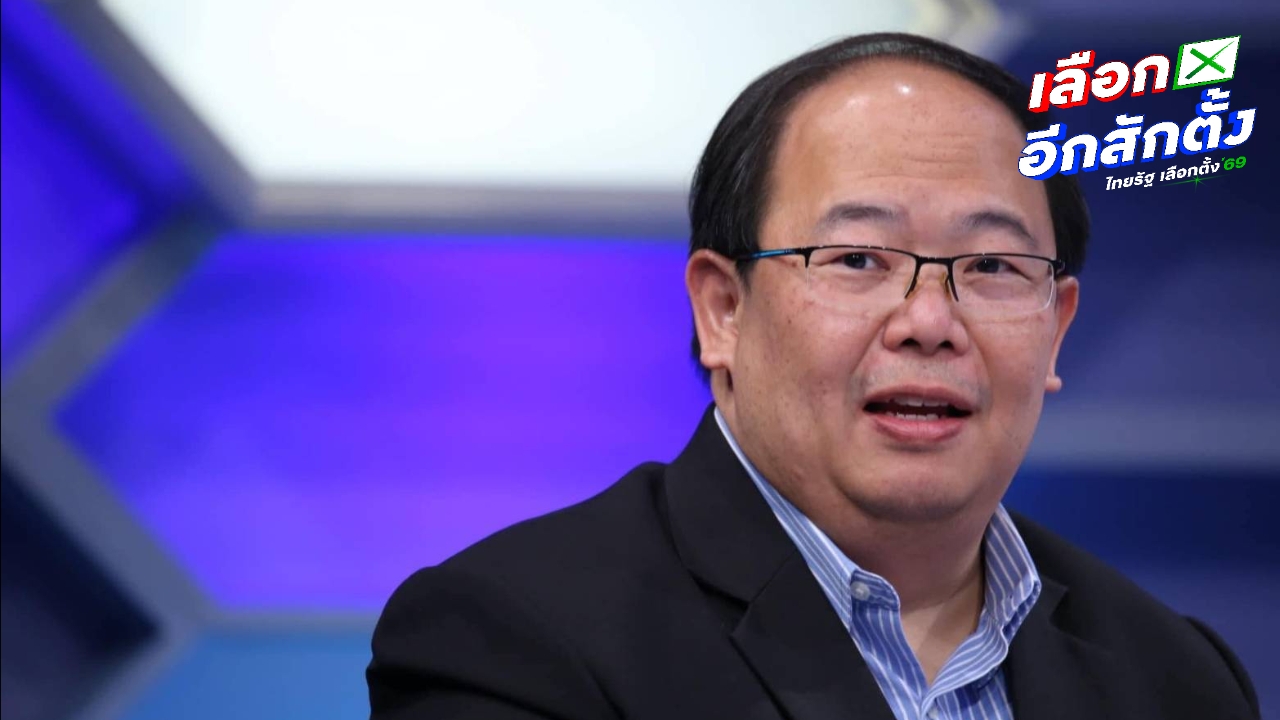
A scholar lays out the three-dimensional national strategy of the Anutin government, focusing on security, economy, and leadership, while warning that extreme policies could be double-edged swords.
On 16 Feb 2026 GMT+7, Associate Professor Dr. Yutthaporn Isarachai, a political science lecturer at Sukhothai Thammathirat Open University, analyzed the political message of Mr. Anutin Charnvirakul, leader of the Bhumjaithai Party. He stated this represents an expression of intent to "form a government" and set a long-term national strategy through three key dimensions. He sees the idea of building a “security wall” and ordering the “closure of border checkpoints” as reflecting a traditional security paradigm prioritizing sovereignty above all. This includes the announcement to cancel MOU 44 (Thailand-Cambodia), which embodies a “Resource Nationalism” approach—vigorous protection of national resources. Though this may impact diplomacy and border economies, bringing in “Sihasak Puangketkaew” to assist shows a continued desire to use professionals to manage international relations without fully closing the country.
Associate Professor Dr. Yutthaporn also said that unveiling a star-studded economic team including Mr. Akniti, Ms. Supajee, and Mr. Sihasak sends a positive signal to the private sector and investors that the new government will be professionally managed, not relying solely on populist policies. It plans to systematically reform tax structures and tourism to lead Thailand out of its prolonged economic stagnation. Furthermore, the rhetoric emphasizing “decisiveness and immediate action” reflects that the Bhumjaithai Party no longer positions itself merely as a coalition partner but is stepping up as a “key player” controlling the country’s direction.
However, Dr. Yutthaporn warned that strongly declared policies, such as those concerning the border or MOU 44, if not realistically achievable or if they provoke excessive international friction, could become “weak points” vulnerable to future criticism.