

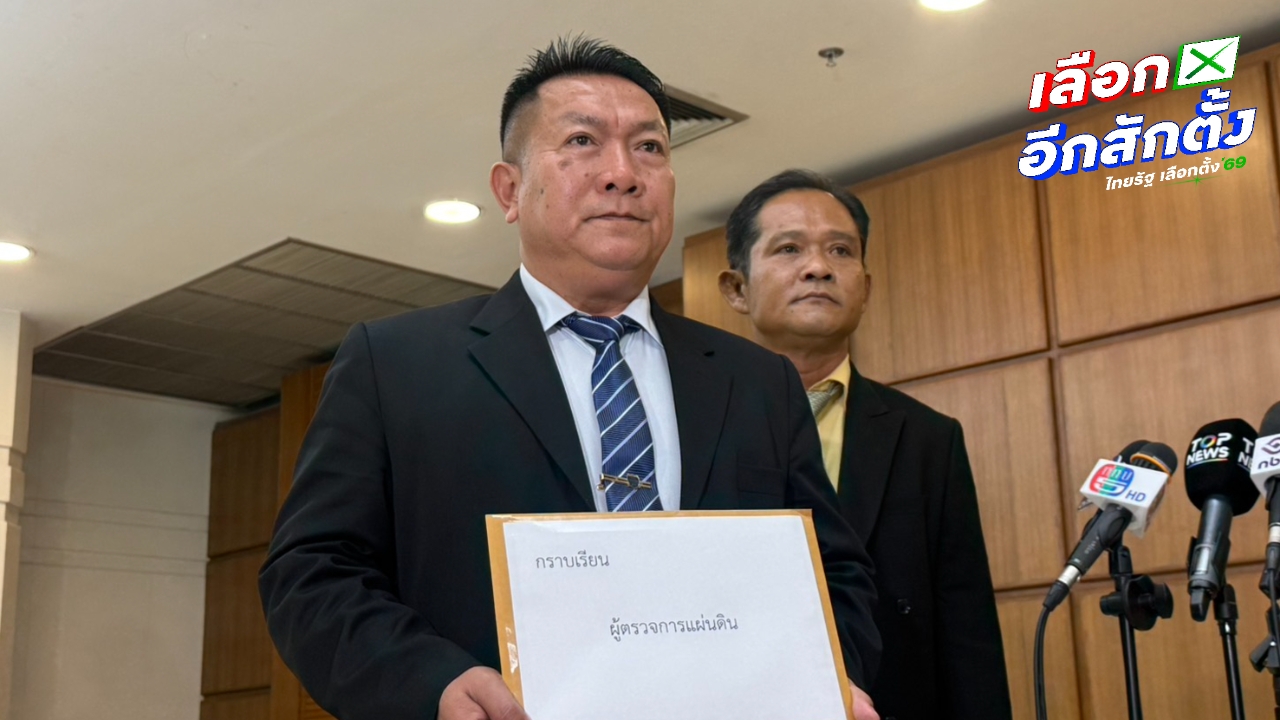
Akrawat, a reserve senator, submitted a petition to the Ombudsman demanding the election be declared void, believing that losing funds for a new election is better than allowing unfit individuals to become MPs. He also implicated the Secretary-General of the Election Commission as the root cause of the problem.
19 Feb 2026 GMT+7 Mr. Akrawat Pongthanachalitkul, a reserve member of the Senate. He traveled to submit a letter to the Ombudsman requesting an investigation into the Election Commission's handling of the production of ballots printed with QR codes and barcodes. He viewed this as potentially violating the constitutional principles of direct and secret voting. Akrawat stated that, on behalf of the reserve senators, he submitted the letter seeking fairness, correctness, and integrity, ensuring everything complies with the law. Previously, he filed a petition with the Administrative Court under case number 306/2569, which has been accepted and is under legal review.
Akrawat further stated that the EC, as the election manager, should recognize that the people hold sovereign power. The election held on 8 Feb 2026, open from 08:00 to 17:00, should be conducted honestly, fairly, and transparently. However, doubts arose, likened to hiring someone to organize your daughter's wedding but having the organizer fail to show up. He questioned the EC's duty to oversee over 55 million eligible voters out of a population exceeding 60 million.
The main issue raised to the Ombudsman was the inclusion of QR codes and barcodes on ballots, seen as arbitrary actions potentially violating the principles of direct and secret elections. He noted that identifying codes on ballots could compromise voter secrecy and render ballots invalid for counting. He also alleged civil rights violations, claiming the EC exceeded its legal authority.
. . . Akrawat revealed that if ballots are deemed invalid, this election could be annulled. However, determining this is the responsibility of the relevant authorities. The advised procedure involves filing through the Ombudsman and forwarding the matter to the Constitutional Court. He also raised concerns about the election budget of 8 billion baht. A new election would require even more funds, but when comparing this expense to other government activities and the potential damage from corruption—such as scams, call center fraud, or illegal online gambling—the cost may be justified rather than allowing a non-transparent process to continue.

Additionally, Akrawat linked this issue to the 2024 Senate election process, suggesting it could harm the country's image among foreign investors. He believes that non-transparent elections undermine economic confidence and may disadvantage Thailand within the ASEAN region. Nevertheless, he affirmed that his petition is not aimed at obstructing any political party, especially the Blue Party, but views it as an EC error. He emphasized support for a continuous government based on correctness.
Regarding the Senate election progress, the second review by the 36-member committee has been extended past its deadline on 18 Feb. Akrawat questioned the delay and raised concerns about the appointment process for two additional EC members. He also implicated Mr. Sawang Boonmee, EC Secretary-General, as the source of the issue, leading to public doubts about impartiality and questioning the EC's conduct in exercising their own voting rights.
. . . Akrawat concluded by addressing a certain official: “Don’t be so eager to become governor that you tremble. Comparing QR codes and barcodes to lottery tickets—he’s seen them often and is ready to act. You might become governor soon, but don’t forget improper actions. Civil servants must remain neutral. They will inspect work in Pattani and are waiting. This is a message to the deputy governors of some province or another.”