

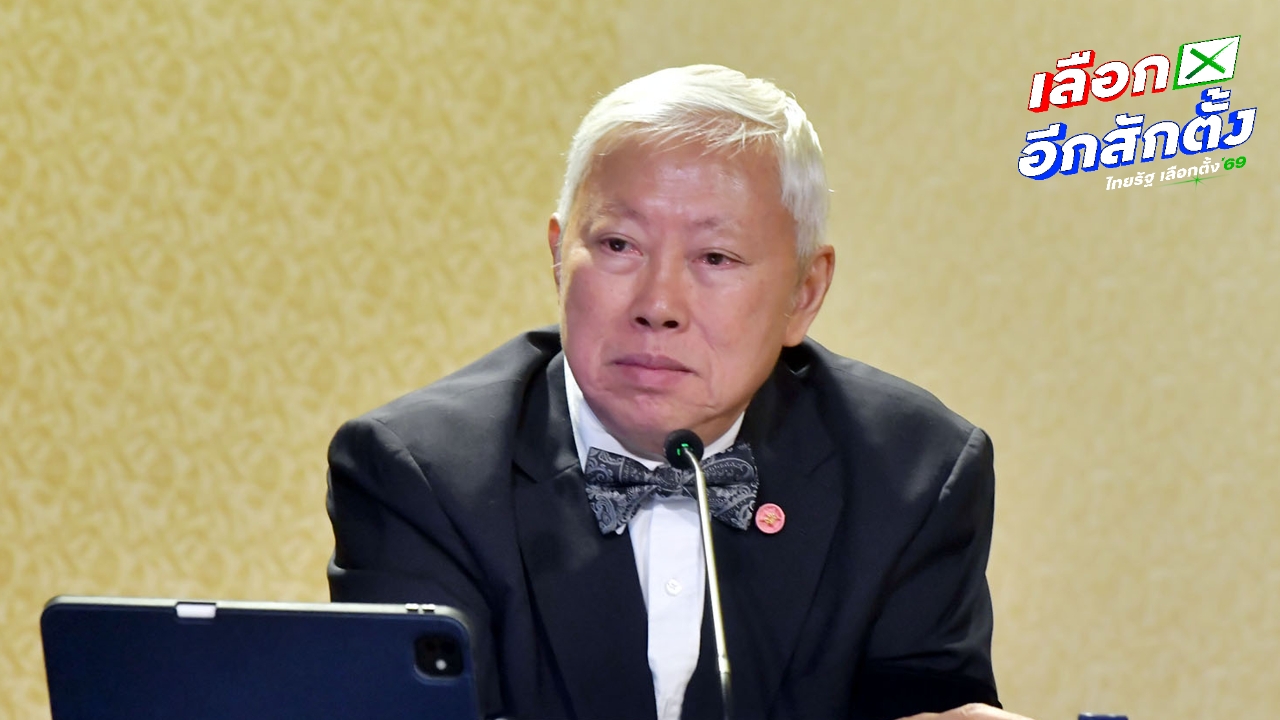
Bawornsak points out that absolute secrecy unknown to anyone worldwide does not exist, emphasizing that barcodes and QR codes on ballots help detect fraud. He cites the example of disabled voters, stating that the law allows assistance in marking ballots, so the process is not fully secret.
On 21 Feb 2025 at 15:30 GMT+7, reporters noted that Deputy Prime Minister Bawornsak Uwanno posted on Facebook regarding ballots with QR codes and barcodes. He summarized that the term “secret” means something hidden or unseen, like a secret door or classified information. Absolute secrecy unknown to anyone worldwide does not exist. The true meaning is to conceal information from those unauthorized to know it, as specified in the Official Secrets Act 2001 and the Prime Minister’s Office National Security Regulations 2009, which state that only trusted, authorized persons can access government secrets. Disclosing such secrets is punishable under criminal law and trade secrets law. Thus, secrecy implies some people know the secret—the creators or holders of that information—and others are deliberately kept unaware.
Bawornsak explained that Section 93 of the Organic Act on the Election of Members of the House of Representatives states that after marking the ballot, voters must fold it so others cannot see their vote, then personally place it into the ballot box in front of election officials. Section 99 prohibits voters from showing their marked ballot to others to reveal their choice. These rules emphasize that the secrecy of one’s vote is both a right and a responsibility of the voter. Section 97 forbids voters from photographing their ballot, with criminal penalties for violations. This secrecy prevents candidates from knowing who voted for whom, which could encourage vote-buying. Meanwhile, the seven-member Election Commission (EC), constitutionally tasked with ensuring elections are honest and lawful, can investigate irregularities. For example, if 100 students from a polling station are abroad but votes appear cast on their behalf, and the winning margin is only 30 votes, the EC can order a recount or re-election. Such investigations require knowing how those 100 votes were cast; without barcodes or QR codes, this would be impossible. Besides the EC and the courts, EC secretaries or other staff who improperly access how individuals voted face imprisonment under Section 23 of the Organic Act.
.
Bawornsak said the phrase “to prevent others from knowing how one voted” excludes the EC commissioners and courts, who have the duty to ensure fair elections. However, EC secretaries and other staff are considered “others” and cannot view individual votes. The law permits only one exception under Section 92: election officials or others may mark ballots on behalf of disabled, impaired, or elderly voters with their consent. This practice means the vote is no longer secret but is legally allowed to assist vulnerable voters. The Constitutional Court ruled that as long as the vote results of such assisted voters are not publicly disclosed, the vote remains direct and secret. Therefore, absolute secrecy unknown to anyone worldwide does not exist.
.
Bawornsak added that scanning barcodes or QR codes to access the original ballots and then link them to voter names is managed separately by the EC, which claims the data are stored in different locations, preventing tracking. He said he is not an expert on the technical details, so he refrains from commenting. However, the facts must be verified with the EC, and if their explanations prove false, those responsible must be held accountable for misinformation. This issue teaches two lessons: trust and confidence in election organizers are crucial. If he were on the EC, he would convene seminars to find ways to restore public trust. Since people distrust barcodes and QR codes, new methods to detect counterfeit ballots without revealing voter identities should be developed, such as watermarks or other techniques. It is time to separate election organizers from rule-makers and fraud investigators, as proposed in the 2014–2015 draft constitution he authored but was rejected. That draft assigned ministry officials to organize elections, the EC to establish rules and monitor fairness, and courts to prosecute electoral fraud.