

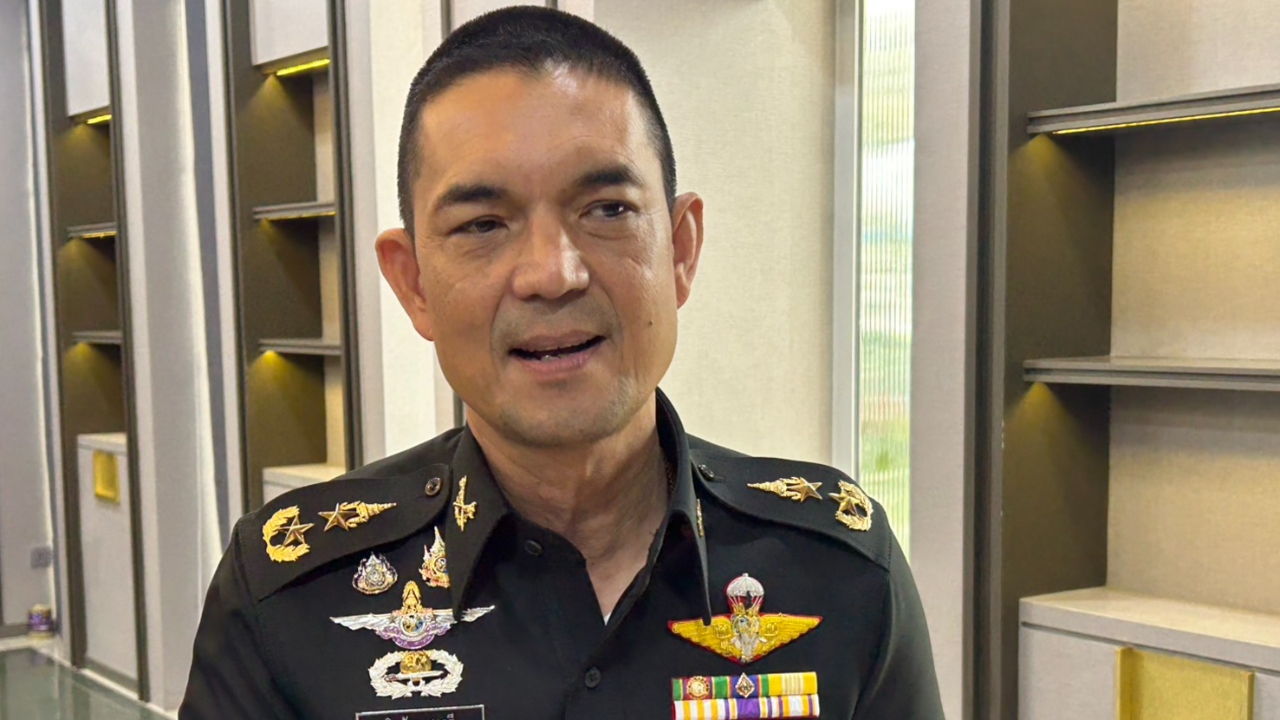
The Army spokesperson confirmed that the military oversees weapon depots nationwide following international standards, noting that sabotage by sending spies to cause damage is difficult because these depots are located inland, far from the borders.
On 25 Feb 2026 GMT+7 at the Army Headquarters, Major General Winthai Suwaree, the Army spokesperson, discussed the military’s management of weapon depots following a fire at an ammunition depot of the Border Patrol Police in Surin Province. He said that the management of weapon depots is governed by regulations and overseen by personnel, all in line with international standards, including site locations and area management, which are similar whether for military or police facilities.
Most incidents occur due to environmental factors, specifically extreme heat, which can cause ignition and fire. Risk management includes separating storage areas rather than storing everything together in one place.
Major General Winthai also acknowledged that besides hot weather, other factors such as movement during cleaning can contribute to depot explosions. However, he reassured that the storage of weapons, which are hazardous materials, is handled according to standard procedures consistent with international systems.
Regarding sabotage concerns, Major General Winthai said such acts are unlikely, as available information does not indicate such threats. Most weapon depots are not located near border areas but are situated inland, at a considerable distance. Preventing spies from infiltrating to sabotage depots is also challenging because these depots are isolated from communities and other buildings. Depots storing large explosives have different structural characteristics. The recent incident involved unit-level weapons, which are considered less severe.
"There are established management methods covering location, storage procedures, usage, and disposal, all regulated within a formal system. The Army regularly emphasizes security measures for weapon depots nationwide, especially during the hot season," he said.
Major General Winthai added that as summer approaches, the Army instructs personnel to enhance security and implement additional safety measures. Historically, such incidents tend to occur during hot weather. Regarding public queries about why fires do not usually happen during the hottest daytime hours, he explained that factors like heat accumulation from earlier periods can cause ignition. Personnel responsible for depot security follow strict regulations, including regular patrols.
Addressing public concerns about whether weapons and ammunition damaged by fire impact border security, Major General Winthai responded that the affected depot is a unit-level facility. The ammunition stored there is only sufficient for unit use and is not abundant, so the impact is minimal. According to regulations, unit-level depots hold limited ammunition that is replenished as needed. Therefore, the lost ammunition corresponds only to a short period of use. The unit is responsible for border security but does not possess heavy weapons like central-level depots.