

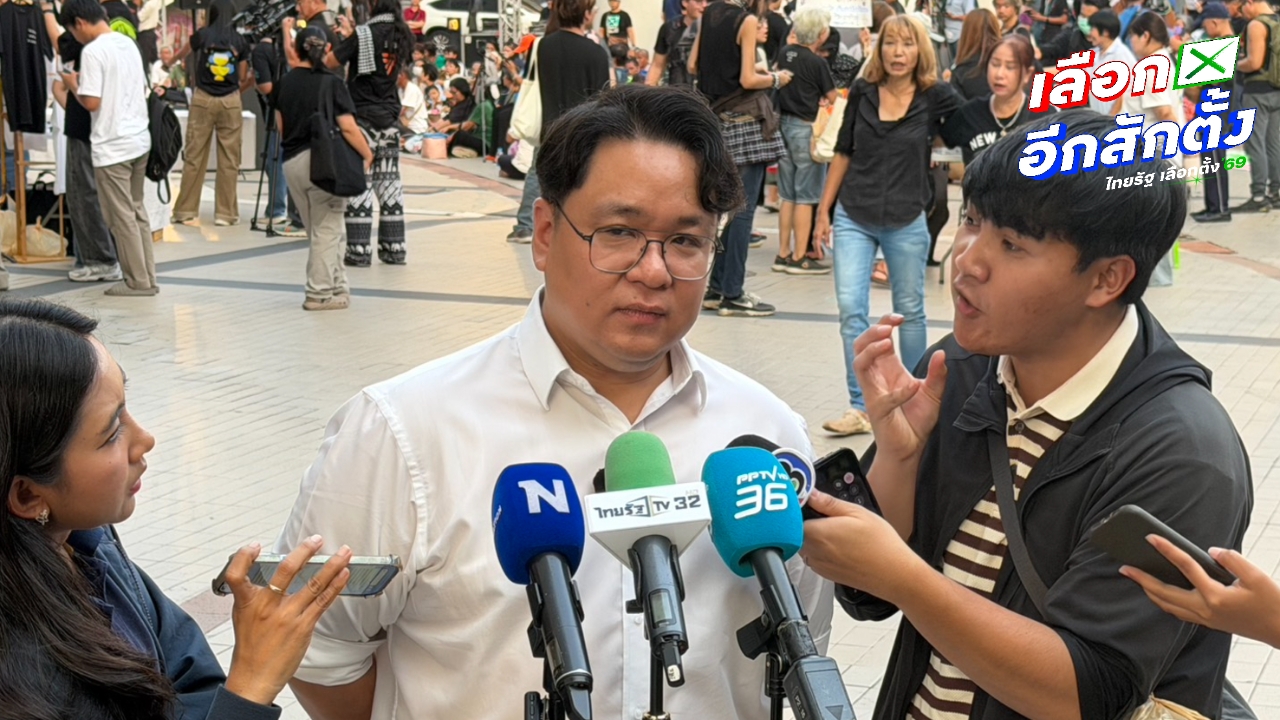
Thanarat Guawatthanaphan believes he himself is being prosecuted by the Election Commission of Thailand (ECT) for observing the Kan Nayaow district election. He insists he did not obstruct the process but may have been perceived as pressuring officials after raising two major questions to the ECT Bangkok Director. He calls on them to clarify clearly, not to silence the public, emphasizing that his questions were asked in good faith.
On 25 Feb 2026, following Kanchit Charoen-in, Deputy Secretary-General of the Election Commission, along with Acting Second Lieutenant Sampan Saengdamlert,Director of the Election Commission for Bangkok,visited the Central Investigation Bureau’s complaint center to file charges against individuals who photographed ballots in Kan Nayaow district on 22 Feb. Although the names of the citizens charged by the ECT have not been disclosed, looking back to 22 Feb, one individual who observed and directly questioned the ECT Bangkok Director was Thanarat Guawatthanaphan, CEO of DomeCloud and an IT expert.
Recently, the Thairath TV news team spoke with Thanarat,who initiallystated “I believe it is me.” He went on to say that he would prefer receiving answers to his questions rather than having citizens prosecuted because public concerns cannot be resolved simply by enforcing laws. Such actions do not ease our worries but instead increase anxiety and heighten tensions, a situation we do not want to see.
Thanarat said he had tried to communicate before the 22 Feb election, emphasizing he was not experimenting. The small camera he carried had no zoom capability, so claims of zooming in to extract secrets are improbable. He personally wonders if his name is truly involved but has yet to be contacted by officials.

Thanarat recounted the events of 22 February, saying he merely wanted to observe whether ballots had changed. He was not interested in decoding anything, knowing in principle it is possible. Regarding accusations of obstructing officials, he said he would wait for formal charges but affirmed he did not obstruct anything that day. He only spoke with the ECT Bangkok Director, who was not performing duties but merely observing. He stayed outside the yellow boundary line and did not take photos inside it. The photos he posted were provided by journalists.
Thanarat emphasized that he did not obstruct anything that day but might have made officials feel pressured because he asked two major questions of the ECT Bangkok Director. First, he asked under what authority citizens are prohibited from photographing ballots before marking them, since Section 97 of the Election Act forbids photographing ballots only after voting. Therefore, photographing unmarked ballots should be allowed. When he asked this, the director said no such authority exists but suggested it was for the public's peace of mind. Thanarat replied that the public seeks reassurance by photographing, but the director said it was not permitted because there are other agencies involved who might feel uneasy. The director also said that although unmarked ballots are official confidential documents, any copying requires written permission.Thanarat pointed out that the director has no such authority and considered that the questioning might have pressured officials.He wondered whether this led to the decision to pursue legal actionor not..
Another issue was pressuring related to the QR Code. The director claimed the QR Code is used to verify counterfeit ballotsduring the vote counting process.At the time, Thanarat asked during the count at polling unit 10 in Kan Nayaow district about QR Code verification. He asked if the barcode or QR Code used to verify counterfeit ballots is applied during the vote count. If not, does that mean nationwide counting is inaccurate? The director said he did not know. When asked when counting occurs, what software is used, which project purchased it, and whether any special equipment is used to read it,the director replied,“I do not know.”
Thanarat felt this was an attempt to silence the public. He did not understand why this was necessary but reaffirmed that all his questions were asked honestly as a citizen, noting that many others likely share his concerns.
He concluded by urging the ECT to communicate more with the public because there are many problems,includingthe abnormal haste of the election process, which everyone knows was unusual. We cannot do anything except wait for the ECT’s explanations.However,the ECT has not provided any clarifications. When citizens seek answers themselves, they face prosecution. This action is unfair.
Regarding the ECT’s certification of the election results amid many doubts, Thanarat said many, including Senator Nantana Nantawaropas, have questioned the legality of certification, as the Constitution requires no pending complaints. Since cases are currently in three courts, the certification appears rushed and likely improper.
