

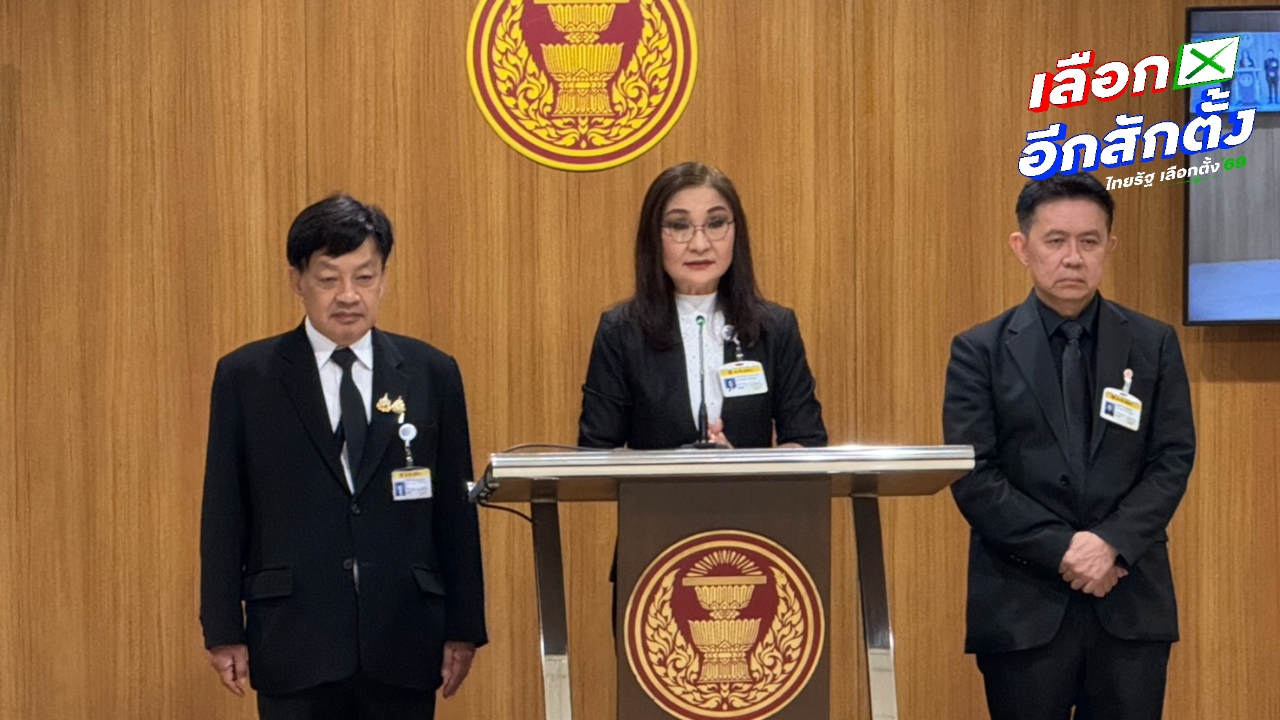
Senator Nantana handed over the case to lawyer Aun to file charges against the Election Commission over the barcode issue on ballots, apologizing to the public that the law does not allow Senators to initiate removal of independent organizations.
At 11:00 a.m. on 26 February 2026 at the Parliament, Ms. Nantana Nantavaropas, a Senator, spoke about the progress of filing a constitutional lawsuit regarding the House of Representatives election. She said that the legal team reviewed the Constitution and related Acts and found no provision allowing Senators to initiate a petition to remove any independent organization. Specifically, regarding the Election Commission's printing of barcodes and QR codes on ballots, which might compromise the secrecy of the vote and violate Articles 83 and 85 of the Constitution, they cannot use the Senator mechanism to act. Therefore, she will return the petition to Mr. Patrapong Supaksorn, or lawyer Aun, to act as a representative of the public by gathering citizen signatures to sue the Election Commission at the Central Criminal Court for Corruption and Misconduct under Section 157, or submit a complaint to the Ombudsman to file with the Constitutional Court under Section 213, as citizens whose voting rights were violated due to lack of ballot secrecy against the Constitution. Lawyer Aun has agreed to take charge of this matter.
"This is a problem with the 2017 Constitution, which does not allow the public to remove independent organization commissioners or corrupt politicians. Both House and Senate members can only appoint them. This is why we need to draft a new constitution to add checks and balances mechanisms, allowing the legislative branch—both the House and Senate—as well as the public, to oversee and remove commissioners and politicians. The drafters of the 2017 Constitution wrote it in a complex way that conceals power and restricts citizens' rights, preventing them from exercising oversight. Regarding the Senate, we must end our election oversight process here and apologize to the public because the law does not allow us to proceed."