

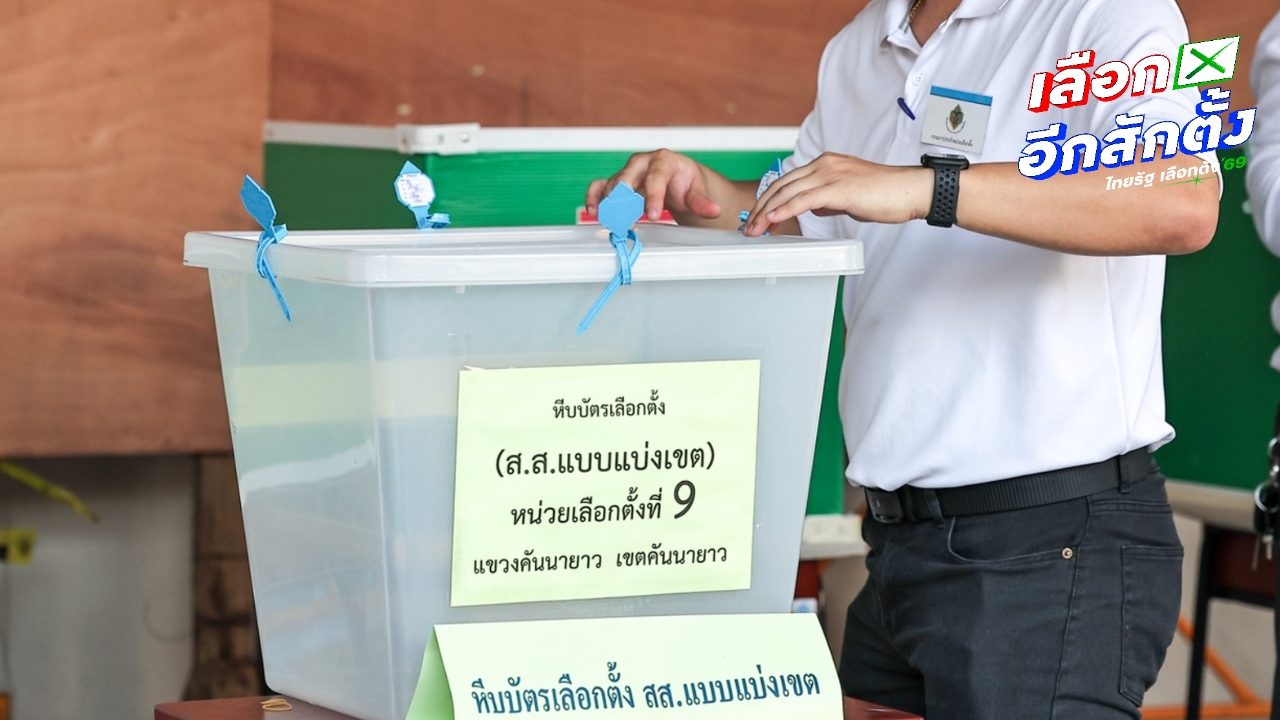
Six individuals have been named following incidents involving photographing and decoding election ballots. The Election Commission (EC) is taking strong legal action on charges of election obstruction, criminal conspiracy, incitement, and inputting false data. Notable persons including Itim, Somchai, IT specialists, and media photographers are not exempt.
On 26 February 2026 at 17:00, the Election Commission (EC) assigned Mr. Kanchit Charoen-in, Deputy Secretary-General of the EC, to file a complaint with the Crime Suppression Division to prosecute a group of individuals who collectively photographed election ballots, ballot stubs, and attempted to decode the information. QR codes and barcodes on election ballots Both district-based and party-list ballots were involved, aiming to link data to voters’ choices. The incident took place during the re-election at polling station 9, constituency 15, Khanna Yao district, Bangkok, on 22 February.
It has been reported that the Election Commission filed complaints against six individuals. These include
1. Mr. Thammathir Sukchotirat, also known as Dr. Rueabin, director of DeeVote at Sripatum University.
2. Mr. Thanarat Kuawatthanapan, CEO of Domecloud, an expert in software and blockchain technology.
3. Mr. Chaipon Chawalwanichchai, known as Kru Chai, owner of the Facebook page M.I.B Marketing In Black.
4. Mr. Somchai Srisutthiyakorn, former Election Commissioner.
5. Mr. Parit Watcharasindhu, spokesperson for the Prachachon Party and prospective party-list MP.
6. Mr. Songpon Ruangsamut, chief photographer at Spacebar.
Authorities are prosecuting these individuals under the Organic Act on the Election Commission of 2017, Section 66 paragraph two; Penal Code Sections 116, 209, and 322; and the Computer Crime Act (No. 2) of 2017, Section 14.
The specified laws prescribe serious offenses and penalties, including imprisonment and fines. Section 66 of the 2017 Organic Act on the Election Commission states that anyone obstructing the duties of the EC, provincial election directors, election inspectors, or appointed EC commissioners—especially by using violence, threats of violence, or acts that undermine the fairness or legality of elections—faces imprisonment up to five years or a fine up to 100,000 baht, or both.
Penal Code Section 116 defines that anyone who acts to alter or abolish the constitution, laws, or government by violence, or incites unrest or division among the people, or causes them to disobey laws unlawfully, is subject to imprisonment up to seven years.
Meanwhile, Section 209 addresses the offense of "criminal conspiracy" by members of a secret group intending to break the law, punishable by imprisonment up to seven years and a fine up to 140,000 baht; leaders or managers face up to ten years imprisonment and a fine up to 200,000 baht.
Section 322 provides that anyone opening sealed letters, telegrams, or documents of others to obtain or reveal contents, causing possible damage, may be punished by imprisonment up to six months or a fine up to 1,000 baht, or both. The Computer Crime Act Section 14 criminalizes inputting false or harmful data into computer systems, including disseminating such data, punishable by up to five years imprisonment or fines up to 100,000 baht, or both.