

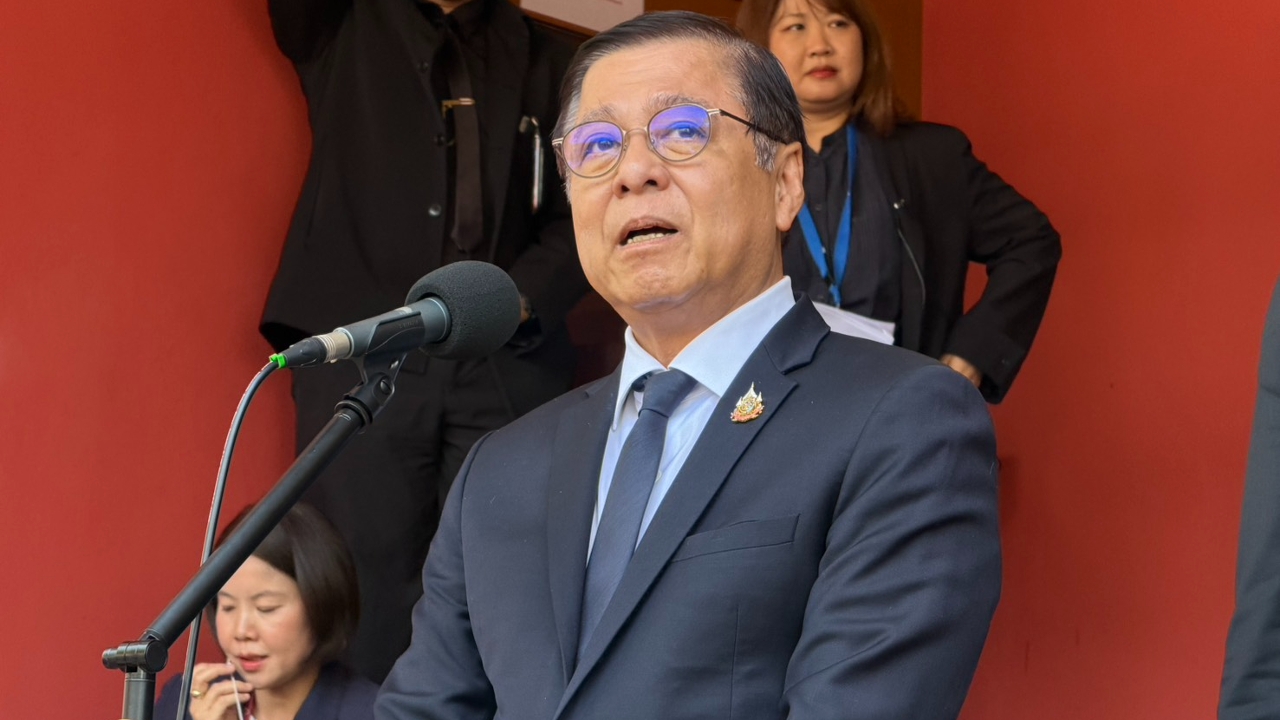
Sihasak admits that the US-Iran war situation is likely to prolong and is ready to evacuate Thai nationals in high-risk countries. If more than 100 people request evacuation, the Air Force will charter a plane to bring them home.
At 12:17 on 2 Mar 2026 GMT+7 at the Government House, Minister of Foreign Affairs Sihasak Puangketkaew disclosed after a National Security Council meeting assessing the Middle East conflict situation that the main issue stems from US and Israeli military actions against Iran. Thailand is concerned about the impact on regional and global peace and security and urges a peaceful resolution through dialogue based on international law. He expressed particular concern for the safety of Thais in the region, especially the approximately 200 Thais in Iran. The embassy has maintained close contact with the Thai community there, advising caution and staying in safe areas.
Sihasak added that the Prime Minister places great importance on assisting Thais wishing to return home. However, all airspace in the area is closed, requiring overland travel by car to the Turkish border before flying home. Currently, about 20 Thais wish to return. If confirmed, facilitation will be provided, including a border operations center to assist their return. The number is manageable and can be handled with commercial flights.
Meanwhile, about 65,000 Thais live in Israel, where the situation remains under control with missile interception effective. No Thais have been affected or expressed a desire to return. The embassy is coordinating closely, and the Israeli government values Thai workers. However, concerns remain for other areas such as Dubai and Abu Dhabi in the UAE, where around a thousand Thais have expressed wish to return. Coordination is underway since Oman’s airport remains open, facilitating immigration procedures.
In other areas attacked by Iran, such as Bahrain, Qatar, and Kuwait, all embassies affected and with Thai nationals have contacted their communities to ask if they wish to return. Return travel will be arranged through the nearest city, Saudi Arabia, via commercial airlines. If more than 100 Thais wish to return from Iran, a plane will be sent to pick them up, with initial coordination already made with the Air Force. Thus, Thailand is prepared for all scenarios. The Ministry of Foreign Affairs has a center for relatives of those in these countries to contact, ensuring confidence and peace of mind.
Asked about the earliest possible evacuation of Thais from Iran, Sihasak said the 20-plus people wanting to return must travel overland. The recent 12-day war has made the thousand-kilometer journey by car difficult due to checkpoints. Evacuation will proceed immediately but requires coordination with Iran to facilitate smooth passage. He emphasized the need for humanitarian facilitation and safety guarantees through coordination with Iranian authorities.
Regarding whether the situation might prolong, Sihasak admitted it would, noting that the US objective likely extends beyond nuclear threat elimination. Iran is committed to counterattacks spreading to multiple countries hosting US bases. The internal Iranian situation is uncertain and unlikely to resolve quickly. Thailand must prepare not only to care for or evacuate its nationals but also for possible related domestic scenarios.
Concerning Thai embassies in risky countries, Sihasak confirmed all remain in contact despite occasional disruptions. Embassies maintain close ties with Thai communities. The main concern is ensuring adequate supplies.