

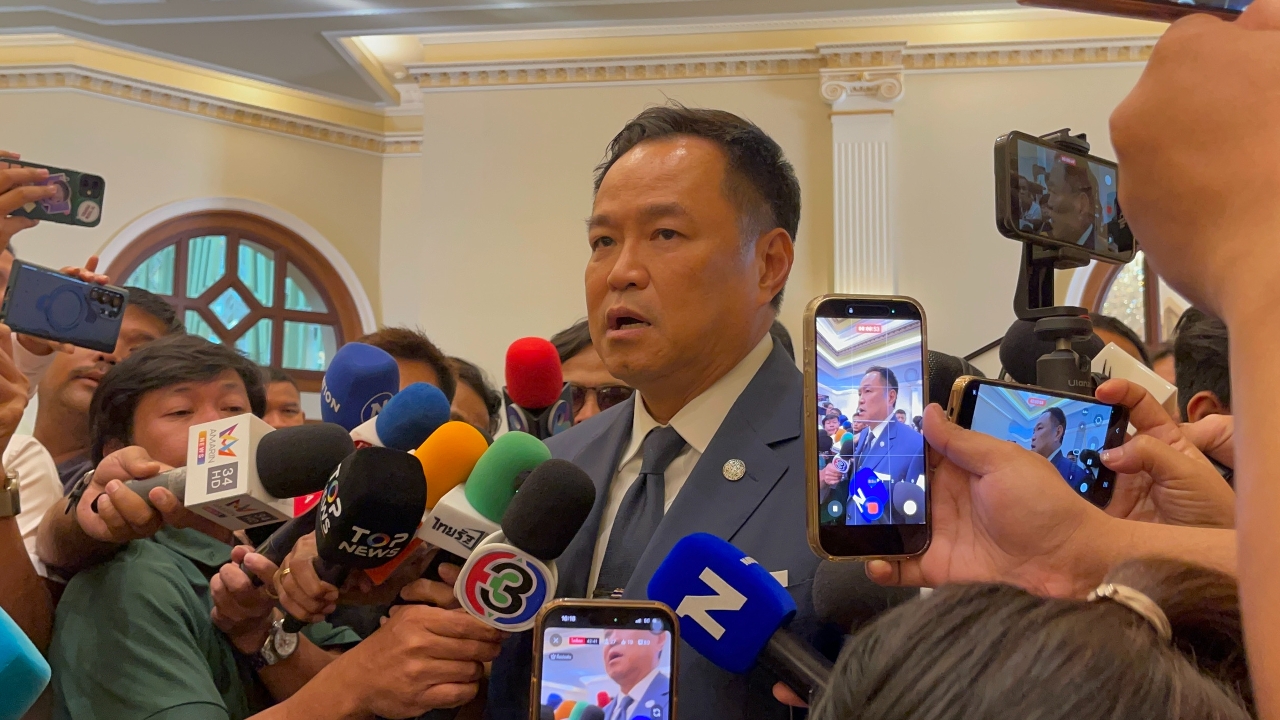
Anutin is confident Thailand can still handle the impacts of the Middle East conflict, viewing every crisis as an opportunity. Ekniti emphasized that oil reserves are sufficient for 60 days, providing enough time to seek new markets. "Ekniti" highlighted having enough oil reserves for 60 days, allowing time to find new markets.
At 15:40 on 2 Mar 2026 GMT+7 at Phakdi Bodin Building, Prime Minister Anutin Charnvirakul briefed on the meeting assessing the conflict situation in the Middle East. He assigned Ekniti to gather relevant government and private economic sectors to understand the situation and response plans. The current events have some impact on Thailand but remain manageable; efforts are underway to prevent severe effects and to turn the crisis into opportunities. He informed private sector representatives, including the Chairmen of the Federation of Thai Industries, the Thai Chamber of Commerce, and the Thai Bankers' Association, about the situation and listened to their requests for government support. He also held discussions with the National Economic and Social Development Council (NESDC) and the Ministry of Finance.
Anutin added that the current situation remains uncertain, affecting various costs including transportation. Global oil prices are expected to rise temporarily, but excess production in the world oil market is high, so impacts should be moderate. He also noted that OPEC has increased oil production capacity. Thailand's energy security is considered controllable, with sufficient fuel reserves and energy stocks to prevent hardship for the public and minimize economic impact.
He urged confidence that the government is not standing idle.
Anutin stated that to assist Thai citizens and workers, the Foreign Ministry has coordinated with embassies in each country to facilitate and ensure the safety of Thais living there, allowing them to continue their lives if they choose not to return home. If they wish to return, all assistance will be provided. The government has coordinated with the Ministry of Transport and military authorities to arrange aircraft for urgent evacuation of Thai nationals, especially from Iran, back to Thailand. He assured that Thailand is actively seeking solutions to minimize impacts on Thai people, entrepreneurs, and national interests, acting swiftly to achieve tangible results as soon as possible.
Ekniti seeks opportunities to attract tourists.
Ekniti reported that the meeting reviewed impacts from all angles, including short-term measures and strategies for a changing world. There are five impact channels: energy—especially the Strait of Hormuz, which supplies 20% of the world's oil—causing a short-term 5% rise in energy prices. The Ministry of Energy is prepared, with the fuel fund able to manage short-term effects and oil reserves sufficient for 60 days, confident that short-term impacts on the public can be controlled and time is available to find new markets. Regarding trade, direct impact is limited since exports to the Middle East account for only 4% and imports 8%. Indirect impacts involve freight costs, transportation, and war-related cost differentials, which have been prepared for. Tourism faces limited direct impact, with only 4% of tourists from the Middle East. This presents an opportunity as Middle Eastern airlines face difficulties, possibly redirecting tourists to Southeast Asia, especially Thailand.
Gold prices have seen less than 2% impact, while the Thai stock market has risen by 17%. International reserves are ample to cover risks. Regarding global political changes, the Prime Minister tasked Ekniti to consult with the private sector on how to seize opportunities, including investment inflows into Asia and Southeast Asia, tourism, medical services, and food. Thailand’s neutral stance can be leveraged for economic advantage.
Supajee reveals limited commercial impact.
Supajee said from a commercial perspective, impacts remain limited because exports to Israel account for just 0.2% of total exports and to Iran only 0.02%. Therefore, the overall effect is minor. However, attention is needed on the broader Middle East region, which accounts for about 4-5% of Thailand’s trade. Indirect impacts include disruptions in trade with other regions, especially Europe, due to rerouted shipping routes. This needs close monitoring. Additionally, alternative sources of raw materials and production inputs must be secured, since many inputs, especially energy, come from the Middle East. Collaboration with private sectors to find and stockpile these materials is necessary. Proactive coordination with commercial attachés worldwide, especially in directly affected countries, is essential to closely monitor and report trade situations for effective management.