

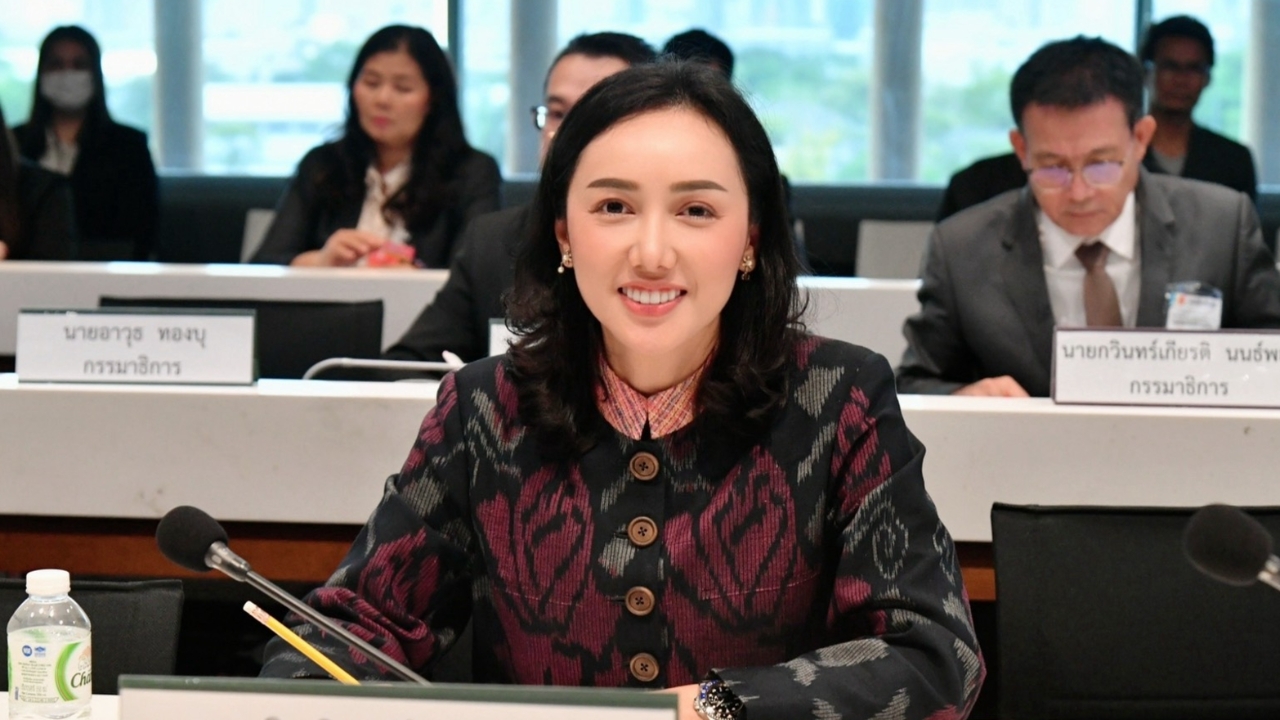
Linthiporn, former Deputy Minister of Education, emphasized that Thai education was once strong and not failing. She invited reflection on the Thaksin era’s focus on children and education, which created opportunities and hope through capable and proactive individuals.
On 3 March 2026 GMT+7, Ms. Linthiporn Warinwatchararat, Deputy Secretary-General of the Pheu Thai Party and former Deputy Minister of Education, posted on her personal page regarding Ice Ratchanok Srinok’s view that Thai education is failing because incompetent people manage it. She questioned on her page whether it is true that no capable people have ever managed Thai education, causing it to fail.
Ms. Linthiporn stated that in fact, the nation has had ministers with knowledge, ability, and passion to reform the education system. The period when Dr. Thaksin Shinawatra served simultaneously as Prime Minister and Minister of Education was a pivotal turning point, shaking education with a new vision to create global citizens. Each initiative Dr. Thaksin implemented unlocked the potential of Thai youth in many dimensions that many may have forgotten.
She said that during 2001–2002, foundations for people and equality were laid, beginning with building the dignity of the teaching profession by adjusting salaries and professional ranks to be on par with specialized careers. Debt problems were addressed to attract talented individuals back into teaching. Simultaneously, the Student Loan Fund was transformed into the Income Contingent Loan (ICL) system, allowing poor children to access university without debt blocking their opportunities.
In 2003, language and digital barriers were broken down and elevated internationally through the English Program (EP) in public schools, hiring native speakers to teach academic subjects so that children in temple schools could perform as well as international school students. Alongside this, the 3-baht Internet policy (SchoolNet) dismantled knowledge barriers, enabling rural children equal access to global information as urban children.
Ms. Linthiporn continued that in 2004, scholarships and “dream schools” were distributed to create opportunities at the grassroots level through the One District One Scholarship (ODOS) program, sending talented students from every district abroad in globally needed fields regardless of financial status. Additionally, rural schools were upgraded to “dream schools” (Lab Schools) infused with technology and child-centered teaching to encourage analytical thinking beyond rote memorization.
During 2005–2006, deep reforms targeted brain development and nurturing spaces, such as the Baby Box initiative sharing knowledge on brain development (BBL) to help parents raise intelligent children from infancy. TK Park was established as a non-traditional learning space combining music, arts, and IT. There was also a strict crackdown on drug abuse to bring youth back into quality education. However, just as the education engine was accelerating toward international standards, a military coup halted progress, freezing, renaming, or letting effective policies wither simply because they originated from the opposing political side.
It is true that Thai education did not fail due to past mistakes but because of a “cut-off vision” that left the system stuck in outdated structures, unable to keep pace with global developments for nearly 20 years. “Just imagine if that progress had not been interrupted—how many economic leaders educated through the ODOS scholarships would we have today, and how far would Thai children have advanced on the world stage?”