

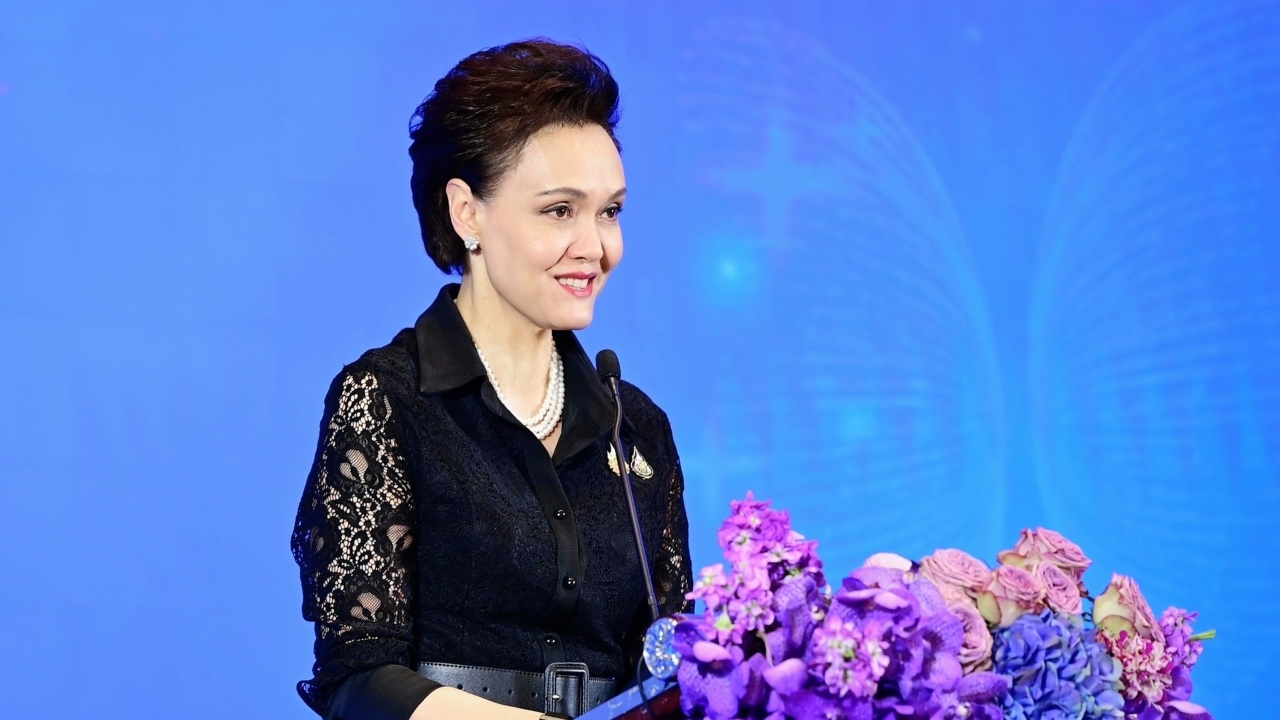
Supachai acknowledges that global energy prices are volatile, affecting Thai exporters. She instructs the Commerce Ministry to set six proactive measures to handle rising shipping costs, assist in managing product prices, control costs, and support exporters.
On 3 March 2026, Supachai Suthammanont, Minister of Commerce, revealed the outcomes of a meeting assessing the unrest situation in the Middle East held on 2 March 2026 at 1:30 p.m. at Phakdi Bodin Building, Government House. The meeting was chaired by Anutin Charnvirakul, Prime Minister and Minister of Interior. Although the direct impact between Thailand and the conflicting countries remains limited, the expanding situation in the Middle East significantly affects the stability of the global economy and trade, especially in energy and maritime transport, which requires close monitoring.
The Commerce Minister said that regarding direct impacts, Thailand’s trade volume with the conflicting countries is not high. In 2025, Thailand’s exports to the Middle East amounted to $12.48 billion, representing 3.67% of total exports. Therefore, there are no significant signs of order cancellations or delays overall.
However, significant effects are present in the Middle East region and the global economy, which is currently under increasing tension, especially for countries relying on maritime transport through key routes in that area. The insecurity and route restrictions have directly impacted sea freight, causing many shipping lines to reroute and extend travel times. This has led to higher freight rates, insurance costs, and logistics expenses. Additionally, container and shipping schedule tightness on some routes has affected Thai exporters.
Moreover, global energy prices tend to be volatile, which may be passed on to production costs and shipping expenses later. The Commerce Ministry assesses that, although direct effects are limited, indirect impacts through price mechanisms and logistics require close vigilance.
To address this situation, the Commerce Ministry has established six key proactive measures:
(1) Managing product prices and preventing opportunistic behavior by closely supervising consumer goods prices, preventing hoarding or unreasonable price hikes, and monitoring the transmission of energy costs to product prices.
(2) Securing alternative raw materials and production inputs by coordinating with importers to survey stocks and diversify risks by sourcing from outside risky areas, as well as encouraging increased use of domestic raw materials.
(3) Supporting exporters and managing logistics by collaborating with the private sector to assess the impact of rising freight and insurance costs, providing in-depth advice on cost management, adjusting delivery terms, and diversifying markets to reduce risks.
(4) Coordinating closely with shipping lines and logistics providers to monitor shipping routes, port congestion, and supply chain continuity to assess impacts on export cost structures.
(5) Proactively leveraging commercial attachés by assigning them to report on trade situations, importer confidence, and related measures closely, while advising Thai businesses on risk management.
(6) Analyzing impacts on inflation and price stability by evaluating increased energy and shipping costs on cost structures and export values to develop timely and targeted policy recommendations.
The Commerce Minister stated that the government is preparing plans to manage product prices, control costs, and support exporters to maintain foreign markets amid volatile global geopolitics. They will work integrally with related agencies and the private sector to maintain stability in Thailand’s trade economy during these uncertain times.