

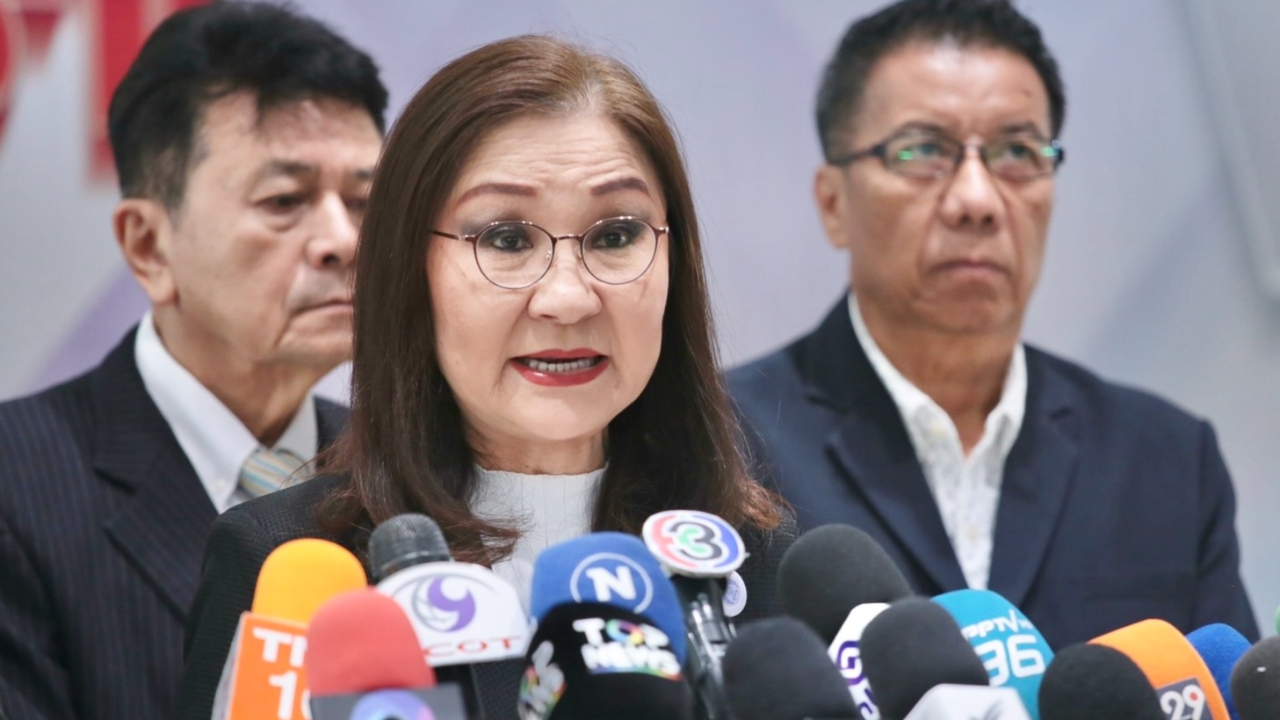
Senator Nantana criticized the government for a soft, 'plus' approach in handling the Middle East war crisis, contrasting it with Singapore's government. She urged Anutin not to manage affairs just by words, noting that Thai people are panic buying fuel. She emphasized that society still does not know how many days or months of oil reserves Thailand actually has left.
At 11:00 a.m. on 4 March 2026 at the Parliament, Ms. Nantana Nantavaropas, a senator, stated she calls on the government to manage the situation stemming from the Middle East conflict seriously. After the United States and Israel launched war against Iran five days ago, the operation has shaken countries worldwide, directly impacting limited oil and gas energy supplies, leading to high prices and potential shortages. This energy crisis is likely to escalate soon into an economic crisis. Thailand will be the most affected in ASEAN, as it imports energy accounting for 4.7% of GDP. Meanwhile, Thai citizens are panicking, queuing densely at fuel stations, yet the caretaker government has not taken any action.
She cited Singapore as an example, which implemented proactive measures on the second day of the Middle East war by announcing six steps: 1. The government warned citizens about the volatility and prolonged nature of the situation, urging preparedness. 2. It provided information on financial management, inflation, and GDP forecasts. 3. Coordinated with the private sector to reduce production costs, adjust production plans, and reorganize supply chains. 4. Proceeded to diversify energy import sources and increase domestic energy reserves. 5. Closely monitored the quantity and distribution of consumer goods to prevent panic-induced hoarding. 6. Economic agencies considered preemptive measures such as utility discounts and transport subsidies, exemplifying a professional government's proactive response.
Ms. Nantana stated, “Returning to Thailand, the government is managing the situation superficially. Currently, people nationwide still do not know exactly how many days of oil reserves remain, as some say 60 days, others claim more, with inconsistent information—an unclear situation amid an energy crisis. Yet, the government insists on exporting oil abroad. Where will the government source oil to replace imports from the Middle East, which must pass through the Strait of Hormuz? What energy-saving measures does the government have? When will work-from-home policies begin to encourage energy conservation? How will the government address rising prices and shortages? What long-term strategies are in place to manage the impending economic stagnation marked by high prices and reduced purchasing power? How will the government support citizens' living costs and assist businesses? These are major national issues, but the government remains inactive and sluggish, relying on old verbal management methods similar to when COVID-19 was dismissed as trivial, causing massive losses. Therefore, I urge the government to manage this war crisis proactively by establishing a war room to gather ideas from the public and private sectors to professionally manage energy resources. Citizens should not panic by hoarding fuel and goods. There must be timely plans to support the public and entrepreneurs. This crisis is severe; the government must not be complacent or careless, nor allow Thai lives to become war victims.”