

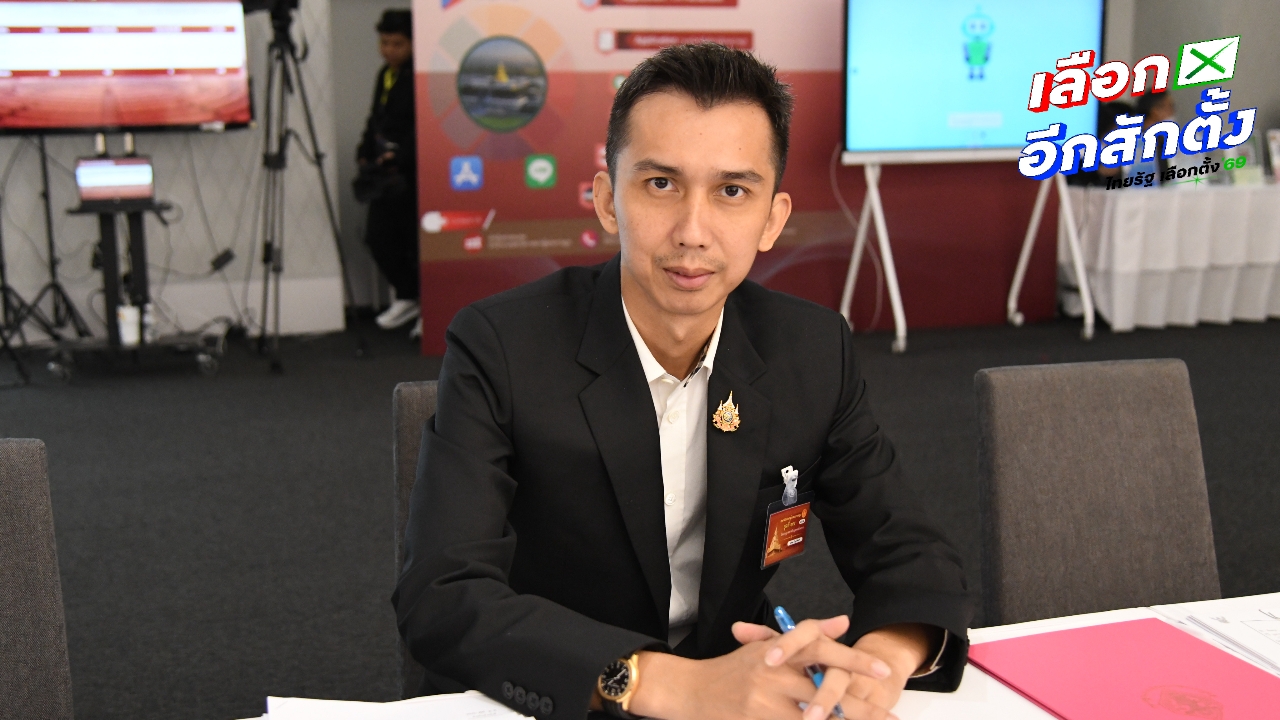
Images of Chonnaphat Naksua, Songkhla MP from Kla Tham Party, show him reporting to parliament as early as 4 March, one day before the Department of Special Investigation (DSI) and the Anti-Money Laundering Office (AMLO) issued a search warrant for his home, revealing legal protections afforded by parliamentary privilege.
On 6 March 2026, reporters reported that Mr. Chonnaphat Naksua, Member of Parliament for Songkhla, Constituency 4, representing the Kla Tham Party, did not report to parliament alongside Lieutenant Colonel Thammanat Prompao, the party's chief advisor, who today brought a total of 54 MPs—including party-list and constituency MPs—to report to the parliament.
Meanwhile, a review of records found that Mr. Chonnaphat had already reported to the Secretariat of the House of Representatives at 16:30 on 4 March 2026. This was before officials from the Department of Special Investigation (DSI), together with staff from the Anti-Money Laundering Office (AMLO), searched Mr. Chonnaphat's home yesterday (5 March) to gather additional evidence related to an old case involving complaints about an online gambling website. As a result, Mr. Chonnaphat now enjoys parliamentary privilege protection, preventing arrest or summons for prosecution during the parliamentary session unless authorized by the House of Representatives.

Furthermore, the Constitution of the Kingdom of Thailand 2017 stipulates parliamentary privileges in Article 124 and immunity in Article 125: In meetings of the House of Representatives, the Senate, or joint parliamentary sessions, any member’s statements expressing facts, opinions, or voting are absolutely privileged. No one may sue or prosecute that member for such statements in any manner.
However, the privilege in the previous paragraph does not protect a member’s statements made during meetings broadcast by radio, television, or other means if those statements, once outside the parliamentary premises, constitute criminal offenses or civil infringements against individuals other than ministers or parliament members.
In such cases, if a member’s statements may cause harm to individuals other than ministers or parliament members, the presiding officer of that assembly must arrange for the requested individual’s clarification to be publicly announced following the assembly’s procedural rules and within the specified timeframe, without affecting that individual’s right to pursue legal action.
The privilege outlined in this article also protects those who print and advertise parliamentary meeting reports according to the procedural rules of the House, Senate, or Parliament, as applicable. It extends to individuals permitted by the presiding officer to present facts or opinions during meetings, as well as authorized broadcasters or transmitters of parliamentary sessions by radio, television, or other means, by analogy.

Article 125 During parliamentary sessions, no member of the House of Representatives or Senate may be arrested, detained, or summoned for investigation as a criminal suspect except with permission from the assembly to which the member belongs or if caught in the act of committing an offense.
If a member is arrested while committing an offense, the presiding officer of their assembly must be immediately informed, and for the benefit of parliamentary meetings, may order the member’s release to attend sessions.
If a member is detained during investigation or trial before a parliamentary session begins, upon convening, investigators or courts must immediately release the member if requested by the presiding officer of their assembly. The court may grant bail or other guarantees as appropriate.
In cases where a member is prosecuted for a criminal offense, whether during or outside parliamentary sessions, the court may proceed with the case during sessions, provided it does not obstruct the member’s attendance at parliamentary meetings.
