

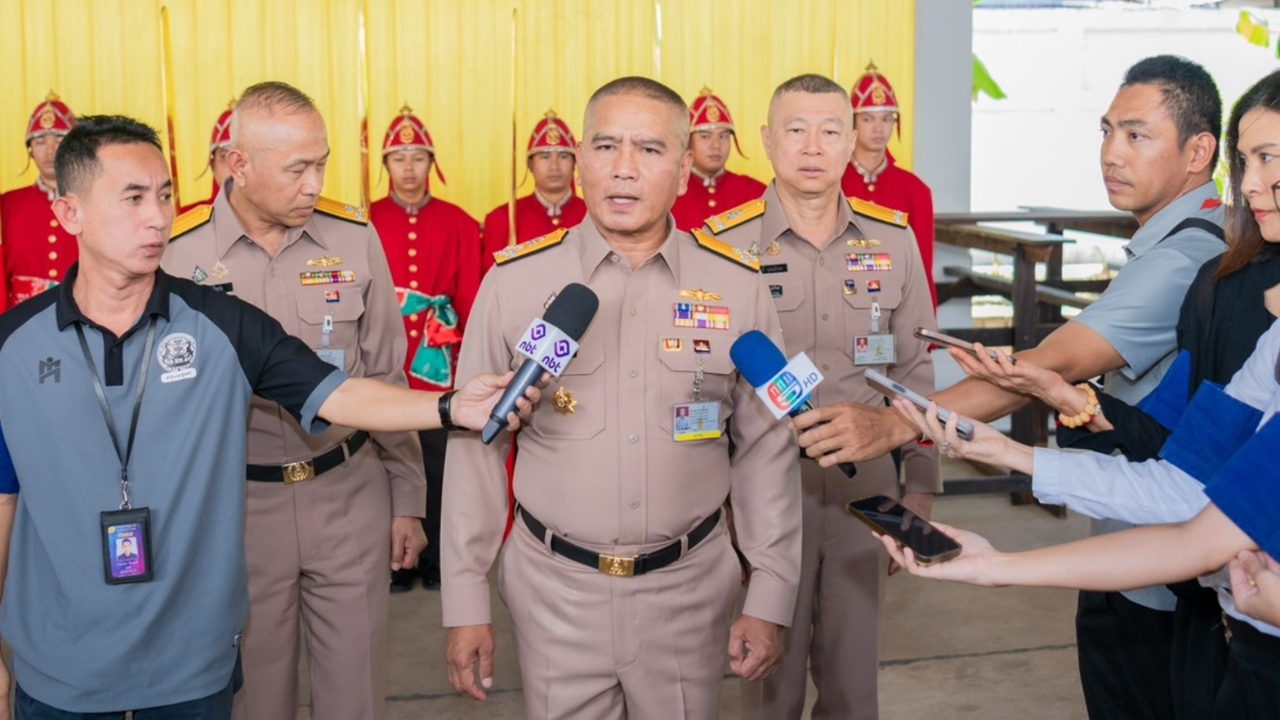
The Royal Thai Navy is training royal ceremony boat rowers to prepare for the Chao Phraya River procession during the King's royal Kathin robe offering ceremony in 2026.
At 09:30 on 10 March 2026, at the Royal Ceremony Boat Division, Small Boat Squadron, Naval Transport Department, Admiral Phairoj Fuangchan, Commander-in-Chief of the Royal Thai Navy, presided over the opening ceremony of the royal ceremony boat rowing instructor training to prepare for the organization of the Chao Phraya River procession for the King's royal Kathin robe offering ceremony in 2026. The ceremony will be held at Wat Arun Ratchawararam Ratchawaramahawihan on 6 November 2026, on the occasion of the auspicious celebration of the Queen's 4th cycle (80th) birthday anniversary. Rear Admiral Ratana Ruangrung, Deputy Chief of Naval Staff for Personnel, as Chair of the Royal Ceremony Boat Preparation Committee, along with Rear Admiral Supasit Buranawosot, Director of the Naval Transport Department and Chair of the Subcommittee on Personnel Training and Rowing Rehearsals, welcomed the event.
The training of royal ceremony boat rowing instructors is the initial critical step in preparing for the Chao Phraya River procession for the 2026 royal Kathin ceremony. The trainees are personnel from all 35 royal ceremony boat units assigned as boat captains and helmsmen for all 52 royal barges, totaling 162 individuals—58 serving as captains and 104 as helmsmen. They receive instruction on correct rowing techniques and procedures. Upon completion, they serve as rowing instructors within their units, training their crews through land-based rowing drills, known as "rowing on the chopping block," and water-based rowing practice to develop boat handling skills. Subsequently, they will proceed to formation adjustment training on the Chao Phraya River.


Regarding the Navy's operational plan for preparing the Chao Phraya River procession, key readiness areas include personnel preparation, rower training, royal barge maintenance, and pier preparation. This procession will use a total of 52 royal barges arranged in 5 rows, measuring 1,200 meters long and 90 meters wide, staffed by 2,200 personnel. The procession consists of various types of vessels as follows.
1. Central Row of Barges, totaling 10 vessels, consisting of:
1.1 The Royal Barge with the monarch onboard: the Royal Barge Suphannahong, the vessel for the monarch's presence.
1.2 Two Reserve Royal Barges: Royal Barge Narai Song Suban of King Rama IX and Royal Barge Anekchatphuchong.
1.3 One Royal Barge carrying the Buddhist robes: Royal Barge Anantanakkharat.
1.4 Two Drum Barges: consisting of
1.5 One Escort Barge: Barge Saeng 7, which protects the monarch.

2. Inner Row Barges: 2 rows with 7 vessels each, totaling 14 barges, consisting of:
2.1 Two Front Gate Barges: Thong Khwan Fa and Thong Babiin, which lead the procession rows.
2.2 Two Destroyer Barges: Suea Thayan Chon and Suea Kamron Sin, leading the armed vessels.
2.3 Eight Animal-shaped Barges: Asuravayuphak, Asurapaksee, Krabirayan Ronrap, Krabi Prab Muang Mar, Palee Rangthawip, Sukreep Khrong Muang, Krut Hern Het, and Krut Trej Trajak. These barges have figureheads carved as real or mythical animals to indicate their associated department or noble owner.
2.4 Two Tow Barges: Ek Chai Hern Hao and Ek Chai Lao Thong, which tow the royal barges, for example, when navigating swift currents to increase speed.
3. Outer Row Barges: 2 rows with 14 vessels each, totaling 28 barges, consisting of:
3.1 Twenty-two Long Barges: Long 1 through 22, serving as the front defense of the procession.
3.2 Six Escort Barges: Saeng 1 through 6, which provide royal protection.

