

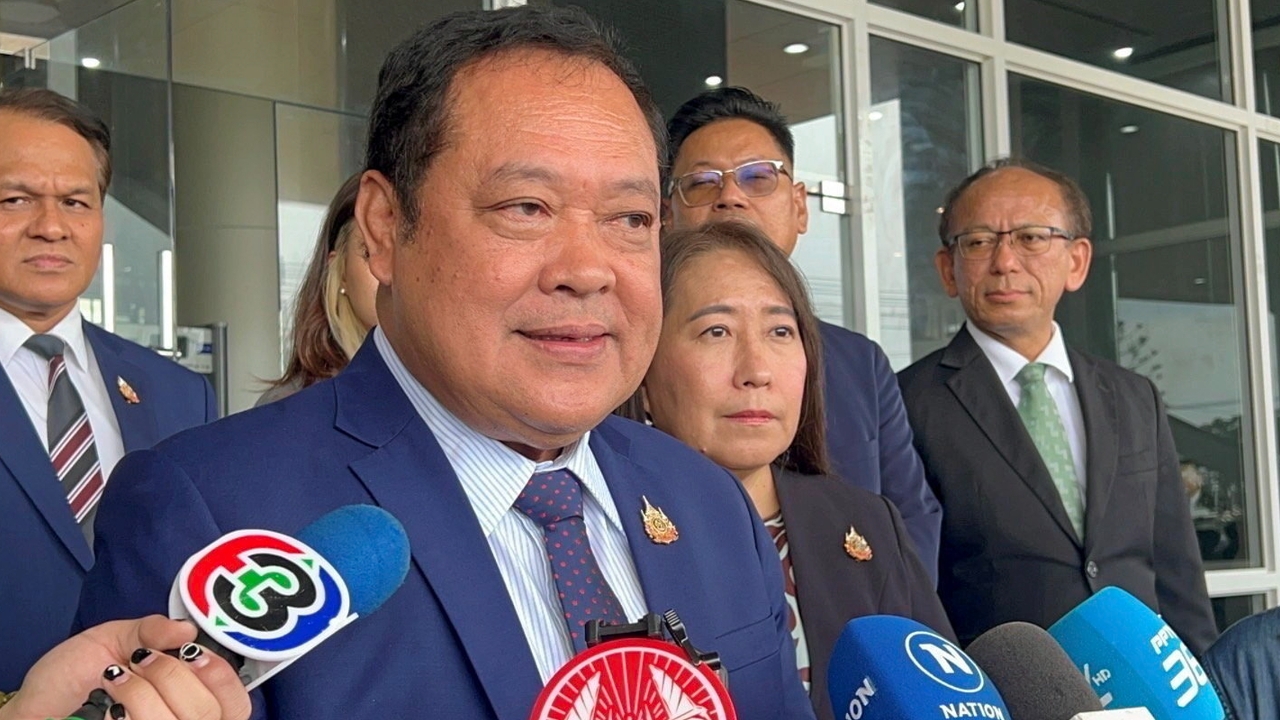
Tawee calls to stop the "tax and phantom oil prices" to resolve the crisis burdening the public, proposing emergency measures to cut excise tax and cancel fund collections, immediately reducing prices by 10 baht per liter.
On 11 Mar 2026 GMT+7, Police Colonel Tawee Sodsong, former Minister of Justice, leader of the Prachachat Party, and party-list MP, posted on social media content urging a stop. "Tax and phantom oil prices" to resolve the crisis causing public hardship.
He stated that pump oil prices have become the heaviest burden eroding Thai living costs. A survey by the National Statistical Office early in 2026 found that the top urgent issue the public wants the government to address is. "Reducing prices of consumer goods, electricity, fuel, and cooking gas." Following the US-Israel attack on Iran, Thai oil prices were. "Distorted contrary to reality." This mechanism allows traders to reap massive profits from "old stock" while the entire nation suffers.
Shockingly, in just 11 days after the war began (27 Feb - 10 Mar 2026 GMT+7), crude oil costs at refineries surged by 72%, with gasoline jumping from 16.54 baht to 28.46 baht and diesel rising from 18.96 baht to 35.29 baht.
In reality, the oil dispensed today is "old stock" purchased earlier at lower prices before the war, yet pump prices rose immediately following the globally panicked market. This is the "phantom price" mechanism, referencing an import parity price from Singapore with added phantom transport and insurance costs, despite domestic refining generating enormous stock gains. Meanwhile, consumers are forced to bear this burden with no alternatives.
Police Colonel Tawee also proposed a one-year emergency reform: " "Cut fat—reduce taxes"—closing the door to corruption. He affirmed the government must address issues by reducing controllable variables rather than introducing new loans or revenue-raising measures to subsidize prices, as complex financial routes often lead to leaks and corruption. Therefore, he proposes the following one-year emergency measures:
(1) Cut excise and municipal taxes Currently, the state collects excise tax on diesel at 6.92 baht/liter and gasoline 95 at 7.50 baht/liter. These should be reduced, as during Yingluck Shinawatra's government when excise tax was lowered to 0.05 baht/liter or zero, or during Prayut Chan-o-cha's COVID-19 period when excise tax was cut by 5 baht to 1.44 baht, or by suspending these tax collections now.
(2) Suspend fund contributions (claimed for energy security) including the Oil Fund at 9.6 baht and the Conservation Fund at 0.05 baht, totaling 9.65 baht. Temporarily halt fund collections to restore liquidity directly to the public and reduce market distortions. Cutting excise taxes and suspending fund collections could immediately lower oil prices by over 10 baht per liter without using any government budget to subsidize.
(3) Eliminate the "phantom price" and control marketing margins Cancel referencing the import parity price, enforce actual domestic refining costs (Cost Plus) from local stock, and regulate marketing margins to reflect fair competition.

Police Colonel Tawee added that the state must accept some sacrifice to save citizens' lives. If the government implements these measures, the true cost of oil without "tax and phantom price" would reduce diesel to around 18-19 baht and gasoline to 16-17 baht. Adding marketing margins (income for oil companies and station owners covering staff wages, electricity, transport, and profit) at about 3.7 baht, diesel would cost approximately 24 baht per liter and gasoline about 21 baht per liter.
Thus, concerns about government revenue loss cannot compare to the devastation of the grassroots economy and logistics costs. Using the approach of "reducing public expenses rather than increasing state revenue" is the most transparent, corruption-free method and the only way to help Thailand's economy survive the current energy security crisis.
