

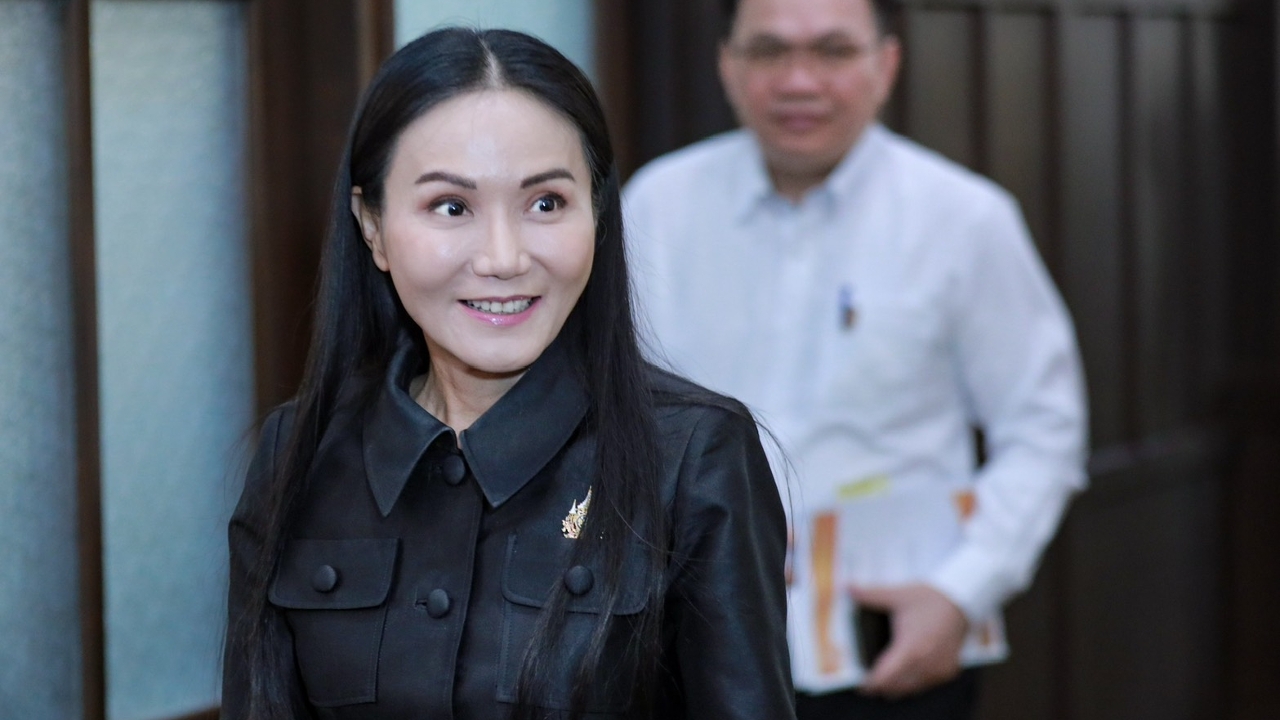
“Narumon” chaired the Teachers' Council board meeting proposing revisions to professional license criteria, opening the way to use teaching experience alongside exam scores, and approved 29 teacher education programs from 18 institutions.
On 11 Mar 2026 GMT+7, Dr. Narumon Pinyosinwat, Minister of Education, chaired the 3/2569 meeting of the Teachers' Council Board, with board members and Assistant Professor Amolwan Weerathammo, Secretary-General of the Teachers' Council, attending at the Rajawallop meeting room.
Dr. Narumon stated that the meeting approved the recognition of qualifications for teacher professional licenses for applicants graduating from foreign institutions, according to the Teachers' Council announcement on recognizing qualifications for professional teacher licenses for foreign graduates, B.E. 2566 (2023), covering 311 individuals. The board also approved the development of tests on knowledge and professional teaching experience per teacher professional standards and agreed on a draft Teachers' Council announcement regarding criteria and methods for testing and evaluating teaching professional competencies (draft version) B.E. .... The proposal allows assistant teachers' practical teaching experience to be considered in issuing teaching licenses by combining practical evaluation scores from their employers with exam results. If the combined score exceeds 60%, the license is granted immediately. There will be time limits: for example, 2 years of work counts up to 20% of the evaluation, and 3–4 years counts up to 30%.
“This approach addresses the needs of many teacher groups, especially special education teachers, for whom this score is very important, instead of relying solely on exam scores to obtain licenses. By the end of March, there will be clarity on reviewing the entire licensing exam system, potentially allowing completion at the university level, similar to medical professional licenses, which have tiered exams at the producing institutions. If this approach is adopted, universities and the Teachers' Council must work closely to truly meet teacher production needs. Development should conclude within universities, not leaving graduates uncertain about receiving licenses. The number of licenses to be issued remains undecided and will be clarified by the end of March as well,” said Dr. Narumon. Dr. Narumon added.

Additionally, the meeting approved a framework for developing tests on knowledge and professional teaching experience aligned with teacher professional standards. Proposals for sustainable systemic teacher quality development cover nine points: improving student selection quality for teacher training institutions, verifying readiness and standards of teacher training institutions, quality assurance of teacher education curricula, quality checks of program leaders and instructors at training institutions, supporting and strictly overseeing quality teacher production and development processes, evaluating competencies before graduation, qualifications required for initial teaching license exams, reviewing test design aligned with current contexts, and creating a linked database system among teacher training institutions, the Office of the Higher Education Commission, the Teachers' Council, and teacher employers including the Teachers’ Civil Service and Local Government sectors.
Dr. Narumon concluded by stating that regarding the recognition of degrees and certificates by professional standards, the meeting approved 29 programs from 18 institutions: 18 four-year bachelor's degree programs in education, six graduate diplomas in teaching profession, one master's degree in education (teaching profession), and four master's degrees in education (educational administration). The board also approved changes to details for previously recognized degrees and certificates, including adjustments to student intake plans for three institutions covering 12 programs: 11 four-year bachelor's degree programs in education and one master's degree in education (educational administration).