

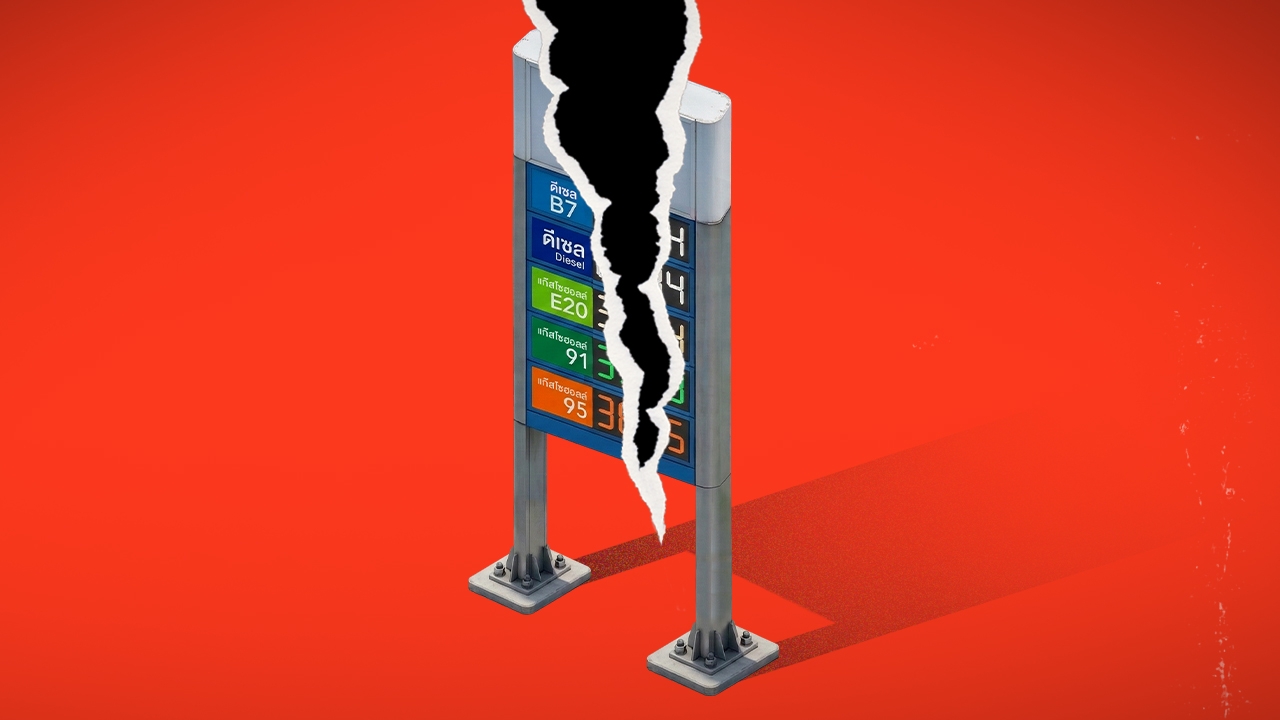
The surge in crude oil prices in the global market, especially refined oil prices in the Singapore market, is creating pressure on energy costs that inevitably impacts Thailand’s economic system, as Thailand mainly relies on imported fuel energy.
In such a situation, fixing oil prices through the Oil Fund or government subsidies alone is no longer a sustainable solution, because the longer energy prices stay high, the heavier the burden on the Oil Fund and the national budget. Currently, the Oil Fund compensates diesel prices at the pump by 13 baht per liter and this amount will continue to rise until the war ends.
What the government, especially the Ministry of Energy, should do now is not to keep delaying but to manage the situation with a clear plan, focusing on protecting the most vulnerable groups of the population.
First, the Ministry of Energy should communicate honestly, transparently, and gradually with the public that subsidizing oil prices is not a permanent formula that can be used indefinitely. Importantly, Thailand cannot avoid the impacts from the global energy market crises in the Middle East indefinitely.
The government, through the Ministry of Energy, must report the situation truthfully and explain the timeframe and conditions of state policies on how they will assist citizens and businesses, so that all parties can prepare to cope with the situation. This approach is better than allowing uncertainty and distrust among the public that lead to panic, as has been seen.
Second, energy policy should shift from subsidizing oil prices across the board to targeting assistance to the most necessary groups, such as public transportation, freight trucks, farmers, fishermen, and low-income groups. These groups are key indicators of the national cost of living index. If energy costs rise sharply for them, it will cause a ripple effect on product prices.
Third, if oil prices must be adjusted, the government should do so gradually and announce changes in advance—for example, increasing prices in small steps to reduce shocks to living costs, inflation, and business expenses. Predictable adjustments are better than sudden ones.
Fourth, the state must prioritize short-term energy security by carefully managing oil reserves, diversifying oil and other energy import sources, and preventing fuel hoarding during tight global energy markets. In the long term, this oil price crisis should serve as a catalyst for Thailand to accelerate restructuring its energy system, including developing public transport, seriously promoting clean energy, and reducing dependence on oil in the economy.
The truth is, Thailand cannot control global oil or energy prices, but it can manage their impacts if the government adopts transparent, rational policies that prioritize those most affected.
Telling Thai people the real situation should not be avoided but rather be the starting point for building mutual trust to face this major energy crisis together.
The key question is not how the government can stop or prevent oil prices from rising, but how it can manage the impacts of rising oil prices fairly and sustainably.