

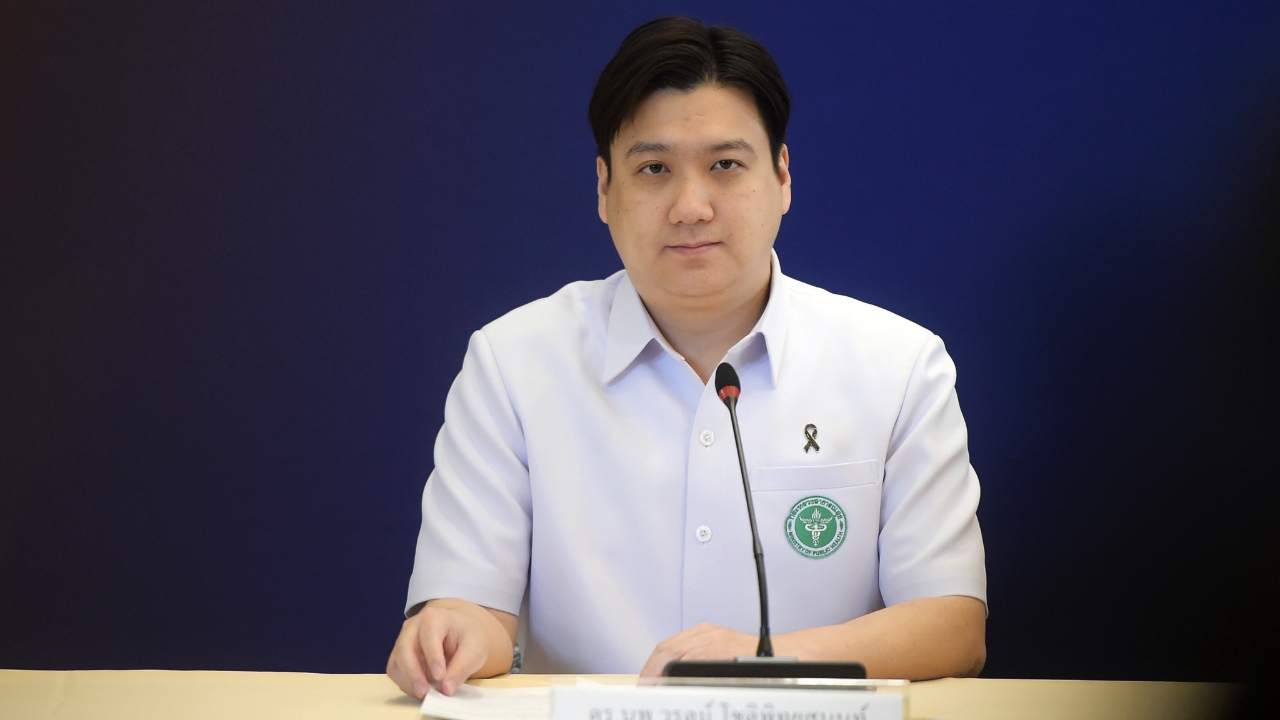
The Ministry of Public Health spokesperson announced expanded online channels for physical and mental health consultations for Thai nationals in high-risk countries. They have prepared comprehensive three-dimensional screening measures and organized medical teams and staff to support this effort, confirming readiness in both personnel and medical supplies.
At 11:05 a.m. on 12 March 2026, at the Government House, the Center for Management and Monitoring of the Conflict Situation in the Middle East (CMMS) held a daily briefing. Dr. Woratom Chotpittayasunont, spokesperson for the Ministry of Public Health, stated that due to the unrest in the Middle East region, Mr. Pattana Prompat, Minister of Public Health, emphasized to all related units within the ministry to prepare comprehensive care for the physical and mental health of over 100,000 Thai workers in the at-risk countries, focusing on three key areas.
1. The Ministry of Public Health has increased health care access for Thais in risk areas by providing immediate online self-care options. For physical health, consultations and care are available via telemedicine through the Mor Prom Super App, which offers services such as online doctor appointments, remote diagnoses, and secure digital health record management. Alternatively, the Line Official Account "Trusted Health Partner for Thai Workers Abroad" allows users to request medical advice and receive initial symptom assessments and health guidance from medical personnel anytime, anywhere. For mental health, the Department of Mental Health has opened a special channel to reduce stress and anxiety for people in risk areas, accessible by adding the Line ID @1323middle.east or scanning QR codes from related media.
2. Three-dimensional screening measures are in place at points of entry into the country, with medical teams and staff assigned to support the screening process. The first dimension is proactive screening: the Department of Disease Control checks for key symptoms such as fever, cough, respiratory issues, and skin rashes. Suspected cases are immediately isolated and referred to designated medical facilities. The second dimension involves the Department of Medical Services screening for chronic diseases and injuries requiring treatment, with referrals to a nationwide network of prepared hospitals. The third dimension addresses mental health: the Department of Mental Health and the MCATT team conduct initial mental health assessments and provide immediate psychological care if severe insomnia, panic, or stress conditions are detected.
3. The Ministry of Public Health continues to monitor and care for Thai citizens by extending concern directly to their homes. At the local level, provincial health offices and hospitals in their home regions will send staff to visit homes and monitor conditions via telephone. For patients with chronic illnesses or those needing ongoing rehabilitation, the ministry facilitates continuous and timely access to medical services in their local areas.
Dr. Woratom added further advice for returnees: if you experience abnormal symptoms such as fever, cough, shortness of breath, or accumulated stress after returning, please inform screening personnel immediately so medical teams can promptly provide standardized treatment. Additionally, residents in risk areas should continuously follow reliable news sources, maintain ongoing safety plans, and strive to live as normally as possible by engaging in stress-relieving activities and regularly contacting loved ones. Finally, you can seek help whenever needed without hesitation. The Ministry of Public Health assures full readiness in all aspects, including personnel and medical supplies, to care for all Thai people.