

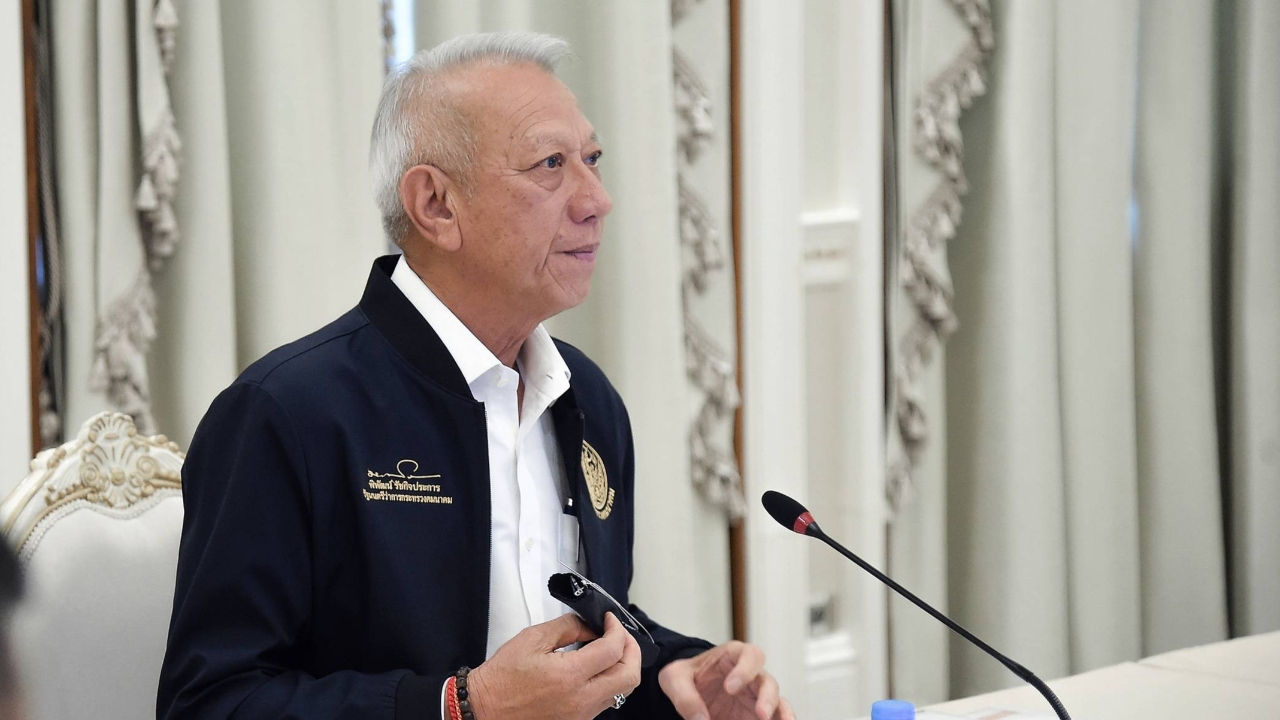
Phiphat is set to convene a meeting tomorrow to address the 4-baht increase in refining fees and discuss the oil fund should the Middle East war drag on. Regarding the Mayuree Naree ship, Iran has admitted to firing the bomb but the cause remains unknown.
12 March 2026 GMT+7 Mr. Phiphat Ratchakitprakarn, Deputy Prime Minister and Minister of Transport, serving as chairman of the Center for Management and Monitoring of the Middle East Conflict Situation (CM3ES). He updated on progress addressing energy issues caused by the Middle East war, stating that violent clashes continue between Israel, the United States, and Iran, along with several other Middle Eastern countries, with no sign of easing. On 11 March, the Thai-flagged ship Mayuree Naree had completed delivering goods in the United Arab Emirates (UAE) and was attacked by a bomb at the ship’s stern while returning. There were 23 crew members on board. Oman’s marine forces successfully rescued 20 crew members. Three remain missing. Reports last night indicated search and rescue operations were underway, but no further updates have been received.
Mr. Phiphat added that when such events occur, global oil prices rise, and crude oil prices climb again. The exact price changes are uncertain, but since 1 March, the Prime Minister has ordered that diesel prices be fixed at 29.94 baht per liter for 15 days until 16 March. On 17 March, a new price adjustment will be announced. For gasoline, prices are not fixed but E10, 95, and 91 octane prices have increased by 0.50 baht per liter. E20 and E85 prices have been reduced. Diesel prices remain stable, especially with the current oil fund needing to compensate 3 billion baht daily. Previously, the fund had a surplus of 2.5 billion baht but will turn negative after compensation.
He acknowledged that the Thai public and media are questioning the Energy Ministry, the CM3ES, and the Prime Minister about why refining fees have risen from 2 baht to 6 baht. He will invite executives to a meeting tomorrow, 13 March at 10:00 a.m., to discuss the reasons behind the 6-baht increase. A press briefing is expected at Government House around noon afterwards.
Regarding initial measures to support operators, Mr. Phiphat said they first need to hear from refineries about the reasons for the 4-baht price hike. After discussions, they will consider joint solutions. The burden should not be fully passed to consumers, as the oil fund is immediately affected, not users. Consumers will feel the impact only if prices rise after the 15-day cap expires. The fund’s money belongs to all. When crude prices fall but domestic selling prices remain high, the difference is returned to the fund. Currently, with crude prices rising, the fund must compensate to avoid immediate shocks.
“We do not wish for these events to occur, and neither does the Prime Minister. But even though we are not a party to the war, we are still affected by it.”
Mr. Phiphat stated the Energy Ministry is confident and can confirm that about 50% of oil purchases in the market pass through the Strait of Hormuz, and the rest do not. The ministry and PTT still procure oil normally. Prices depend on the regional spot market. Operators under Section 7 buy oil from domestic refineries using a three-day average spot price. If the period includes weekends, the next business day’s price is used.
When asked if the oil fund will run a deficit of 120 billion baht like in 2022, Mr. Phiphat said it is currently unpredictable as the war’s end is unknown. However, the Prime Minister has directed that care and fairness be extended to all Thai users, including general consumers, industry, agriculture, and especially industries buying oil through jobbers or wholesalers not directly from the three main companies: PTT, Bangchak, and Caltex. He assured that PT is not involved, as it only sells to franchise customers.
Industries purchasing from jobbers should collect bills and report them to the provincial energy office or governor. In Bangkok, reports go to PTT headquarters; in other provinces, to local offices or governors. The Energy Ministry has discussed with parent companies that when bills are collected, they must supply oil to the jobber’s industrial customers. The government is working to support this because refinery and gas station prices differ by about 10 baht. It remains to be seen whether the government or companies will assist or if traders must bear responsibility. Jobbers sell cheaper than stations, but currently station prices are lower than wholesale.
Regarding companies making tens of billions in profit while the fund runs a deficit, the Minister of Transport said it is the government’s role to mediate prices. In the past, deficits reached hundreds of billions; now it is likely several billion. He urged hope for a swift resolution to avoid further fund deficits.
: Mayuree Naree ship Asked whether there has been contact with the ship’s owner, Mr. Phiphat said he has assigned the Permanent Secretary of the Transport Ministry and the Director-General of the Marine Department to coordinate continuously. The Director-General has not yet reported any updates. The exact cause remains unknown and uncertain. Iran has admitted to firing the bomb, but the motive is difficult to ascertain. Iran declared that if any country expels Israel’s ambassador, it would allow attacks on that country’s ships passing through the strait. Mr. Phiphat views this as unacceptable. Thailand cannot tolerate such intimidation, as many other countries’ ships also transit this route. The transport of oil, crude, gas, and other goods must pass through this channel.
When asked if any other Thai-flagged ships remain in the Strait of Hormuz, Mr. Phiphat confirmed that the last Thai ship passed safely through the strait yesterday. No other Thai-flagged ships are currently in the area.