

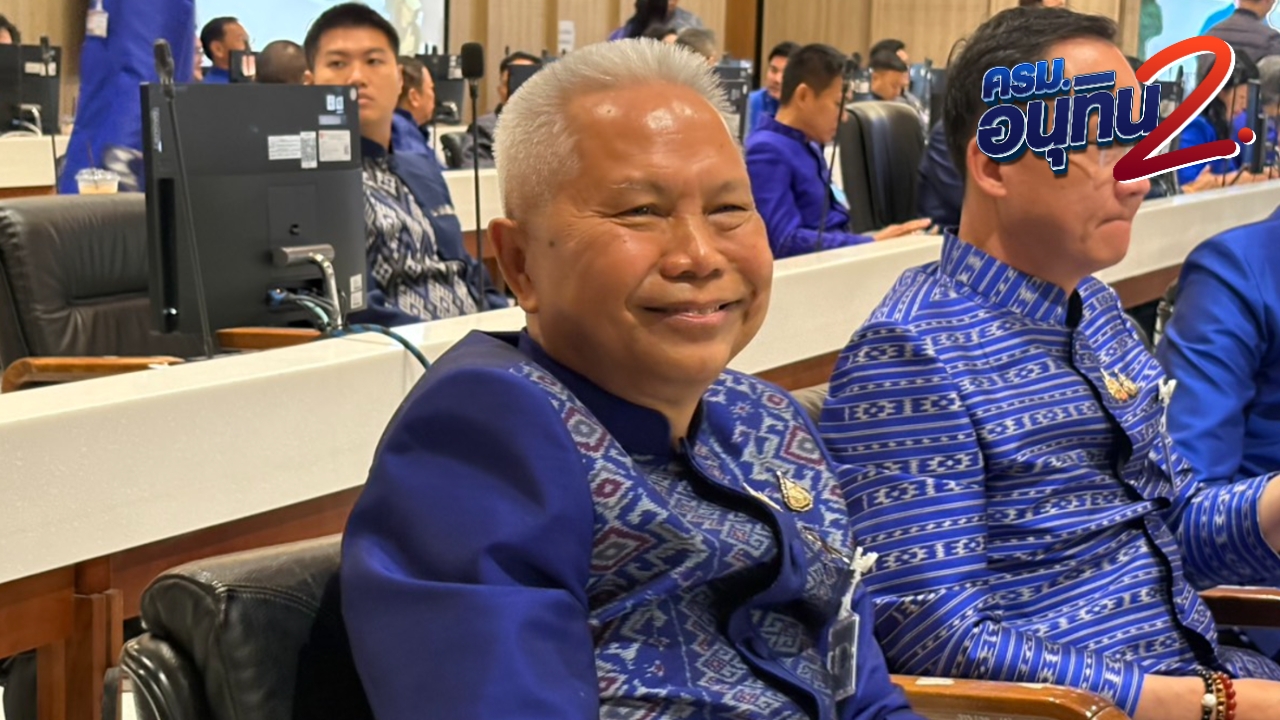
The 2026 Speaker of the House vote unfolded as expected: Sopon Sarum, Buriram MP from the Bhumjaithai Party, won overwhelmingly with 289 votes to become the 35th Speaker, surpassing Parit Watcharasindhu by more than double, with over 80 abstentions and invalid ballots.
On 15 March 2026 at 09:30, the 27th House of Representatives, 1st year, 1st extraordinary session convened to vote for the Speaker following the MPs’ oath-taking under Article 115 of the Constitution of the Kingdom of Thailand. Mr. Phairoj Lohsuntorn, a 90-year-old party-list MP from the Pheu Thai Party and the eldest MP, acted as the temporary chair.
At 09:38, Mr. Prasert Chandraruangthong, Secretary-General of the Pheu Thai Party, nominated Mr. Sopon Sarum, Buriram MP of the Bhumjaithai Party, for approval as the 35th Speaker. Meanwhile, Mr. Pakornwut Udompiphatsakul, party-list MP of the Prachachon Party, nominated Mr. Parit Watcharasindhu, also party-list MP, as a challenger. Both nominees then presented their visions.

Mr. Sopon thanked the Bhumjaithai Party, its members, and those who nominated him. He reflected on his 25 years of work, acknowledging strengths and weaknesses, and expressed hope that this House would combine past experience with modern technology to develop the House of Representatives. He emphasized that representatives volunteer to serve the people and solve national problems. The legislature should bring citizens’ hardships into discussion through questions and motions, implementing these concretely. He also wished for a legislature that provides quality, balanced, and reasoned oversight.
Regarding legislation, he noted the world faces crises and hoped the legislature would help overcome them. Laws passed here should serve as tools for the executive branch. Many outdated laws exist; he hoped this House would promptly amend or repeal them. New laws must be modern, timely, and efficient, adapting to developments.
. . . He believes citizens do not want to see the House engage in winning arguments without regard to consequences but want concrete work. He earnestly hoped members would collaborate on legislation and that this House would be a reliable model. Without becoming a dignified legislature, achieving the democracy we seek is difficult. As a nominee, he vowed to work fairly for the nation, religion, monarchy, and people, upholding constitutional monarchy democracy.

Next, Mr. Parit thanked members for his nomination and acknowledged he did not expect to be elected after the election results. While respecting the top-ranked party’s rights, as opposition leader, he viewed the role as not only to scrutinize the government and push legislation but also to promote directions for government consideration and for public decision-making.
The Speaker’s most important mission is to restore public trust in politicians in the House. Although the only directly elected body, it has often damaged public faith. The Speaker must remain impartial. He believed everyone agreed that any party violating rules must be warned and treated equally. He noted the public’s hopes and outlined four principles for the next Speaker, where neutrality should not apply.
1. The next Speaker should not be neutral between stagnation and progress. He wants the House to better utilize future technologies to improve legislative efficiency, such as creating a database compiling MPs’ debates in plenary and committee meetings for public access, and increasing possibilities for online meetings to respond rapidly to citizens’ crises without waiting for regular sessions.
2. The next Speaker should not be neutral between secrecy and transparency. A transparent House allows citizens to see if their taxes are well spent. This includes producing and publishing dashboards for real-time public monitoring of MPs’ attendance, debate frequency, and voting alignment with constituents. The House should also support live broadcasts of committee meetings, as it does plenary sessions.
3. The next Speaker should not be neutral between wastefulness and protecting taxpayers. Given current economic challenges worsening citizens’ livelihoods, people do not want their elected representatives to waste tax money or lavishly renovate the House instead of solving public problems. He hopes the Speaker will lead efforts to cut or reduce unnecessary budgets, even if it conflicts with some members.
4. The next Speaker should not be neutral between power concentrated in a few and the power of the people. A House that does not protect its organization’s existence weakens democracy. With democracy under pressure and citizens’ voices muted, he hopes the next Speaker will champion protecting the people's will from obstruction, distortion, or domination by powers detached from the populace.
As a representative of 500 elected members, he sees the Speaker’s key role as uniting all parties and members to review the recent election management, restoring public confidence that future elections will be free, fair, and transparent. He also believes the Speaker must ensure the constitutional drafting process proceeds steadily, quickly, and inclusively, reflecting the February 8 referendum’s public mandate.
“The most important question today is: In the next four years, will this House stand with the sovereign people of the nation or with a few power groups attempting to dominate our representatives?”
As there were multiple nominees, a secret ballot was conducted. MPs lined up alphabetically, received ballots, wrote the name of their choice for Speaker, and submitted them into the ballot box. A committee representing each party counted votes. After debate on name-writing, it was agreed to use numbers: Sopon Sarum as number 1, Parit Watcharasindhu as number 2; abstentions were indicated by leaving the ballot blank.
At 10:31, Mr. Phairoj called for MPs to show presence; 447 members were present, constituting a quorum, though some later called out. A six-person vote-counting committee was appointed, and voting began at 10:41.

By 11:56, after secret voting ended, the chair closed the ballot box. The counting committee began tallying votes aloud at 12:02, led by Mr. Worawong Worapanya, Lopburi MP from Pheu Thai, finishing at 12:42.
At 12:54, the chair announced the results: Mr. Sopon Sarum received the highest number of votes: 289. He was thus approved as Speaker. The vote breakdown was as follows:

At 12:59, the House proceeded to elect the 1st Deputy Speaker. Ms. Mallika Jiraphanwanit, Lopburi MP of the Bhumjaithai Party, was nominated unopposed. She was required to present her vision, similar to Mr. Lertsak Patanachayakul, who was also unopposed and presented his vision, thus becoming the 2nd Deputy Speaker. As expected, the session concluded at 13:13. (Read more:)No surprises as Mallika and Lertsak smoothly elected Deputy Speakers.)
After the Speaker and Deputy Speakers are confirmed, the Secretary-General of the House will promptly notify the Prime Minister to submit a royal command for their appointment. A formal ceremony will follow to receive the royal appointment before they assume their duties.