

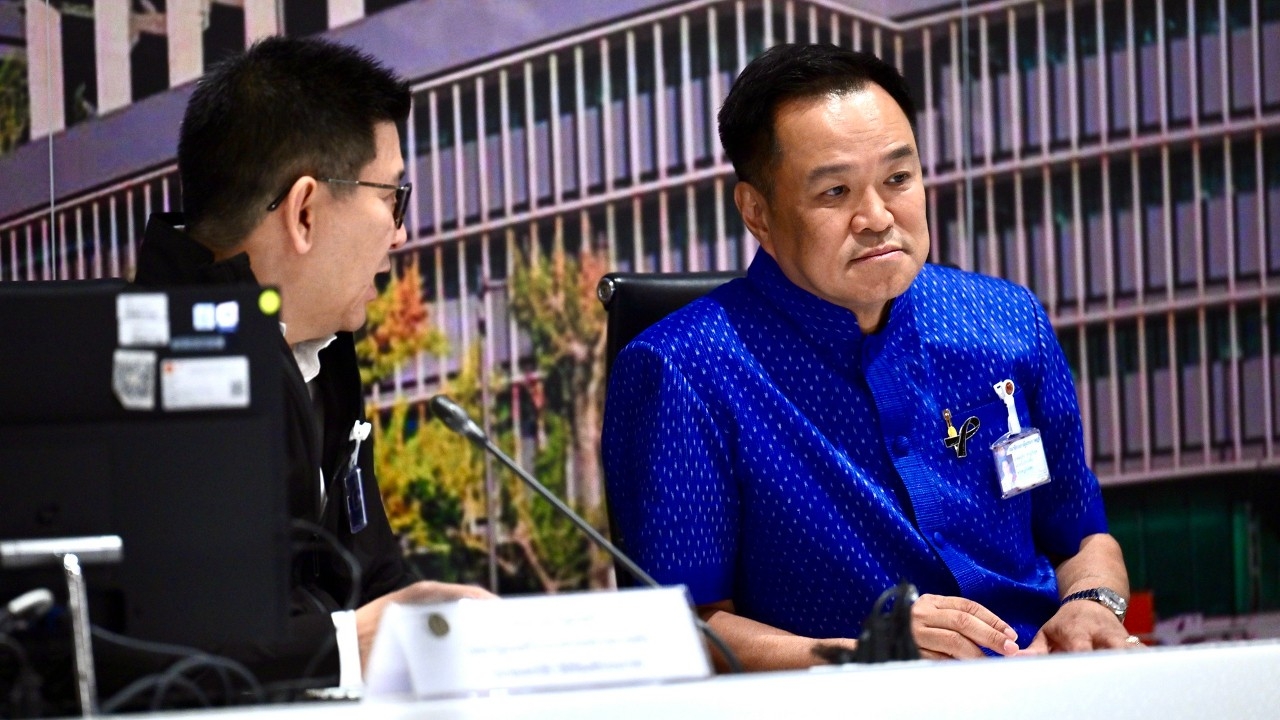
The Prime Minister led the SBK meeting, where Ekkaniti confirmed that crude oil supplies remain abundant, sufficient for 90 days. Fuel at gas stations is adequate, ATM cash has not run out, and efforts are underway to communicate with the public. He emphasized managing transport and logistics carefully.
At 11:55 a.m. on 15 Mar 2026 GMT+7, at the Parliament Building, Anutin Charnvirakul, Prime Minister and Minister of Interior, acting as advisor to the Situation Center for Monitoring the Middle East Conflict (SBK), chaired the SBK meeting alongside Ekkaniti Nitithanprapas, Deputy Prime Minister and Minister of Finance, who is also SBK deputy director. Commerce Minister Supachai Sutthumpun, Defense Minister Gen. Natthaphon Nakpanich, and SBK committee members also attended. Deputy Prime Minister and Transport Minister Pipat Ratchakitprakarn, SBK director, joined via video conference due to an official inspection in Phatthalung province.
Ekkaniti stated that crude oil supplies are certainly adequate because there is enough crude for refining to cover 90 days comfortably. The Ministry of Energy reported that plenty remains. The current issues stem from managing transport and ensuring that fuel stations can assure the public that fuel supplies are sufficient, despite concerns raised by the National Economic and Social Development Council secretary-general about ATMs running out of money; in reality, there is still plenty of cash.

Ekkaniti said management today must make people feel assured that fuel supplies are plentiful. This has been confirmed by major fuel operators such as PTT, Bangchak, and other large traders, who all confirm that fuel is not depleted but remains abundant. However, transport management is critical. We need to communicate clearly with the public that fuel is sufficient at stations. Additionally, besides the usual public demand at stations, the industrial sector, which normally does not refuel at stations, has increased demand, which makes people feel that fuel might run out. This is essentially a transport management issue.

In summary, the tasks today are as follows:
1. Communicate with the public, with major fuel traders confirming that fuel supplies are definitely sufficient.
2. Entrust the Ministry of Energy with managing transport and logistics, including providing detailed information about areas nearing shortages so supplies can be redirected accordingly. The National Economic and Social Development Council secretary-general mentioned that some ATMs are short of cash, but funds have been pooled to ensure sufficiency.
3. Address the industrial sector's fuel demand, as the Federation of Thai Industries has advised finding management solutions. Deputy Prime Minister Pipat proposed managing industrial fuel use separately to avoid competition with the general public, establishing alternative channels.