

The government invited oil trading companies to discuss oil reserve stocks after many gas stations ran out of fuel due to public stockpiling. Authorities have ordered urgent communication asking the public not to worry, assuring there is enough supply for 90 days.
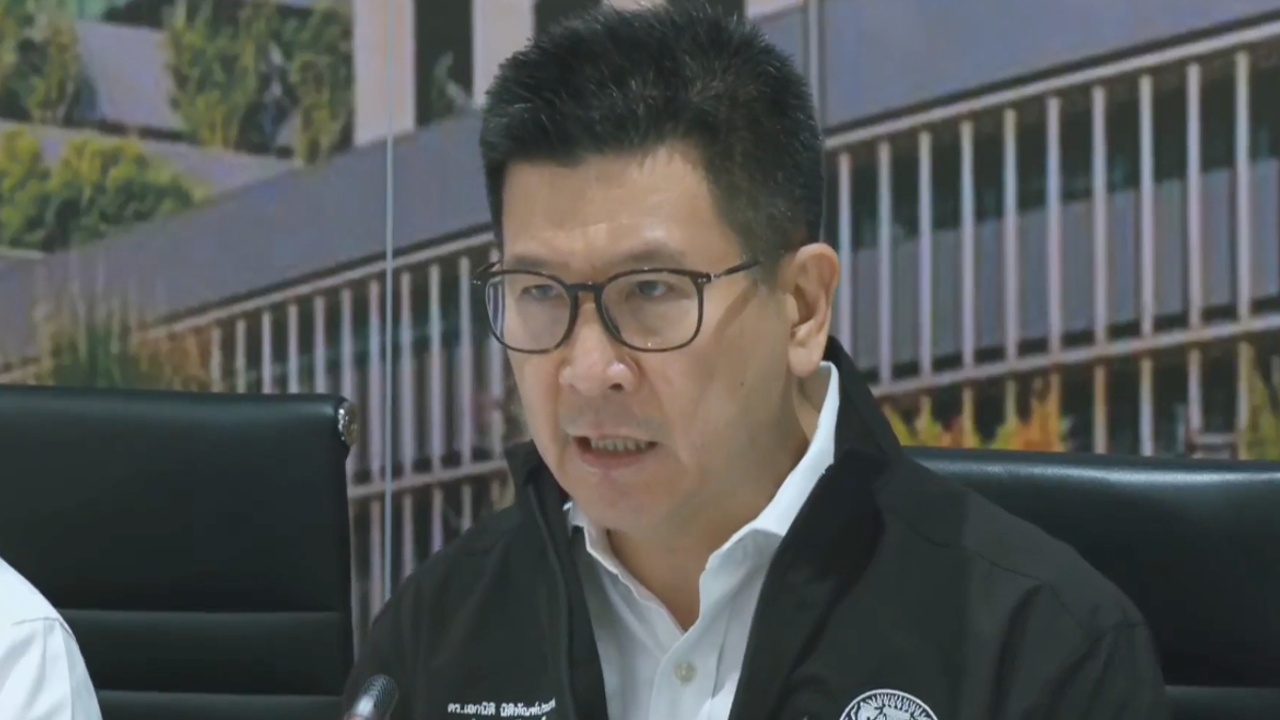
At 13:30 on 15 March 2026, Mr. Akniti Nitithanprapas, Deputy Prime Minister and Minister of Finance, announced the results of a special meeting of the Center for Managing and Monitoring the Middle East Conflict Situation (CMEC). The Ministry of Foreign Affairs reported that the situation at the Strait of Hormuz remains tense. The key issue today was domestic oil prices. The Energy Ministry, represented by Mr. Sarawut Kaewtaphip, Director-General of the Energy Business Department, confirmed that the government can manage crude oil supplies sufficient for 90 days of domestic use.
Furthermore, the Prime Minister invited executives from PTT Public Company Limited and oil traders under Section 7, responsible for managing gas stations selling fuel to the public throughout Thailand, to join the meeting to exchange updates. All parties reaffirmed that supplies remain sufficient and that gas stations have enough fuel for public use, urging people not to worry.
Additionally, the public is encouraged to be confident that oil supplies are definitely sufficient. The meeting also addressed why some stations had shortages, assigning the Energy Ministry to oversee transportation and oil management. Due to the Middle East situation causing public panic, the Energy Ministry will manage supplies to ensure the public is confident there will be no shortage.
The Director-General of the Energy Business Department revealed that as of Friday, 13 March 2026, the department, along with provincial energy offices nationwide, inspected a total of 53 warehouses with 589 tanks. Commercial oil reserves totaled about 1.4 billion liters, and legally mandated reserves stood at around 3.4 billion liters. Combined, these amount to 39 days of supply. Oil currently in transit to Thailand accounts for 27 days, and contracted incoming oil adds another 30 days. In total, reserves cover 96 days, or at least 90 days.
Meanwhile, with increased fuel sales at gas stations due to public demand, transportation issues have arisen. The Prime Minister ordered the Energy Ministry to discuss with relevant agencies ways to speed up fuel delivery, ensuring adequacy and preventing shortages.
Executives of various oil trading companies confirmed there are sufficient reserves. The companies have global networks and have prepared for crisis situations by securing oil from ports bypassing the Strait of Hormuz or sourcing crude from the U.S., West Africa, and Latin America. They assured the public that crude oil supplies, currently at 60%, are adequate for refining and maintaining stockpiles for the country’s use.
The Vice President of the Thai Chamber of Commerce stated that after meeting with the chairpersons of the Southern region’s 14 provincial chambers, concerns about oil shortages were addressed. He clarified that the Thai Chamber of Commerce participates in all oil-related meetings and concluded that there is no shortage. The current issue in some rural stations is due to demand that does not reflect actual consumption.
Mr. Akniti concluded that oil producers and traders have coordinated with the Energy Business Department and chambers of commerce nationwide to assure no shortage exists. Since crude oil—the raw material—is managed by the Energy Ministry for refining into gasoline and diesel, supplies are sufficient. However, recent public concern about shortages led to stockpiling, causing distribution to stations to be less than normal. It was decided that the Energy Ministry’s Director-General will consult traders to assure the public that gas stations have adequate fuel, matching the current situation and demand, and urged the public to remain confident in the sufficiency of oil supplies.
Regarding the industrial sector, the Prime Minister ordered the Energy Business Department to arrange talks with major traders owning refineries, especially those under Section 7 and Section 10 traders or jobbers, to explore how to manage oil supply for industry.